
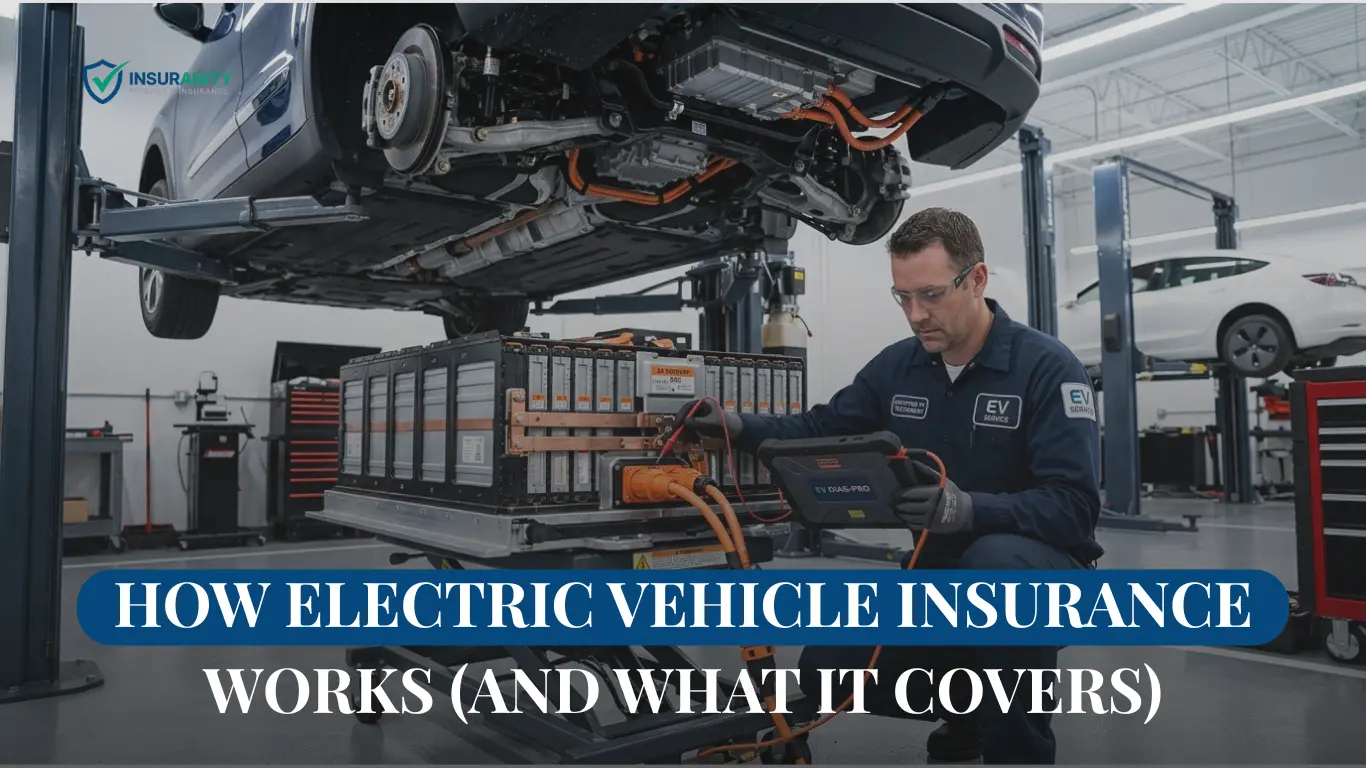
Picture this: You just drove your brand-new electric vehicle off the lot. The ride is whisper-quiet, the acceleration is instant, and you’re already calculating how much you’ll save on gas. Then someone rear-ends you at a stoplight. The repair estimate comes back at nearly $9,000 more than double what the same fender damage would cost on a regular gas car. Why? Because your EV’s bumper-mounted sensors, aluminum panels, and high-voltage wiring harness all had to be replaced by a certified EV technician.
That moment is exactly why understanding electric vehicle insurance before something goes wrong is so important. This guide breaks it all down in plain, simple language what it covers, how it’s priced, and how you can pay less without giving up protection.
What Is Electric Vehicle Insurance, Really?
Electric vehicle insurance is a type of auto insurance built around the unique needs of battery-powered cars. At its core, it works the same way as regular car insurance you pay a monthly or annual premium, and if something bad happens to your car or if you cause an accident, your insurer helps cover the costs.
But EVs are different from gas-powered cars in ways that directly affect your policy. They cost more to repair. Their parts are harder to find. Their battery packs alone can be worth tens of thousands of dollars. So while the basic structure of electric vehicle insurance is familiar, the details and the price are often a surprise to first-time EV owners.
The good news? Once you understand how it all works, you can make smarter decisions and avoid paying more than you need to.
Why EVs Cost More to Insure Than Gas Cars
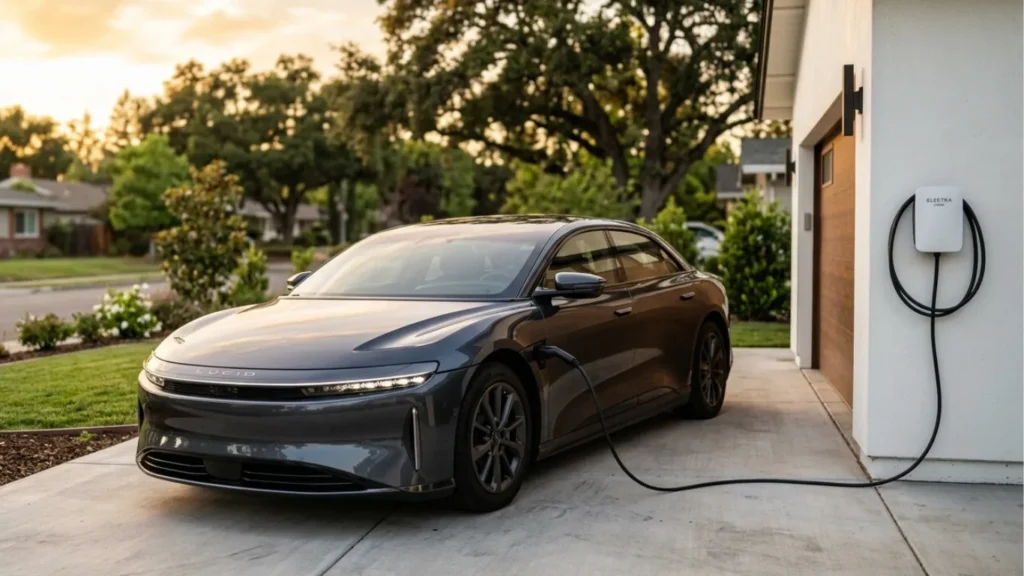
Before we get into what’s covered, it helps to understand why electric vehicle insurance costs more in the first place. This is one of the most common questions new EV owners have, and the answer makes sense once you see it clearly.
The average annual cost of insuring a full electric vehicle in the US is around $3,281 for full coverage, compared to roughly $2,697 for a standard gas car. That’s a notable gap, and here’s what drives it:
- Higher vehicle value The average transaction price for a new EV is over $55,000, compared to about $48,000 for gas vehicles. More value means more exposure for your insurer.
- Specialized parts EV components aren’t available at the corner auto parts store. Many parts are proprietary, ordered directly from the manufacturer, and take longer to arrive.
- Certified technicians Not every mechanic can work on a high-voltage battery system. EV repairs often require shops with special equipment and trained staff, which means higher labor costs.
- Longer repair times On average, an EV spends about 15.6 days in the shop after a collision, compared to 12.7 days for a gas vehicle. That extra time matters when your insurer is covering a rental car.
- Higher claim payouts The average EV repair costs over $1,000 more per claim than a comparable gas vehicle repair.
Understanding this is not just trivia. If you know why your premiums are higher, you know exactly which levers you can pull to bring them down which we’ll cover later.
What Does Electric Vehicle Insurance Actually Cover?
This is the heart of what most people want to know. Electric vehicle insurance covers several key areas, and each one plays a different role in protecting you.
1. Liability Coverage
This is the foundation of any auto policy, and it’s legally required in almost every US state. If you cause an accident and someone else gets hurt or their property is damaged, liability coverage pays for it up to your policy limits. It does not cover your own injuries or your own vehicle.
If you’re not sure what happens when you drive without this protection, it’s worth understanding the legal and financial consequences of driving uninsured, which can include license suspension, heavy fines, and out-of-pocket lawsuit exposure.
2. Collision Coverage
Collision coverage pays to repair or replace your EV if it’s damaged in an accident whether you hit another car, a guardrail, or a tree. For EVs, this is especially important given how expensive even minor repairs can be. A small fender collision on a Tesla or Rivian can easily run into the thousands due to integrated crumple zones and sensor clusters.
3. Comprehensive Coverage
Comprehensive coverage handles damage that happens outside of accidents. Think theft, hail, flooding, fire, or a tree branch falling on your car. Given that EV theft rates have been rising in some US cities, this coverage is worth taking seriously.
4. EV Battery Coverage
This is one of the most important and most misunderstood parts of electric vehicle insurance. Your EV’s battery pack is its most expensive component, often valued between $10,000 and $20,000 depending on the model. Some standard policies treat battery damage as a gray area.
The best EV-focused policies specifically include battery replacement coverage if the pack is damaged in a covered accident. Always ask your insurer directly: “Is my EV battery covered under collision and comprehensive?” Don’t assume confirm it in writing.
5. Charging Equipment Coverage
Here’s something many EV owners never think about until it’s too late: your home charging station. A Level 2 home charger costs anywhere from $400 to $1,200 to install. If it’s damaged by a storm, a power surge, or a garage fire, some electric vehicle insurance policies will cover it. Others won’t. This is a specific add-on worth asking about when you shop for coverage.
If you’re a renter and wondering how your home or storage situation affects your insurance picture, it’s also useful to understand what renters insurance does and doesn’t cover alongside your auto policy.
6. EV-Specific Roadside Assistance
Standard roadside assistance covers flat tires and towing. EV roadside assistance goes further it can include emergency mobile charging if your battery dies on the road. Running out of charge is not the same as running out of gas. There’s no gas can solution. A tow to the nearest charging station can cost hundreds of dollars out of pocket without this coverage.
7. Software and Technology Coverage
Modern EVs run on complex software systems that control everything from the powertrain to the climate system. If a software module is damaged in an accident and needs to be replaced or recalibrated, a well-structured electric vehicle insurance policy will help cover that cost. This is something most gas-car policies never needed to address, which is why it’s easy to overlook.
8. Gap Insurance
If you financed your EV and total it in an accident, standard coverage only pays what your car is currently worth not what you still owe on your loan. Because EVs depreciate faster than expected in some markets, this gap can be significant. Understanding how gap insurance works and what it costs is a smart move before you drive off the lot.
How EV Insurance Premiums Are Calculated
Your premium isn’t pulled from thin air. Insurers use a combination of factors to decide exactly how much your electric vehicle insurance will cost each month.
| Factor | How It Affects Your Rate |
|---|---|
| Vehicle make and model | Luxury EVs cost significantly more to insure than economy EVs |
| Battery size and range | Larger batteries mean higher replacement costs = higher premiums |
| Your driving record | Accidents and tickets raise your rate across any vehicle type |
| Your location | Urban zip codes carry higher theft and accident risk |
| Annual mileage | Lower mileage often means lower risk and lower premiums |
| Credit score | In most US states, a lower credit score raises your premium |
| Coverage level | More coverage means higher premiums, but better protection |
| Deductible amount | Higher deductibles lower your premium but raise your out-of-pocket costs |
A 35-year-old driver with a clean record in a suburban zip code driving a Chevrolet Silverado EV might pay around $1,947 per year for full coverage. That same driver in a Tesla Model S in a major city could pay over $4,000 per year. The vehicle you choose matters enormously.
Step-by-Step: How to Get the Right EV Insurance Coverage

Follow these steps to make sure you’re properly covered without overpaying.
Step 1: Know your vehicle’s value and replacement cost
Before you shop for policies, look up the current market value of your EV and the cost to replace the battery pack. This tells you how much coverage you actually need.
Step 2: Decide between minimum and full coverage
Minimum coverage is legally required but only covers damage to others. Full coverage liability plus collision plus comprehensive protects your own EV too. For most EV owners with a vehicle worth $30,000 or more, full coverage makes financial sense.
Step 3: Ask specifically about EV add-ons
When you get quotes, ask each insurer these specific questions:
- Is the battery pack covered under collision and comprehensive?
- Is home charging equipment included?
- Does roadside assistance include emergency charging?
- Is software and module replacement covered?
Step 4: Compare at least three to four quotes
Rates for electric vehicle insurance vary dramatically between insurers sometimes by $1,000 or more per year for identical coverage on the same vehicle. Always compare before committing. Switching car insurance providers is easier than most people think and can be done mid-policy without penalty in most states.
Step 5: Stack your discounts
Most insurers offer discounts that apply equally to EV owners. These include bundling your home and auto policies (typically 15 to 25% off), safe driver discounts, low-mileage discounts, and sometimes an EV-specific or green vehicle discount. Ask for every discount that might apply to you.
Step 6: Set your deductible thoughtfully
Raising your deductible from $200 to $500 can lower your premium by 15 to 30%. But only do this if you can realistically afford the higher out-of-pocket cost if a claim occurs.
Step 7: Review your policy every year
EV technology is evolving fast. New models, new parts availability, and new insurer programs appear regularly. An annual policy review keeps you from overpaying for coverage that no longer fits your situation.
EV Insurance vs. Regular Car Insurance: A Clear Comparison
| Feature | Gas Car Insurance | Electric Vehicle Insurance |
|---|---|---|
| Core coverages | Liability, collision, comprehensive | Same, plus EV-specific add-ons |
| Battery coverage | Not applicable | Specific endorsement often needed |
| Charging equipment | Not applicable | Optional add-on |
| Roadside assistance | Towing, flat tire, fuel delivery | Includes emergency mobile charging |
| Average full coverage cost | ~$2,697/year | ~$3,281/year |
| Repair time after collision | ~12.7 days | ~15.6 days |
| Software/tech coverage | Rarely needed | Increasingly important |
Real Factors That People Often Overlook
Your Charger at Home Matters More Than You Think
Most EV owners charge at home overnight. If your garage catches fire and your charger is destroyed, or if a power surge fries the unit, repair or replacement costs can stack up fast. This isn’t covered by your auto policy automatically and it may or may not be covered by your homeowner’s or renter’s policy either. If the charger was professionally installed, the installation work itself may have been covered under an electrical contractor’s public liability insurance but that doesn’t extend to your ongoing coverage as the owner. It’s worth checking both policies.
Not All EVs Are Created Equal When It Comes to Insurance
A Hyundai Ioniq 5 and an Audi e-tron might both be electric, but their insurance costs are worlds apart. The Ioniq 5 typically falls below the EV average in annual premiums. The Audi SQ8 e-tron can run above $10,000 per year for full coverage. The vehicle you choose is one of the single biggest factors in your electric vehicle insurance rate.
Financing Your EV Changes Your Coverage Requirements
Most lenders require full coverage collision and comprehensive when you finance a vehicle. If you drop to minimum coverage to save money, you could be in breach of your loan agreement. Always check your lender’s requirements alongside your state’s minimum insurance requirements.
How to Lower Your EV Insurance Premium Without Sacrificing Coverage
Paying less doesn’t have to mean being exposed to more risk. These strategies genuinely work:
Bundle your policies
Combining your home and auto insurance under one provider is one of the most consistent ways to lower your overall insurance spend. The savings often range from 15 to 25%. To understand the full value of having your financial protection under one roof, it also helps to think about whether life insurance fits your overall picture. And while you’re reviewing your financial coverage, understanding how health insurance coordination works can prevent gaps if you or a passenger are injured in an EV accident.
Enroll in a telematics program
Many insurers offer apps or small devices that track your driving habits speed, braking, mileage. Safe, low-mileage drivers can earn meaningful discounts through these programs over time.
Maintain a clean driving record
This is the single most reliable way to keep your premium low. One at-fault accident can raise your rate by 40% or more.
Improve your credit score
In most US states, your credit-based insurance score directly affects your premium. Drivers with poor credit pay on average over 100% more than those with excellent credit. Every point you gain on your credit score can work in your favor at renewal time.
Choose your EV model wisely
If you haven’t purchased yet, factor insurance costs into your buying decision. A quick quote comparison across two or three models you’re considering can reveal thousands of dollars in annual savings.
Pay annually instead of monthly
Many insurers offer a small but real discount when you pay your full premium upfront rather than in monthly installments.
What Happens When You File an EV Insurance Claim?
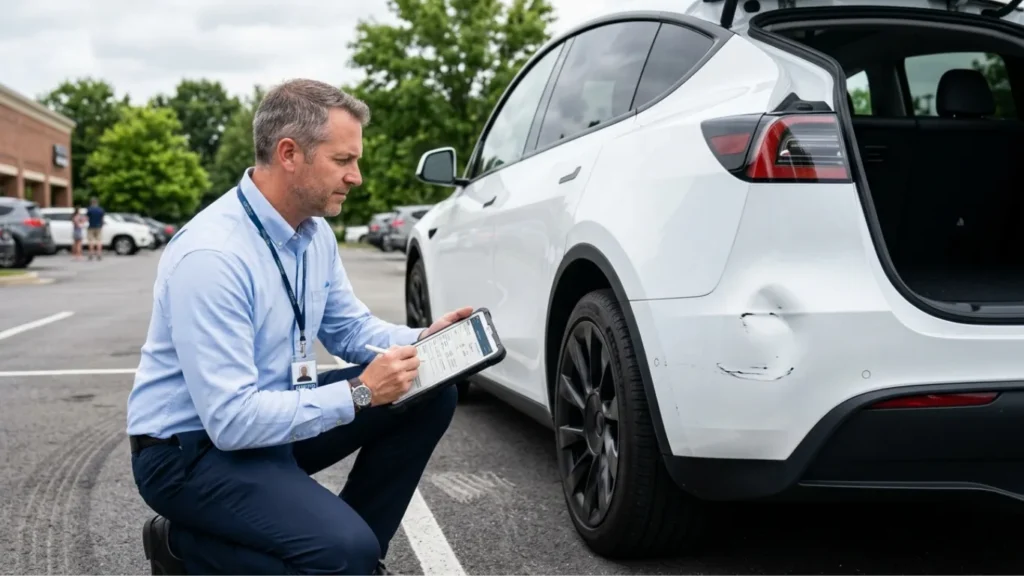
The claim process for electric vehicle insurance follows the same general steps as any auto claim, but with a few EV-specific things to keep in mind.
After an accident or incident, you report the claim to your insurer. An adjuster reviews the damage either in person or through photos. For EVs, the adjuster needs to assess not just the visible body damage but also any potential impact on the battery pack, high-voltage systems, and software modules.
Because EV repairs often require OEM (original equipment manufacturer) parts and certified technicians, your insurer may direct you to a specific repair facility. This is worth asking about before you need it. Knowing which shops near you are certified for your EV brand can speed up the process significantly.
One thing many EV owners don’t realize: even a minor collision can trigger a battery inspection. Lithium-ion battery packs can sustain internal damage that isn’t visible on the outside but can cause safety issues later. A thorough inspection is standard practice at certified EV repair shops, and your policy should cover it.
The EV Insurance Landscape Is Changing
Electric vehicle insurance is not standing still. As EVs become more common on US roads with over 1.3 million new EV sales recorded in 2024 alone insurers are actively developing better pricing models, more EV-specific coverage options, and improved claims processes.
Usage-based insurance, which prices your policy on actual mileage and driving behavior rather than demographic estimates, is becoming more popular among EV owners. Because EV drivers tend to drive more carefully and predictably (partly due to the way EVs deliver power), many benefit from usage-based models.
Some automakers now offer their own integrated insurance programs, using real-time driving safety scores collected directly from the vehicle to set premiums. While these programs aren’t available for every EV model, they represent a direction the industry is clearly moving toward.
Staying informed about these changes and reviewing your policy annually gives you a real advantage as a consumer. You may also find it helpful to stay current on broader auto insurance topics, like what happens when you stay on a parent’s insurance policy or how builders risk insurance works if you’re adding a home EV charging station as part of a renovation.
FAQs
No, standard electric vehicle insurance does not cover natural battery degradation. Insurance is designed to cover sudden, accidental damage — not gradual wear. If your battery slowly loses range over the years due to normal use, that falls under your manufacturer's warranty, not your insurance policy. However, if your battery is damaged in a covered accident, fire, or theft, your comprehensive or collision coverage should pay to repair or replace it. Always ask your insurer whether battery damage from a road hazard — like hitting a large pothole that cracks the battery casing — is included. Some policies cover it, others require a specific add-on. When in doubt, get it confirmed in writing before you sign your policy.
The coverage types are the same, but the cost is usually lower for a used EV because the vehicle's market value is lower. Since insurance pays based on your car's actual cash value at the time of a claim, a used EV with a lower value means a smaller potential payout — and a lower premium. That said, a few things are worth checking when insuring a used EV. First, ask whether the battery has been inspected and whether its health report is available. A degraded battery is worth less, which affects your payout if the car is totaled. Second, confirm that any remaining manufacturer warranty transfers to you, since warranty coverage and insurance coverage work differently. Finally, gap insurance is rarely needed on a used EV since the loan amount is usually closer to the vehicle's actual value.
Does where I charge my EV — at home versus public stations — affect my insurance rate?
Where you charge does not directly change your electric vehicle insurance premium the way your zip code or driving record does. However, it can matter indirectly. If you primarily charge at home, some insurers view that favorably because home charging tends to mean shorter, more predictable daily drives and lower overall mileage — both factors that can reduce your rate. Public fast-charging stations, especially DC fast chargers, are generally considered safe and do not trigger any insurance surcharge on their own. What does matter is whether your home charging equipment is covered under your policy. A Level 2 home charger is a real financial investment, and damage to it from a fire, storm, or power surge is not automatically covered by your auto policy. Ask your insurer specifically whether home charging equipment is included or requires a separate endorsement.
Will my electric vehicle insurance rate go down as EVs become more common?
Likely yes, over time. One of the main reasons electric vehicle insurance costs more right now is that insurers have less historical claims data for EVs compared to gas vehicles, and repair networks are still catching up. As more EVs hit the road, more claims data becomes available, more certified repair shops open, and parts become easier to source. All of these factors push repair costs down — and lower repair costs eventually translate to lower premiums. In fact, the rate of increase in EV insurance costs has already started slowing compared to the sharp jumps seen between 2022 and 2024. Battery repair technology is also improving, meaning fewer EVs are being written off as total losses after moderate accidents. None of this happens overnight, but the trend is clearly moving in the right direction for EV owners.
Can I use my electric vehicle for rideshare driving, and does that change my insurance needs?
Yes, you can use an EV for rideshare driving, but your personal electric vehicle insurance policy will not cover you while you are actively working for a rideshare platform. Standard personal auto policies exclude commercial use. Most rideshare companies provide some level of coverage while the app is on and you are on a trip, but there are gaps — particularly during the period when the app is on but you have not yet accepted a ride. To be fully protected, you need either a rideshare endorsement added to your personal policy or a separate commercial auto policy. This is a coverage gap that competitors rarely address clearly, but it is a real financial risk. If you get into an accident while waiting for a rideshare request with only a personal EV policy, you could find yourself without coverage for your own vehicle repairs.
One More Thing Worth Knowing
Electric vehicle insurance is not a specialty niche anymore. Major insurers across the US now offer EV-specific coverage options, and competition among them is genuinely working in consumers’ favor. Rates that were hard to find or expensive just a few years ago are increasingly accessible especially for non-luxury EV models.
The key is knowing what to ask for, comparing your options carefully, and not defaulting to the first quote you receive. A well-chosen policy protects one of the most significant purchases you’ll ever make, covers the unique risks that come with EV ownership, and doesn’t have to break the bank to do it.
For a broader look at how auto insurance laws in your state shape your coverage requirements, the Insurance Information Institute offers a reliable, state-by-state breakdown of what’s legally required and what’s optional.
Understanding electric vehicle insurance is ultimately about making sure the investment you made in going electric stays protected whether that’s your battery, your charger, your tech, or your peace of mind on the road.