
You open your car insurance renewal letter, and the number staring back at you is like a punch in the gut. Again. You have had zero accidents. You haven’t claimed in years. But your premium’s rising like petrol prices on a holiday weekend.
Here’s a fact that most drivers in the US still don’t know: fitting a insurance approved vehicle tracker can quietly slash a significant chunk off that bill and it works whether you’re a careful suburban commuter or a small business owner running a fleet of vans.
This guide will show you exactly how it works, what happens behind the scenes, and the simple steps you can take today to begin saving.
What Is Insurance Approved Vehicle Tracker?
An insurance approved vehicle tracker is a small GPS device installed into your car and approved by insurance companies as a valid security and monitoring device. This isn’t some generic GPS thing you pick up off the shelf. It’s been independently tested and validated to meet certain safety and performance standards so insurers can reward you for installing one.
It’s like a smoke detector for your car. A smoke detector won’t stop a fire, but it does send a message to your home insurer that you take risk seriously, and they will price your policy accordingly. An auto insurance approved vehicle tracker does the same thing for your auto insurance.
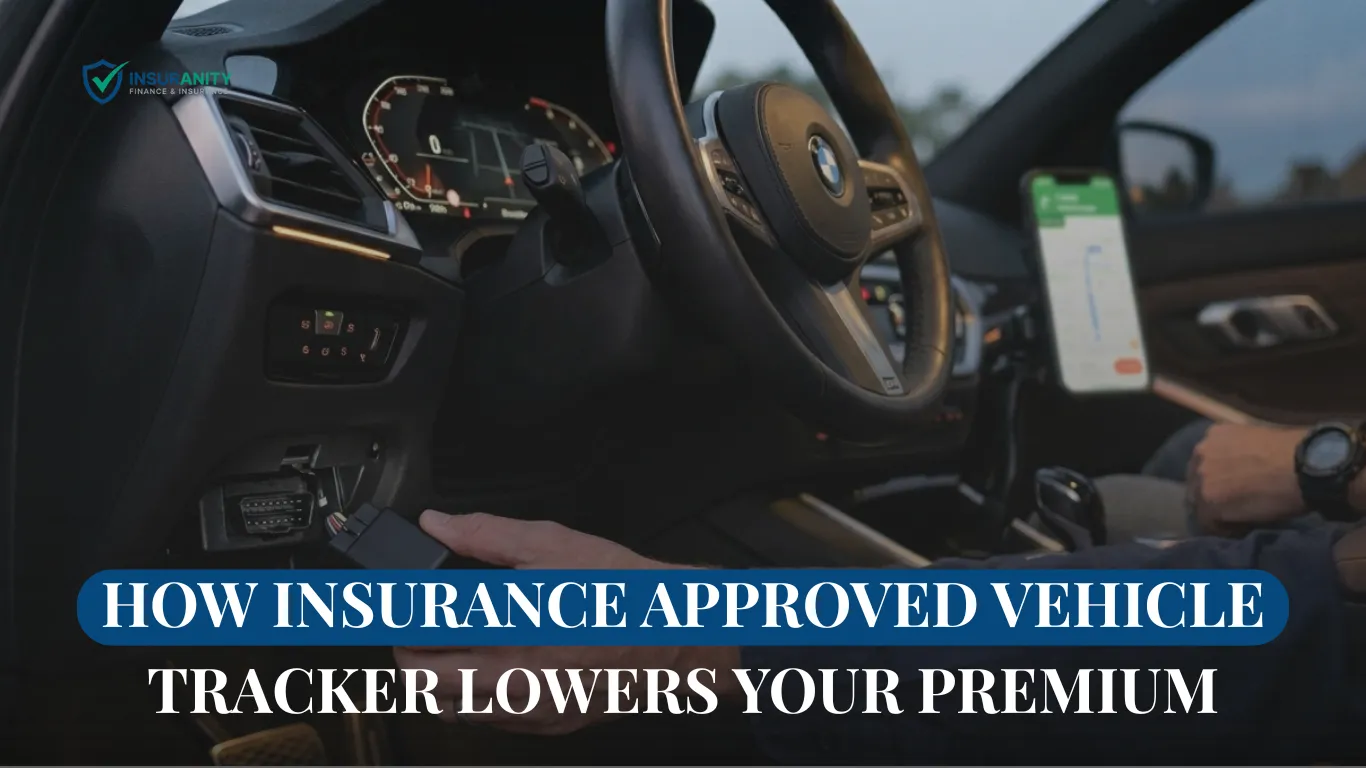
These devices plug into your car’s OBD-II port (a small outlet typically located under the steering wheel), or are hardwired discreetly behind the dashboard. When it is connected, the tracker collects data in real time and sends it over a cellular network to a secure platform.
Why Insurance Companies REALLY Care About These Devices

At its heart, insurance is a numbers game. Every company figures out the likelihood of your filing a claim and how much that claim might cost. Insurance approved vehicle tracker fitted to a vehicle, two big risk numbers drop:
1. Greatly reduced risk of theft
A tracked vehicle is much easier to recover if stolen. Real time GPS data means police can find a stolen car in minutes instead of days. The faster the recovery, the lower the payouts from the insurer and the fewer total loss claims.
2. Driving behaviour can be measured.
Your real driving behaviour is becoming visible with an active telematics device in your car. It tracks everything. How fast you drive, how you brake, how you accelerate, the number of miles you drive, even the time of day you are on the road. Safe driving data provides insurers with concrete evidence that you’re a low-risk driver, not just claim-free.
This shift from assumption-based to data-based pricing is called usage-based insurance (UBI), and it’s one of the fastest-growing segments of the US auto insurance market.
How Much Can You Really Save?
Let’s get to the numbers, because that’s what people really want to know.
Data across the industry shows that drivers who choose telematics and tracker-linked schemes could save between 5% and 40%, depending on driving behaviour and the insurer’s specific programme structure. A 2024 Consumer Reports survey of more than 40,000 policyholders found that the median annual savings from telematics was about $120 and that’s across all drivers, even those who didn’t actively try to improve their habits.
Safe, low-mileage drivers tend to fall on that end of the spectrum.
Here is a realistic look at what savings can look like:
| Driver Profile | Annual Premium (Before) | Estimated Discount | Annual Savings |
|---|---|---|---|
| Urban commuter, safe habits | $1,800 | 15% | $270 |
| Suburban driver, low mileage | $1,400 | 20% | $280 |
| Young driver developing habits | $2,200 | 25% | $550 |
| Small fleet owner (5 vehicles) | Total $9,000 | 30% | $2,700 |
These are estimates that are illustrative. Your true savings depend on your insurer, state regulations, and driving patterns. Also, a handful of states – like California – have strict limits on how telematics data can be used in pricing.
Insurance Approved Vehicle Tracker Data You Should Know
That’s the question most people will ask before they agree to install anything on their car, and it’s a good one.
A typical insurance approved vehicle tracker typically gathers:
- Real-time vehicle GPS tracking
- Speed at any moment during a trip
- Hard braking incidents (sudden stop)
- Jackrabbit starts (quick acceleration)
- Average miles per trip and per month
- Time of day the car is driven (driving at night is more statistically risky)
- Geo-fencing alerts if the vehicle leaves a pre-defined area
More advanced trackers also monitor engine diagnostics and can send notifications if the vehicle is tampered with or moved without the ignition being turned on. The latter is especially useful when it comes to theft detection.
One important thing to know: if you’re privacy-conscious, the data collected by a insurance approved vehicle tracker is generally only shared with your insurer and only when you’ve signed up to a telematics program. The device is not sending your location to a public feed. It is a private, secured data transfer.
How to Lower Your Premium With an Insurance Approved Vehicle Tracker – Step-by-Step
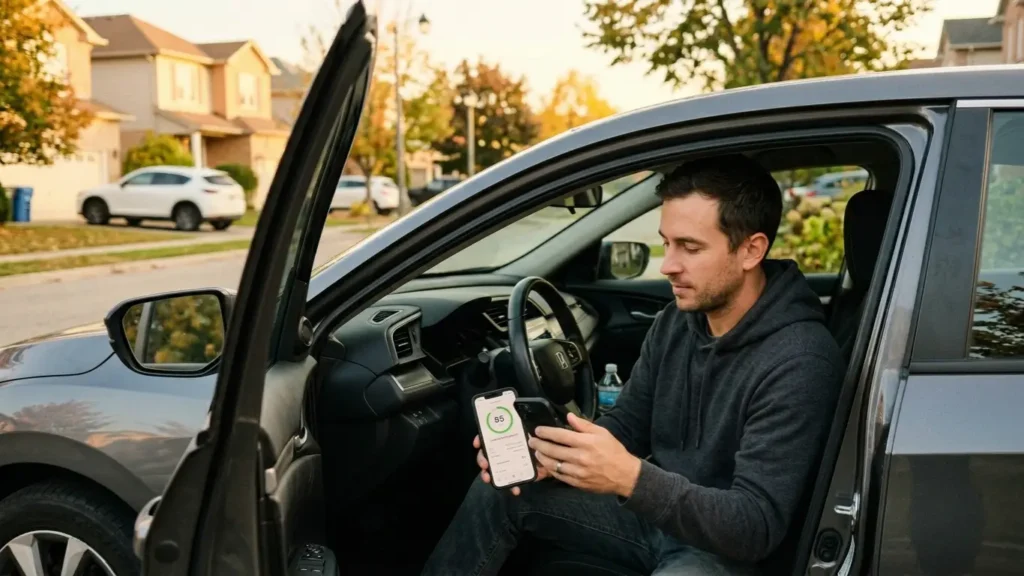
Here is a simple process you can follow to get the most out of your tracker, and start reducing what you pay:
Step 1. Start With Your Current Insurer
Before you buy anything, call your insurance company or log in and ask one question. “Do you offer a discount for telematics devices or GPS trackers?” Most of the major insurers in the US have a program. Some will even give you a device for free when you enrol.
Curious about what happens when you switch providers? This guide on how to switch car insurance covers the main things to look out for.
Step 2: Understand the Discount Structure
Not all tracker discounts are created equal. Some insurers offer a flat discount just for enrolling (usually 5% to 10%). Others provide a variable discount that increases over time based on your actual driving data. Specifically ask your insurer, “
- Do you get a discount on enrolment right away?
- What types of driving behaviours are scored and tracked?
- Will a low score increase my premium?
This last question is important. Some US programs will increase your rate if your driving data looks risky. Some only give you discounts, not raises. Knowing what structure your insurer uses will help you to make a smarter choice.
Step 3: Select the Right Tracker
If your insurer doesn’t supply a device, you’ll have to choose one. Check that the tracker itself says it is compatible with your insurer’s telematics program. A generic online GPS device may track your car’s location, but may not plug into your insurer’s discount ecosystem.
What to look for in a good vehicle tracker approved by insurance:
- Optional hardwired or OBD-II plug-in installation
- live cell phone data transmission
- A companion mobile app to keep track of your personal driving score
- Your insurer’s program compatibility
Step 4: Drive Mindfully for the First Three Months
Most insurers provide the discount for a period of active monitoring, often the first 30 to 90 days. This window is where you score your driving data and set your rate. That’s when it pays to be aware:
- Ease off the throttle instead of slamming it from a stop
- Allow yourself sufficient space in front of you so you don’t have to brake hard
- Avoid late night trips whenever possible (10PM to 4AM is high-risk in most scoring models)
- Try to keep daily mileage to a reasonable level
You don’t have to drive a robot. It’s just that you need to drive like the cautious person you probably are already.
Step 5: Share data and get discount
At the end of the monitoring period, your insurer will determine your score and apply the appropriate discount at your next renewal. Some programs will give you a real-time update on your discount, so your savings can improve over time as you build up your data.
If your app has this option, save a copy of your driving reports. You can also use this data to your benefit if you ever file a claim it can show the other driver was at fault.
More Than Just Savings: Other Ways a Tracker Protects Your Finances
The premium discount is the main benefit, but a approved vehicle tracker protects your wallet in a few other ways that are rarely mentioned.
Stolen vehicle recovery
If your car is stolen and recovered in one piece, you don’t need to file a total-loss claim. Total-loss claims are among the costliest types of auto claims, and having one on your record can bump up your premium for years to come. With GPS tracking, police can usually find and recover a vehicle before too much damage is done.
Dispute resolution in the event of an accident
If an accident occurs and you and the other driver disagree on what happened, your GPS and telematics data can be used as an objective record. Time-stamped and saved: speed, location, braking history. This sort of evidence can prevent you from having a false claim filed against you which protects your claims history.
Teen Driver Responsibility
New driver parents face some of the highest premiums in the country. A vehicle tracker approved by insurers on a teen’s car gives parents insight into speed, location and risky behaviour and insurers often offer significant discounts on policies for young drivers in exchange for this transparency.
If you’re looking at wider ways to make your cover work harder for you, it’s worth knowing how much gap insurance costs especially if you’re driving a newer or financed vehicle alongside your tracker setup.
Myths About Vehicle Tracker and Insurance
My insurer will have the data against me
A few programs can help increase your rate. Always check before you register. And if you are already a careful driver, the data will almost always back you up.
I’ll lose my privacy
Your insurer receives data based on the terms you agree to when you sign up. It is not available to the public and most insurers have strict policies on the use of the data.
Installation is too complex
Installing an OBD-II plug-in tracker takes about 30 seconds. It’s literally just plugged into a port under your dashboard. No tools, no wiring, no mechanic needed.
It is not worth the savings
A 10% discount on a $1,500 annual premium saves you $150 a year. The tracker usually has an upfront cost of $50 to $150. It pays for itself the first year. And the maths gets even better for drivers with high premiums.
Who Will Benefit From An Insurance Approved Vehicle Tracker?
The truth is, most drivers. Yet these groups see the greatest impact:
Good drivers being rated for demographics instead of behaviour
Drivers who are young, newly licensed, or living in urban zip codes are often paying high premiums for their actual driving ability. This is what you use to give proof to the insurer, a insurance approved vehicle tracker.
Low-mileage drivers
If you work at home or don’t drive much, usage-based tracking can tie your premium to how little you actually drive. This is one of the most under-utilized savings opportunities in auto insurance.
Fleet owners and small business owners
The math quickly adds up when you have multiple vehicles. 20% off a fleet of five vehicles is real money year after year. Plus fleet managers get visibility into driver behaviour, reducing accidents and keeping future premiums from jumping.
Drivers with a claims or violation history
A vehicle tracker approved by the insurer can help you rebuild your risk profile with real evidence. Instead of waiting years for a violation to disappear from your record, you can start proving your safe driving right away.
It’s always worth knowing the full picture of your auto coverage. If you’re not sure whether you have the right protections in place, investigating whether it’s illegal to drive without insurance and the penalties involved gives good context for why getting coverage right matters.
A Real World Example

Marcus, 28, a delivery coordinator in Atlanta, was paying $2,100 a year for auto insurance. He had no accidents, but lived in a high-theft urban area and had one minor speeding ticket from three years ago. His insurer had a telematics enrolment option.
He plugged in the OBD-II tracker, drove his normal routes for 60 days and got a 22% discount on renewal. That’s $462 a year back in his pocket. He paid once for the tracker $79.
He didn’t change his driving. He just gave the insurer the data to back up what he already knew about himself as a driver.
Does an Insurance Approved Vehicle Tracker Suit Every Driver?
The only drivers who might be worse off are those whose habits would be flagged by telematics aggressive acceleration, hard braking a lot, lots of late-night driving, or very high annual mileage in risky conditions.
For everybody else, the case is a no-brainer. You get a discount, better theft protection, useful trip data and a stronger hand if you ever need to dispute a claim. The device pays for itself in a short time and the savings compound over time.
If you’re already looking at your overall insurance strategy, tangential topics such as understanding commercial umbrella insurance and workers comp options for sole proprietors can help you understand the full picture of how vehicle coverage fits into broader financial protection especially if you’re running a business.
FAQs
Is a professionally installed tracker better than a DIY GPS tracker?
Yes, professionally installed trackers are usually more trusted by insurance providers because they offer stronger security, tamper alerts, and certified theft recovery services. DIY trackers may help with personal monitoring, but many insurers do not approve them for insurance discounts.
Can a vehicle tracker help recover a stolen car faster?
Yes, insurance-approved GPS trackers can provide real-time location updates that help recovery teams and police locate stolen vehicles quickly. Some reports show tracked vehicles have significantly higher recovery rates compared to cars without tracking systems.
Are there any ongoing costs after installing a vehicle tracker?
Many advanced tracking systems require a yearly or monthly subscription fee for 24/7 monitoring, mobile alerts, and recovery support. While these costs add extra protection, drivers should compare them with the potential insurance savings before purchasing.
The Bottom Line
An insurance approved vehicle tracker is one of the most practical, low-effort tools available for US drivers who want to pay less for car insurance without cutting coverage. It works by giving your insurer real data, not demographic guesses. It reduces the risk of theft, lets you earn discounts for using less and provides you with a factual record that protects you if something goes wrong.
It’s simple: ask your insurer about their telematics program, get a compatible tracker, drive as you normally do, and let the data do the talking.
You don’t need to keep paying more and more for your premium. An insurance approved vehicle tracker is a concrete, proven way to change that, one trip at a time.