
Imagine a 34-year-old dad, Marcus, finishing work on a Tuesday, kissing his kids goodnight and never waking up the next morning. His wife, Sarah, is left with two young children, a mortgage and no financial plan in place. In three months she has to get rid of their home.
That’s a true story. It happens to real families every week.
Here’s the question most people keep putting off: do I need life insurance? Not a day. Just now. Based on your real life, your debts, your family, your income, and your responsibilities.
In this guide, we’ll take you through it all clearly, step-by-step, so you can stop guessing and start knowing.
So What Is Life Insurance?
Before we decide whether life insurance is something you need it’s helpful to understand what it actually does in layman’s terms.
Life insurance is a contract, You pay a little bit each month (called a premium). If you die while the policy is in force, the insurance company pays a lump sum of money to the people you choose (called beneficiaries). That money can be spent on whatever, mortgage payments, childcare, day-to-day bills or just keeping the lights on.
It’s not a savings account. It’s not an investment. It’s a financial safety net, made for the people who count on you.
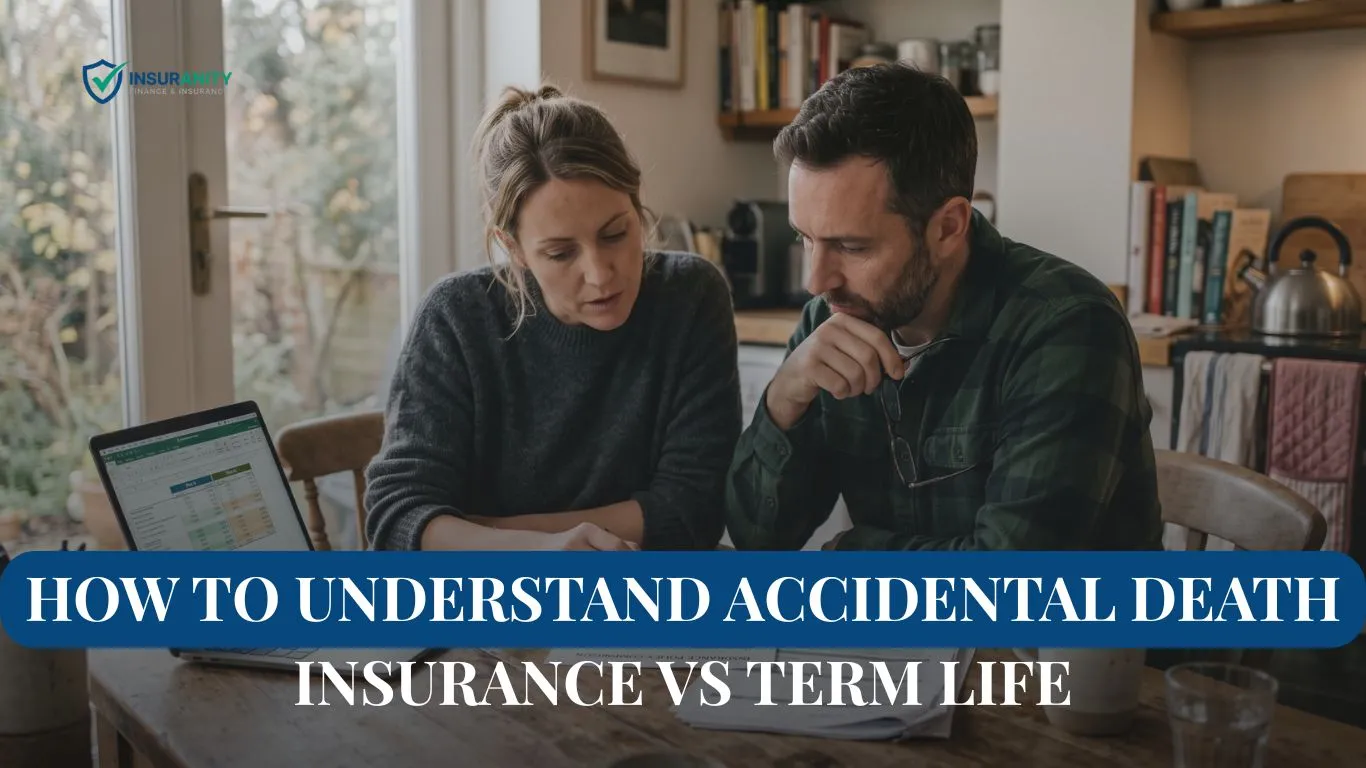
Most people choose between two main types: Term vs. Whole Life Insurance. Term covers you for a specified number of years. Whole life insures you your whole life and builds cash value over time. But before you make any decision, read this comparison of Term VS Whole Life Insurance to understand the full difference
The Real Question: Is There Anyone Who Depends on You?

The most important question to ask yourself about do I need life insurance is this: If you died tomorrow, would someone be left in financial difficulty?
Think with honesty. Not emotionally. Financially.
- Is your partner relying on your income to pay rent or a mortgage?
- Do you have children to feed, or to pay for childcare or schooling?
- Do you back up your aging parents?
- Do you have debts, a car loan, student loans, credit cards, that someone else would have to deal with?
If you answered yes to any of those, then the answer to do I need life insurance is almost certainly yes.
If you are single, debt free, no dependants and have good savings. You may really not need it at the moment. But that changes fast. And the older you get, the more expensive life insurance becomes.
7 Sure Signs You Need Life Insurance Right Now
Here is a simple checklist to help you make up your mind. If you can relate to even one of these, it is worth taking seriously.
1. You Own a Mortgage
The biggest financial commitment you will make in your life is probably your home. Who pays it if you die? And if your name is on that loan, your family could lose the house.
One of the most common and sensible uses of life cover is a life insurance policy for parents or any homeowner with dependents. Decreasing Term Policy – A policy designed to decrease with your mortgage balance. Lower premiums while protecting what matters most.
2. You Have Kids
Most people don’t realize how much it costs to raise a child. The Child Poverty Action Group estimates it costs a couple about $250,000 to raise a child to the age of 18, while for a solo parent it is about $290,000. And that doesn’t include college.
If you need life insurance as a parent it is not just to cover grief. It is to cover reality. Childcare, school supplies, sports, clothes, food – all of it goes on whether or not you are here.
3. You Are the Main Breadwinner
If your paycheck pays the bills, your family’s financial security is gone the moment you’re gone. One of the most overlooked reasons people need life insurance is simple income replacement and replacing the years of income your family would lose.
Many financial planners recommend a simple rule of thumb: try to get coverage equal to 10 times your annual salary. So if you’re making $60,000 a year, a $600,000 policy gives your family a real financial runway.
4. You Are a SAHM (Stay-at-Home Mom)
Most people don’t realize this: stay-at-home parents need life insurance, too.
Your input has immense financial value whether or not it comes with a paycheck. If you died, your partner would have to pay for full-time childcare, housekeeping, transportation, and possibly cut their own hours. That all costs are actual money.
This is a big void that competitors often don’t address clearly. The value of unpaid domestic work is often higher than a salary – and it absolutely needs to be protected.
5. You owe money
Your debts don’t simply disappear when you die. They are part of your estate. If your estate doesn’t have enough to cover creditors, they can go after your assets and sometimes, your assets include your family home.
Car loans, personal loans, large credit card balances – these are all reasons to ask yourself do I need life insurance. The debts can be wiped out with a simple policy, leaving your family with a clean slate financially.
6. Self-employed or freelance
If you’re self-employed or own your own business, there is no employer to provide death-in-service benefits. Nobody’s watching your back. You stop earning when you stop.
Self-employed people tend to underestimate their exposure. There is no safety net. As a freelancer, it’s essential you understand what is a health insurance premium and how protection insurance works together to build a financial plan that actually holds up.
7. You Need to Cover the Cost of a Funeral
The average cost of a basic funeral in the US has gone up considerably. Many families are blindsided at one of the worst times by this expense. A modest life insurance policy can cover this cost in full, removing a real financial burden from your loved ones at a difficult time.
When you don’t need life insurance
Let’s be honest here. Life insurance is not for everybody right now. In some cases one can do without it, or delay it.
You might not need it if:
- You have no financial dependents and are single
- You don’t have any major debts
- You have enough savings or investments to meet the needs of your dependents for many years
- Your spouse has a job and would be okay financially without your money
That said, even if all of this is true today, it may not be true in five years. And waiting means higher premiums. People in their 20s often pay as little as $15 to $25 a month for solid coverage. The same coverage can be two to three times as expensive by their 40s.
Term VS Whole Life Insurance: What Do You Really Need?

This is where most people get stuck, so let’s keep it simple.
Term life insurance is similar to renting protection. You pay monthly, you’re covered for a certain amount of time. Usually 10, 20, or 30 years, and if you die during that time, your family gets the payout. If the term ends and you’re still alive, the policy just ends. No payout, no cash back.”
This is the cheapest type of life cover. This is why most families with a mortgage and young children usually opt for term life.
Whole life insurance is like owning. It covers you for life and never expires. It also accumulates cash value over time that you can borrow against. Premiums are much, much higher – sometimes 10 to 15 times that of a term policy but the payout is guaranteed whenever you die.
Term VS Whole Life Insurance Which one to choose? It depends on your goals:
| Feature | Term Life | Whole Life |
|---|---|---|
| Coverage period | Fixed (10-30 years) | Whole life |
| Monthly premium | Low | High |
| Cash value | Yes | No |
| Best for | Mortgage, young family | Estate planning, legacy |
| Payout guarantee | Only if you die in-term | Never |
For most people asking do I need life insurance for the first time, term is the wiser, more affordable place to start. Once you know if life insurance is worth it for your situation, the type becomes much clearer.
How Much Insurance Do You Need?
This is a question that confuses people, so here’s a simple way to think about it.
Step 1: Determine your family’s total needs
- Remaining mortgage balance
- Consumer debt (cars, credit cards, personal loans)
- Annual living expenses * years until youngest child is independent
- Child care costs
- Funeral costs (add at least $10,000)
Step 2: Subtract what you have
- Current savings and investments
- A death-in-service benefit provided by your employer (Note: this benefit ceases on termination of your employment)
- All life insurance policies in force
Step 3: Your coverage number is the gap
A common rule of thumb used by many advisors is 10x your annual income. So a $70,000 earner would want $700,000 in coverage. This is not a ceiling, it is a floor.
It’s also worth knowing that life insurance tax deductibility rules affect how policies are structured – particularly for business owners and the self-employed – so it’s worth understanding before you buy.
Life Events to Prompt a Policy Review

Life insurance isn’t a “buy it and forget it” product. Your needs are changing. These are the top times to reassess whether you need life insurance or need more of it:
- Getting married or entering into a long-term partnership – someone is now financially dependent on you
- Having a baby — your financial responsibilities just blew up
- Buying a home — your biggest loan just arrived
Getting a big pay raise – your family’s standard of living has increased and your coverage should reflect that - Divorce – may require changes to your coverage needs and beneficiaries
- Start a business — your income is no longer protected by any employer benefits
- A parent becoming financially dependent on you — a commonly overlooked trigger
Most financial planners suggest reviewing your policy every one to two years, even without life changes, to make sure nothing has changed.
What About Your Employer’s Death-in-Service Benefits?
Many people just say, “I already have life insurance through work” and change the subject. However, employer death-in-service benefits have serious limitations that are rarely discussed.
They typically pay two to four times your annual salary at best. That is hardly enough for most families with a mortgage and children.
Second, and more importantly, that coverage goes away the moment you leave that job. If you are made redundant, change careers or become self-employed, you are totally unprotected – often at precisely the point in your life when your financial commitments are at their greatest.
Employer cover can complement a personal policy but should never replace it. It’s a key part of good financial planning to understand how long you can stay on certain insurance plans or job benefits – and what happens when they end.
Can Your Health Affect Your Ability to Get Life Insurance?
It’s a common worry that a pre-existing condition will make coverage impossible or cost too much. This is largely a myth .
Most people can still get life insurance even if they have managed conditions such as diabetes, high blood pressure, or a history of certain illnesses. The premiums may be higher, but the coverage is there.
For younger, healthier applicants, the process is even easier. Today, many insurers won’t even ask for a medical exam for standard amounts of coverage. You complete a health questionnaire and a decision is made quickly – often the same day.
The lesson: don’t assume you can’t get it. Make sure. The price of waiting is almost always a lot more than the price of applying now.
A Simple Gut Check: The “What if” Test
If none of the above steps seem concrete enough, try this.
Close your eyes and picture a tomorrow without you. Not in my emotions. In Action.
- What bills will you find in your family’s mailbox next month?
- Could your partner afford to pay the mortgage?
- Who’s paying for your kids’ childcare next week?
- How much would it cost to have your funeral?
If being honest about any of those makes you uncomfortable, then you already know the answer to do I need life insurance.
It’s not a question of if anymore. The question is, what kind, how many and when to start.
Do I need life insurance if I already have coverage through my employer?
Employer cover is a good start, but it usually pays only 2–4x your salary and disappears the moment you leave that job. A personal policy gives you permanent, portable protection that stays with you no matter where you work.
How do I know how much life insurance I actually need?
A simple starting point is 10 times your annual income. Then add your mortgage balance, outstanding debts, childcare costs, and funeral expenses. Subtract any existing savings or employer benefits to find your real coverage gap.
Do I need life insurance if I'm a stay-at-home parent?
Yes. Even without a salary, your work has real financial value. If you died, your partner would need to pay for childcare, housekeeping, and more. That cost needs to be covered, and life insurance is the most practical way to do it.
At what age should I get life insurance?
The earlier the better. Premiums are cheapest when you are young and healthy. Most financial planners recommend getting covered in your 20s or early 30s, ideally when you take on a mortgage, get married, or have your first child.
The Final Word
One of the most responsible financial questions you can ask yourself is do I need life insurance. And the answer is almost always yes for anyone with dependents, debts or anyone who wants their family to continue living the life they’ve built together.
That’s not a death policy. It’s a life insurance policy. It is about making sure the people you love most are not financially destroyed by it.
The best time to get covered is before you think you need it. Because by the time you really need it, it’s too late to get it.