
Picture this. You finally rent a storage unit to clear out the garage. In go the holiday decorations, your grandmother’s old dresser, a flat-screen TV, and three boxes of “stuff I might need someday.” A month later, you get a call. A pipe burst at the facility, and your unit got soaked. Your stomach drops. Then one question hits you harder than the rest: Who pays for all of this?
That single moment is why so many people type the exact question into Google: Does My Renters Insurance Cover Storage Unit belongings, or am I on my own? It is a fair worry, and the good news is that you are not as exposed as you might fear. The honest answer is yes, with some important limits attached. Let’s walk through how it actually works, in plain language, so you know exactly where you stand before anything goes wrong.
The Short Answer First
So, does my renters insurance cover storage unit items? In most cases, yes. Your renters policy includes something called off-premises coverage. This means your belongings are protected even when they are not inside your apartment. Your stuff is covered at home, in your car, in a hotel room on vacation, and yes, inside a rented storage unit too.
Think of your policy like a bubble that follows your things around. The bubble is strongest inside your home. It still works outside your home, just a little weaker. That weaker version is the part you really need to understand.
How Off-Premises Coverage Actually Works
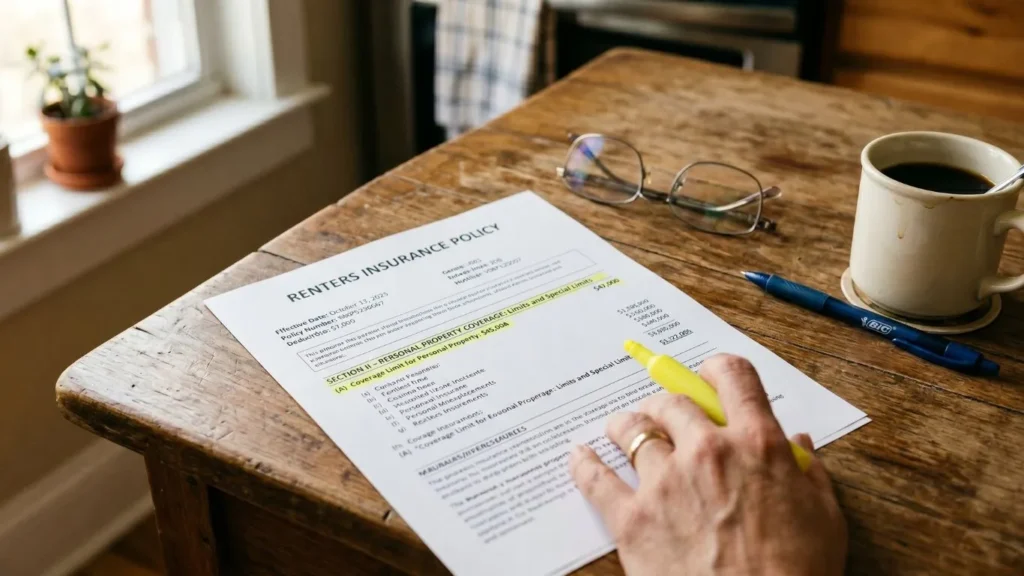
Does My Renters Insurance Cover Storage Unit? Here is the simple version. Your renters’ insurance has a number called personal property coverage. That is the total amount the insurance company will pay to replace your belongings. Many renters carry somewhere between $20,000 and $50,000 of it.
When your items sit inside a storage unit, they are not protected up to that full number. Instead, they fall under a smaller cap. This smaller cap is usually 10% of your total personal property coverage, or a flat $1,000, whichever amount is larger.
A quick story makes this clear. A reader named Marcus carried $40,000 of personal property coverage. He assumed his storage unit was fully protected for that whole amount. It was not. His storage cap worked out to $4,000. When thieves broke into his unit and took $9,000 worth of tools and electronics, his policy paid $4,000 minus his deductible. The rest came out of his own pocket. A five-minute policy check would have saved Marcus thousands.
So when people ask, does my renters insurance cover storage unit contents fully, the truth is this: it covers them partly, up to that sub-limit.
| Total Personal Property Coverage | Typical Storage Unit Limit (10%) |
|---|---|
| $20,000 | $2,000 |
| $30,000 | $3,000 |
| $40,000 | $4,000 |
| $50,000 | $5,000 |
Numbers can shift from one company to the next, and a few states use different rules. Always read your own paperwork. Still, this table gives you a solid ballpark.
What Dangers Are Actually Covered
Your belongings in storage are protected against the same list of covered perils as the belongings in your home. A “peril” is just an insurance word for “bad thing that can happen.” Common covered perils include:
- Fire and smoke
- Theft and break-ins
- Vandalism
- Windstorms and hail
- Water damage from a burst pipe or leaking appliance
- Damage from a falling object
- Lightning strikes
If one of these covered perils damages your items in storage, you can file a claim and get paid back, up to your storage limit and minus your deductible. This is the heart of the answer to does my rents insurance cover storage unit belongings. The protection is real, and it follows the same rulebook your home coverage follows.
What Is NOT Covered (Read This Part Twice)
Does My Renters Insurance Cover Storage Unit? This is where most people get caught off guard. A renters’ policy does not cover everything. Some dangers are simply left out, and that gap matters a lot for storage units.
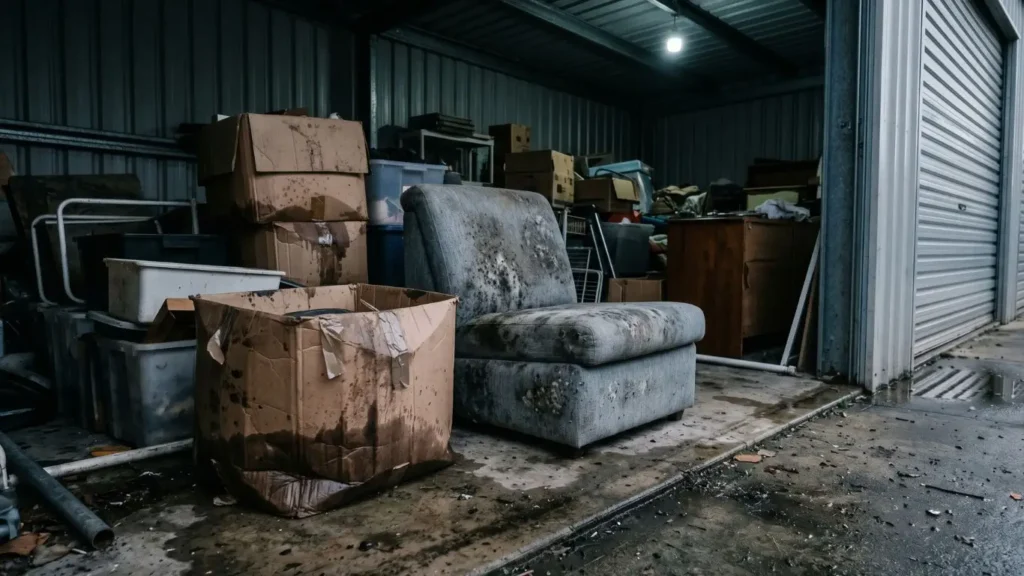
Your policy will likely not pay for:
- Flooding. Rising water from heavy rain or storms is excluded. This is a big one, because storage units near ground level flood often.
- Mold and mildew. Slow moisture damage is rarely covered.
- Earthquakes. Earth movement needs separate coverage.
- Pest damage. Rodents and insects chewing through your boxes are on you.
- Poor maintenance. If the facility was sloppy and that caused damage, the facility’s issue is not your renters’ policy’s job.
Here is another quick story. A woman named Priya stored her wedding photos and a leather sofa in a cheap unit during a move. Months later, she opened the door to a wave of musty air and green mold creeping up the couch. Her renters’ insurance paid nothing, because mold is excluded. A climate-controlled unit would have prevented the whole mess for a few extra dollars a month.
So if you are wondering, does my renters insurance cover storage unit flood or mold damage, the answer is almost always no. Knowing this before you store anything is the difference between a smart plan and a painful surprise.
A Step-by-Step Guide to Protect Your Stored Stuff
You do not need to be an insurance expert. You just need to follow a clear set of steps. Here is exactly what to do.
Step 1: Read Your Policy’s Off-Premises Limit
Pull up your renters’ insurance documents. Look for the words “off-premises,” “personal property away from premises,” or a sub-limit percentage. This single number tells you how much of your storage unit is actually protected. If you cannot find it, call your agent and ask directly.
Step 2: Add Up the Value of What You Are Storing
Walk through your unit, or your plan for it, and total the replacement cost of everything. Be honest. Furniture, electronics, tools, and appliances add up fast. If your total is higher than your storage limit, you have a gap to close.
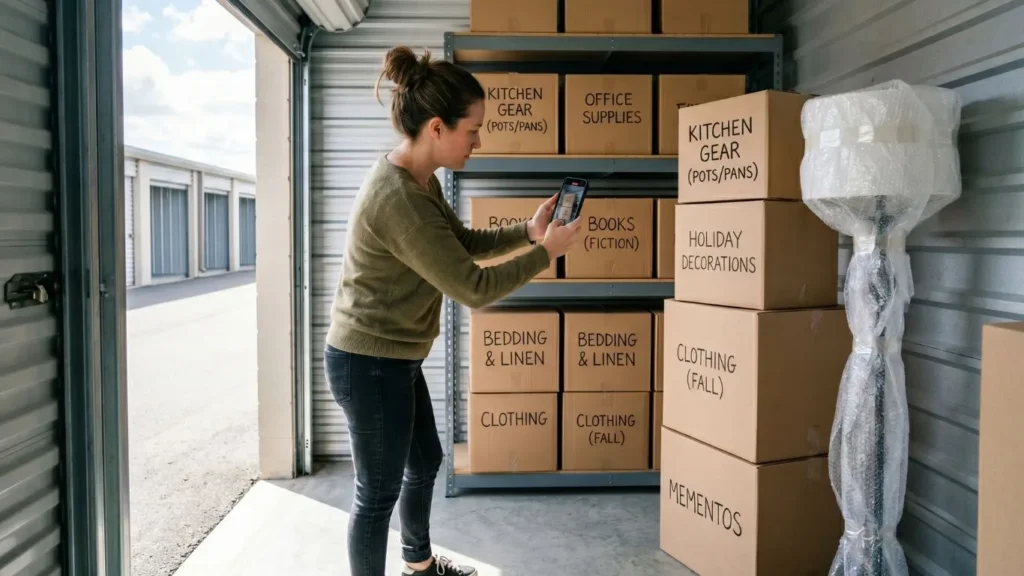
Step 3: Make a Home Inventory
This step quietly wins claims. Take photos and a video of every item. Write a list with each item’s name, rough value, and purchase date. For pricey things like a TV or laptop, snap the serial number too. Store this list in your email or the cloud, not in the unit itself. When you need to prove what you lost, this inventory does the heavy lifting.
Step 4: Decide If You Need More Coverage
If the value of your belongings beats your sub-limit, you have three solid choices. You can raise your overall personal property coverage, add a “rider” or “endorsement” for specific valuable items, or buy a separate self-storage insurance policy. We will compare these next.
Step 5: Pick the Right Unit
Choose a clean, secure, well-kept facility. A climate-controlled unit costs a bit more but blocks the heat, cold, and moisture that ruin furniture and electronics. Prevention is always cheaper than a claim.
Follow these five steps, and you will never have to nervously ask does my renters insurance cover storage unit items again. You will already know.
Renters Insurance vs. Self-Storage Insurance
Many storage facilities offer their own self-storage insurance at the front desk. Some even require proof of coverage before they hand you a key. So which is better for you? It depends on your situation.
| Feature | Renters Insurance (Off-Premises) | Self-Storage Insurance |
|---|---|---|
| Covers items at home | Yes | No |
| Covers items in storage | Yes, up to a sub-limit | Yes, full unit value |
| Coverage amount | Limited (often 10%) | Matches what you store |
| Extra monthly cost | Already included | Separate fee |
| Best for | Low-value storage | High-value storage |
The takeaway is simple. If your stored items are worth less than your sub-limit, your existing renters policy already has you covered. If you are storing a lot of valuable things, a dedicated self-storage insurance policy fills the gap that renters’ coverage leaves behind. Some people even use both, letting the renters’ policy do the light lifting while storage unit insurance covers the rest.
This is also why the question does my renters insurance cover storage unit belongings does not have a one-size-fits-all answer. A college student storing old textbooks has very different needs than a family storing a full house of furniture between moves.
Special Rule: Moving Between Homes
Does My Renters Insurance Cover Storage Unit? Here is a helpful detail many people miss. If you are using a storage unit during a move, your off-premises coverage often gives you a bit more breathing room. While you are between two homes, your belongings in transit and in temporary storage can sometimes get fuller protection than the standard sub-limit, as long as your policy stays active and paid.
The catch is timing. Update your policy with your new address within about thirty days of moving. Let coverage lapse, and that protection disappears right when you need it most. If you are also juggling a vehicle during the move, it helps to understand how coverage works for a leased or financed vehicle so nothing slips through the cracks.
Valuable Items Have Their Own Limits
Even within your storage coverage, certain items face extra caps called sub-limits. Jewelry, cash, firearms, watches, and collectibles are common examples. Your policy might cap cash at $200 and jewelry at $1,500, no matter how much personal property coverage you carry overall.
If you plan to store anything truly valuable, talk to your agent about “scheduling” those items. Scheduling means listing an item by name and insuring it for its real value. It is the same smart thinking behind protecting business tools and equipment under the right policy. The principle carries over: name your valuables, prove their worth, and insure them properly.
How to File a Claim If Something Goes Wrong
If your stored items are damaged or stolen, stay calm and move fast. Quick action protects your payout.
- Call your insurance company right away. The sooner you report it, the smoother the process.
- Document the damage. Photograph everything before you move or clean anything.
- Protect undamaged items. Shift the safe items somewhere secure, so your loss does not grow.
- Pull out your inventory. That list and those photos from Step 3 earlier now prove exactly what you lost.
- File a police report for theft. Insurers usually require one for stolen-property claims.
Handling a claim well is a skill, much like knowing the right way to switch insurance providers without creating a coverage gap. Preparation always beats panic.
Is Renters Insurance Even Worth It for This?
Some people wonder if a renters’ policy earns its keep. For most renters, it absolutely does. A policy often costs about the price of a couple of coffees each month, yet it shields your belongings at home and in storage. When you weigh that small cost against replacing a whole unit of furniture out of pocket, the math gets obvious fast. If you are still on the fence, it is worth reading a deeper breakdown of whether this kind of protection pays off for your own budget and lifestyle.
It also helps to know your rights as a policyholder. For instance, understanding when and how you can cancel or change a policy keeps you in control instead of locked into something that no longer fits.
Common Mistakes That Leave People Unprotected
Let’s close the loop with the slip-ups that cost renters real money:
- Assuming full coverage. The biggest mistake. Your storage unit is covered, but only up to that sub-limit.
- Skipping the inventory. No proof, no smooth claim. A simple phone video fixes this.
- Storing excluded items. Keeping irreplaceable or flood-prone valuables in a ground-level unit invites trouble.
- Choosing the cheapest, dampest facility. A slightly better unit prevents the mold and water claims your policy will not pay.
- Forgetting to update after a move. Coverage follows your active policy. Keep it current.
People who store valuable property should treat their unit with the same care a business owner gives a project site or major asset. The mindset is identical: know your risks, match them to the right coverage, and never assume.
FAQs
Will a storage unit claim raise my renters insurance premium?
It can. Filing any claim, including one for stored items, may lead to a higher premium at renewal, since insurers view past claims as a sign of future risk. For smaller losses that sit close to your deductible, paying out of pocket is sometimes the cheaper long-term choice. Weigh the claim amount against the likely rate increase before you file.
Does renters insurance cover a storage unit in a different state from where I live?
Yes. Your off-premises coverage protects your belongings almost anywhere, so a unit in another state is still covered up to your policy's sub-limit. The same exclusions and limits apply no matter the location. The one thing that can change is the sub-limit rule itself, since a few states set different percentages, so confirm the details with your insurer.
Are my car or vehicle parts covered if I store them in a storage unit?
Usually not. Renters insurance covers personal belongings, but it generally excludes motor vehicles and their permanently attached parts, whether they sit in your home or a storage unit. Loose items like car speakers or tools may get limited protection, but the vehicle itself needs auto coverage. Check with your agent before storing anything vehicle-related.
How long does renters insurance cover items kept in storage?
There is typically no strict time limit. As long as your policy stays active and paid, your stored belongings remain covered for as long as they are in the unit. The risk is not time, it is value drift and lapses. Review your coverage yearly and update it after any move so your protection never quietly falls out of date.
The Bottom Line
So, to answer the question one final time: does my renters insurance cover storage unit belongings? Yes, it does, through off-premises coverage, against the usual covered perils, up to a sub-limit that is often 10% of your personal property coverage or $1,000, whichever is greater. It will not cover flood, mold, pests, or earthquakes.
The smartest move is not to guess. Read your policy, total your stored items, build an inventory, and close any gap with extra coverage or a self-storage insurance add-on. Do that, and the next time a pipe bursts or a lock gets cut, you will not feel that stomach-drop panic. You will already know exactly how does my renters insurance cover storage unit protection, and you will be ready. For deeper guidance on protecting belongings in any setting, the Insurance Information Institute is a trusted, independent place to learn more.