
Picture this: You are sitting at the closing table for your very first home. Papers are flying everywhere. Your lender slides one sheet across and says, “We need proof of hazard insurance before we finalize your loan.” Your stomach drops. You smile and nod but inside you are thinking, “What exactly is this, and why did nobody mention it before today?”
If that sounds familiar, you are not alone. Millions of American homebuyers hear this term every single year and have no idea what it means. The good news? It is far simpler than it sounds and by the time you finish reading this, you will know exactly what it covers, what it skips, and why your lender cares about it more than almost anything else.
What Is Hazard Insurance and How Does It Actually Work?
Let’s keep it simple. What is hazard insurance? It is not a separate policy you buy on its own. It is a specific part of your homeowners insurance policy that covers physical damage to the structure of your home from events like fire, windstorms, hail, lightning, theft, and vandalism.
Think of your homeowners insurance like a lunchbox. Inside are several items: your sandwich (dwelling coverage), your chips (personal property), your drink (liability), and dessert (additional living expenses). What is hazard insurance in that lunchbox? It is the sandwich, the biggest, most essential part. Without it, lenders will not give you a mortgage.
The term comes from the mortgage world. Bankers and loan officers started using it as shorthand for dwelling protection coverage inside a standard homeowners policy. Over time, the phrase stuck and now millions of people hear it and think it is a brand-new type of coverage they need to buy separately. It is not.
Why Mortgage Lenders Require What Is Hazard Insurance Coverage
This is the question most people are actually asking when they search what is hazard insurance online. The answer comes down to one word: collateral.
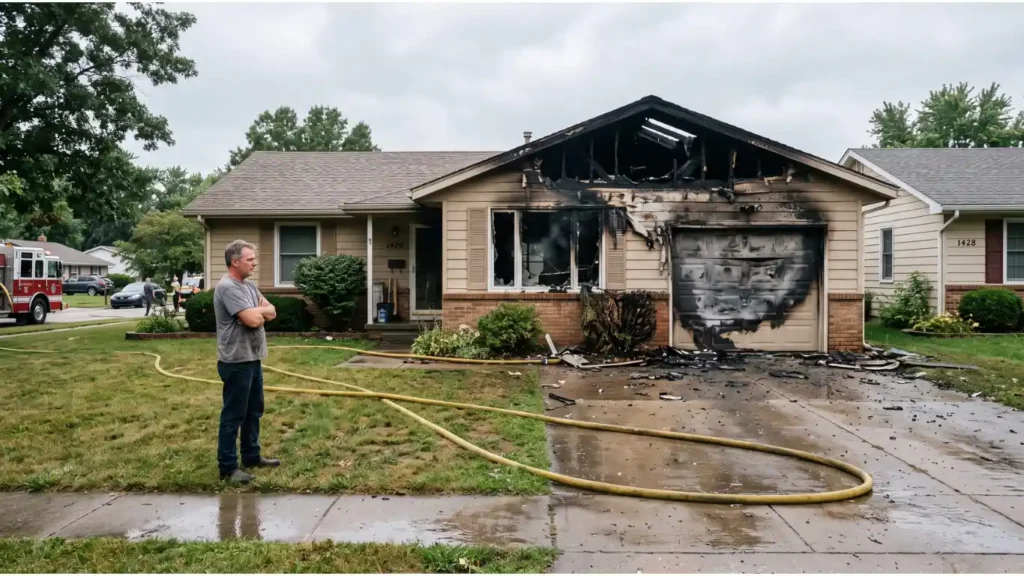
When a bank gives you a $350,000 mortgage, your home becomes their collateral. If something destroys that home, a fire, a tornado, a lightning strike and there is no insurance to rebuild it, the bank is left holding a loan on a pile of ash. That is a financial disaster for the lender.
So lenders require this coverage to protect their investment. As long as you are paying off that mortgage, your lender has a direct financial stake in your home’s structure. They want to know that if something bad happens, a policy exists to rebuild or repair that structure.
Under current mortgage guidelines, most lenders require coverage at your home’s full replacement cost large enough to rebuild from the ground up, not just cover market value, which can be very different. This is a detail even experienced homeowners often miss. Understanding how home insurance works during renovations or structural changes is equally important when your home’s value shifts.
What Does Hazard Insurance Cover? A Complete Breakdown
Now that you understand what is hazard insurance in plain terms, here is exactly what it covers. Most standard policies protect the physical structure of your home against these perils:
- Fire and smoke damage
- One of the most common and costly claims in the US
- Windstorms and hail
- Especially critical in Texas, Oklahoma, and Kansas
- Lightning strikes
- Including damage to electrical systems from a direct strike
- Explosions
- Usually from gas leaks or boiler malfunctions
- Theft and burglary
- Structural damage from break-ins, like a smashed door or broken window
- Vandalism
- Graffiti, broken windows, deliberate property damage
- Weight of snow or ice
- Collapsed roofs from heavy winter storms
- Vehicles hitting your home
- This happens more often than most people realize
- Fallen trees
- Storm damage from downed branches or entire trees
These are the core covered perils under a standard HO-3 homeowners policy, the most common type in the United States. What is hazard insurance protection kicks in when any of these events damages your home’s physical structure walls, roof, foundation, floors, built-in appliances, and attached structures like a garage.
What Hazard Insurance Does NOT Cover And Why This Matters
Understanding what is hazard insurance fully means knowing its limits. Several major gaps catch homeowners off guard every year.
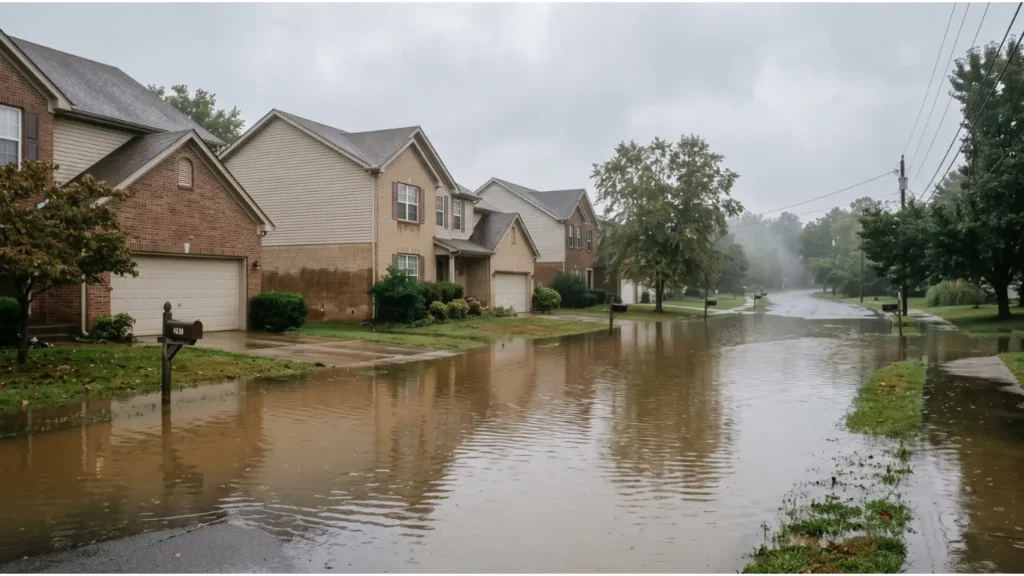
Flooding is the biggest one. Standard hazard insurance coverage does not cover flood damage at all. If a river overflows and water fills your basement, your coverage will do nothing. You need a separate flood insurance policy, either through the National Flood Insurance Program (NFIP) or a private insurer. Many lenders actually require flood insurance on top of hazard insurance if your home sits in a FEMA-designated Special Flood Hazard Area.
Earthquakes are also excluded. If you live in California, Oregon, Washington, or anywhere in earthquake country, you need to purchase a separate earthquake policy. Your standard coverage will not pay a single cent for earthquake damage.
Routine wear and tear is never covered. If your 30-year-old roof starts leaking because it is simply old, that is a maintenance issue not a hazard claim.
Mold, pest infestations, and sewer backups are also typically excluded unless you add specific endorsements or riders. Many homeowners discover this only after filing a claim and getting denied.
| What Is Covered | What Is NOT Covered |
|---|---|
| Fire and smoke | Flooding |
| Windstorm and hail | Earthquakes |
| Lightning | Routine wear and tear |
| Theft (structural damage) | Mold and pest damage |
| Vandalism | Sewer backup (without add-on) |
| Fallen trees | Government action or war |
| Snow and ice weight | Intentional damage by owner |
Named Perils vs. Open Perils: What Is Hazard Insurance Policy Type Do You Have?
This distinction matters enormously when you file a claim but most guides skip right over it. There are two main types of what is hazard insurance policies:
Named perils coverage means your policy only covers damage from events specifically listed in your policy document. If a peril is not on the list, you are not covered. This is the more basic, less expensive option.
Open perils coverage (also called “all-risk” coverage) means your policy covers damage from any cause that is not specifically excluded. The HO-3 policy the standard most American homeowners carry uses open perils for the dwelling structure, which is why it is so widely recommended.
Always check which type applies to your home’s structure. If you are on a named perils policy, there could be serious protection gaps you are not aware of. You can also explore what voluntary life insurance means to see how optional financial protections work in a similar layered way.
Actual Cash Value vs. Replacement Cost in What Is Hazard Insurance Payouts
Here is another detail most people overlook when learning what is hazard insurance the difference in how claims are paid out.
Actual Cash Value (ACV) policies pay the depreciated value of your damaged property today. If your 15-year-old roof gets destroyed by hail, an ACV policy might only pay $4,000 for a roof that would cost $12,000 to replace, because the roof had already lost significant value.
Replacement Cost Value (RCV) policies pay what it actually costs to repair or rebuild using new materials at current prices with no depreciation deducted. This is the type most lenders require, and it is the one that gives you real financial protection.
Always confirm which payout method is written into your policy. The premium difference between ACV and RCV is often small but the difference at claim time can easily run tens of thousands of dollars.
How to File a What Is Hazard Insurance Claim: Step-by-Step
When damage happens, most homeowners feel overwhelmed. Here is a clear, step-by-step process to follow:
Step 1: Prioritize Safety
Make sure you and your family are safe first. If there is a fire, structural collapse risk, or active gas leak, evacuate immediately and call 911.
Step 2: Document All Damage
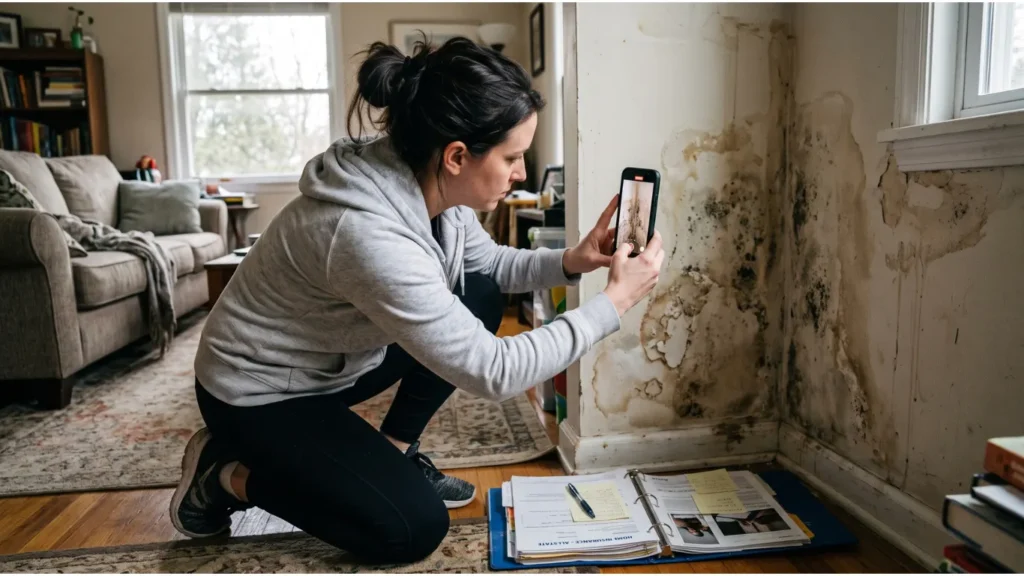
Take photos and videos of everything before you move, remove, or repair anything. The more documentation you have, the stronger your claim. Write down damage details as well.
Step 3: Prevent Further Damage
Most policies require you to take reasonable steps to prevent additional damage after a covered event. Put a tarp over a damaged roof. Board up broken windows. Keep all receipts these costs are often reimbursable.
Step 4: Contact Your Insurance Company
Call your insurer or file online as soon as possible. Most companies have 24/7 claim lines. Provide the date of the event, a description of the damage, and your documentation.
Step 5: Meet the Adjuster
Your insurer will send a claims adjuster to inspect and estimate repair costs. Be present during the inspection. Ask questions and take your own notes.
Step 6: Review the Settlement Offer
Once the adjuster files their report, your insurer will make an offer. Review it carefully against your policy limits and your own repair estimates. If it seems too low, you have the right to negotiate or hire a public adjuster.
Step 7: Complete Repairs
After accepting the settlement, pay your deductible to your contractor and use the insurance payout for covered repairs.
Knowing how to handle temporary displacement costs when your home is uninhabitable after a claim is equally important to understand before you need it.
How Much Does What Is Hazard Insurance Cost?
The cost of what is hazard insurance is rolled into your overall homeowners insurance premium there is no separate line item. The national average homeowners premium for $300,000 in dwelling coverage sits around $2,466 per year as of mid-2025. Your actual rate depends on:
Location
Coastal states, tornado-prone regions, and wildfire zones pay significantly more
Home age and construction type
Older homes and wood-frame construction cost more to insure
Roof age and condition
A new roof can meaningfully lower your premium
Deductible amount
Higher deductibles lower your premium but increase out-of-pocket costs at claim time
Claims history
Multiple prior claims raise your rate
Credit score
Most states allow insurers to use credit-based insurance scores in pricing
If you have a mortgage, your premium is typically paid through an escrow account. Your lender collects a portion of the annual premium with each monthly mortgage payment, then pays the insurer directly when it comes due. This ensures the lender’s collateral is always protected, whether or not you remember to make the payment yourself.
What Is Hazard Insurance vs. Homeowners Insurance: The Real Difference
People regularly wonder whether what is hazard insurance is the same thing as homeowners insurance. The clearest explanation is this:
Homeowners insurance is the complete policy. What is hazard insurance is one important piece inside it.
Your full homeowners policy typically includes five major protections:
Hazard/Dwelling coverage
Protects the home’s structure (this is the hazard part)
Other structures coverage
Covers detached garages, fences, and sheds
Personal property coverage
Protects furniture, electronics, clothing, and belongings
Liability coverage
Pays if someone is injured on your property and sues you
Additional living expenses (ALE)
Covers temporary housing if your home becomes uninhabitable
When your lender asks for proof of this coverage, they are specifically requesting the first item dwelling coverage. In practice, you satisfy that requirement simply by purchasing a standard homeowners policy, which includes hazard coverage automatically.
It is also important to know that hazard insurance is completely different from private mortgage insurance (PMI). PMI protects the lender if you default on the loan. Hazard insurance protects the property itself from physical damage. They serve entirely different purposes and both may be required simultaneously. Understanding the full picture of homeowner insurance options, including home-based business coverage, helps you build the right overall protection stack.
Can You Remove What Is Hazard Insurance from Your Mortgage?
Generally, no not while you still have an active mortgage. Your lender’s requirement stays in place until the loan is fully paid off. There are a few limited exceptions:
- Paying off your mortgage completely frees you from any lender requirement, though keeping coverage is still strongly advisable.
- Refinancing means your new lender will set their own requirements, which may differ slightly.
- Reaching a high equity level may allow some adjustments, but this is rare for dwelling coverage specifically.
If you stop paying for your coverage while still carrying a mortgage, your lender has the legal right to purchase force-placed insurance on your behalf and charge you for it. Force-placed insurance is notoriously expensive and offers minimal protection. It covers the lender’s interest only not yours. That situation alone is reason enough to keep your coverage current. You can learn more about whether financial protection products are legally required and how those requirements work across different types of insurance.
High-Risk Zones: When What Is Hazard Insurance Is Not Enough
If your home is in a high-risk area, standard what is hazard insurance coverage may leave serious gaps. Here is what to watch for:
Flood zones:
If your home sits in a FEMA Special Flood Hazard Area, your lender will require a separate flood policy. Roughly 26% of US homes carry elevated natural disaster risk, making extra coverage more than just smart it is often a legal requirement.
Wildfire zones:
States like California, Colorado, and Oregon have seen standard insurers pull out of high-risk areas entirely. Homeowners in these regions may need state FAIR Plans or surplus lines insurers, often at dramatically higher cost.
Wind and hurricane zones:
Coastal states commonly carry separate wind or hurricane deductibles expressed as a percentage of the dwelling coverage amount. A 2% wind deductible on a $400,000 home means you pay the first $8,000 out of pocket before insurance steps in.
Knowing these nuances puts you well ahead of most homeowners. It is also worth exploring whether multiple coverage types make sense for your financial situation as you build a comprehensive protection plan.
How to Make Sure Your What Is Hazard Insurance Coverage Is Enough
One of the most common and costly mistakes homeowners make is being underinsured. Use this checklist to confirm your what is hazard insurance coverage is adequate:
Check your dwelling coverage limit.
It should reflect the full replacement cost to rebuild from scratch at today’s construction costs in your area — not the market value or purchase price. These numbers can differ significantly.
Review your policy every year
Construction costs have risen sharply due to inflation and supply chain issues. A coverage limit that was sufficient three years ago may be dangerously low today.
Consider an inflation guard endorsement
This automatically adjusts your coverage limit annually to keep pace with rising rebuild costs.
Confirm your deductible is manageable
Make sure you could actually afford to pay it out of pocket if a claim happened tomorrow.
List high-value items separately. Expensive jewelry, art, and electronics fall under personal property protection, not hazard coverage, and often need scheduled endorsements for full replacement coverage. Understanding whether financial protection through life insurance also plays a role in your household security plan is a question worth exploring as your assets grow.
FAQs
Can I choose my own hazard insurance company, or does my lender pick it?
You can choose your own insurer. Lenders only require that you carry adequate hazard insurance coverage at your home's full replacement cost; they do not get to select the company. Shopping around for quotes from different insurers is a smart way to find better rates while still meeting your lender's requirement.
What happens if I let my hazard insurance lapse?
If your coverage lapses while you still have a mortgage, your lender will likely purchase force-placed insurance on your behalf and add the cost to your monthly payment. This type of coverage is usually far more expensive and protects only the lender's financial interest, not your personal belongings or living expenses.
Does hazard insurance cover my furniture and personal belongings?
No, hazard insurance only covers the physical structure of your home, such as the walls, roof, and foundation. Your furniture, electronics, and other belongings fall under a different part of your homeowners policy called personal property coverage, which is a separate coverage limit.
How do I know if my hazard insurance coverage amount is enough?
Your coverage should match your home's full replacement cost, meaning what it would actually cost to rebuild it today using current construction prices, not its market value. Reviewing your policy every year and adding an inflation guard endorsement helps make sure your coverage keeps pace with rising building costs.
Final Takeaway: What Is Hazard Insurance and Why It Belongs in Every Homeowner’s Plan
What is hazard insurance? It is the financial backbone of your homeowners policy. the coverage that steps in when fire, storm, or disaster damages the physical structure of your home. It is what your lender is protecting when they make it a condition of your mortgage. And it is what stands between your family and a devastating out-of-pocket loss when something goes wrong with the most valuable thing you own.
The term sounds technical, but the concept is straightforward. Your home’s structure is protected from covered events, your lender’s collateral is secured, and you have a reliable financial safety net when life takes an unexpected turn.
Now that you know exactly what is hazard insurance and how it works, the smartest next step is to pull out your current homeowners policy and review the dwelling coverage section. Confirm your limit reflects today’s rebuild costs, check your deductible, and verify which perils are covered. If gaps exist, speaking with a licensed independent insurance agent is always the right move.