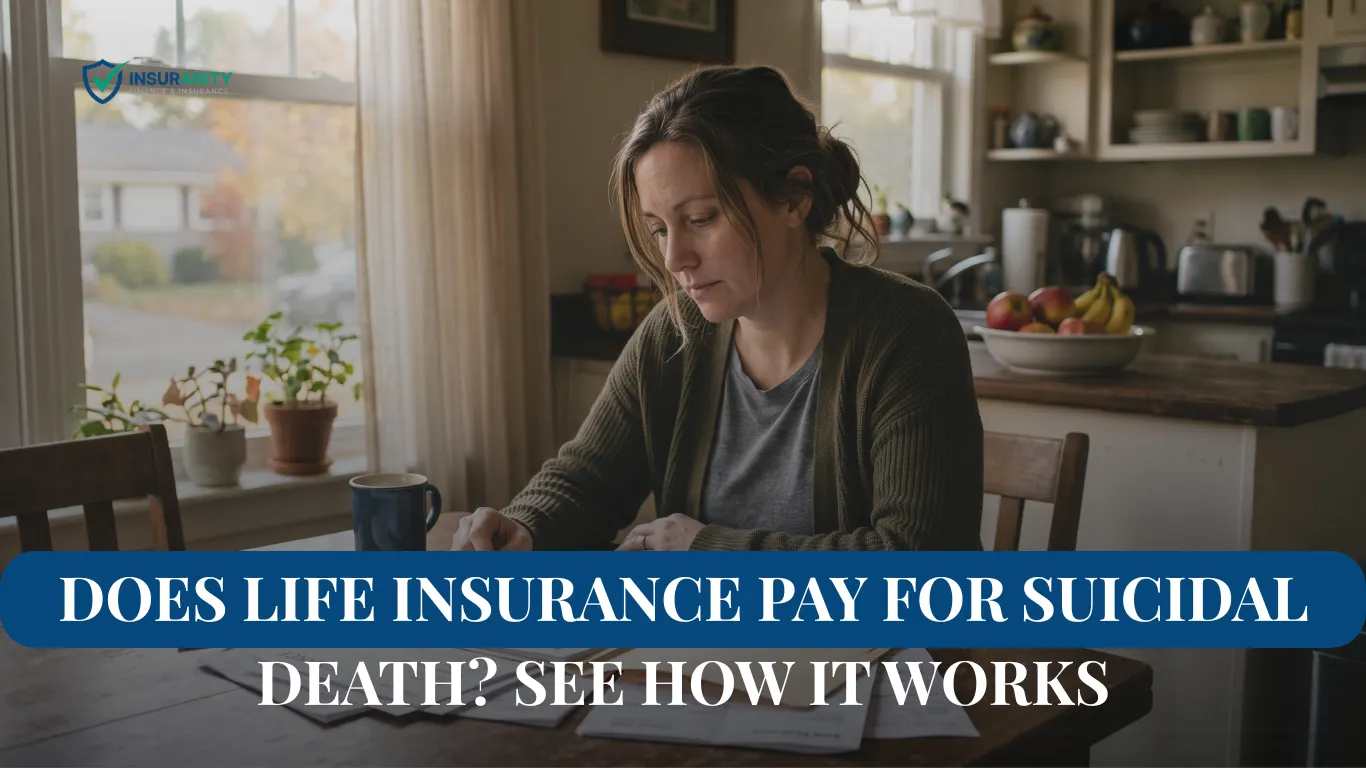
Sarah found the folder three weeks after the funeral. It was sitting in the bottom drawer of her husband’s desk, a thin manila envelope labeled “Policy Documents” in his handwriting. She hadn’t touched it before because she wasn’t ready. When she finally opened it, her first thought wasn’t about grief. It was fear. Her husband had died by suicide, and somewhere in the back of her mind she remembered hearing that insurance companies “don’t pay” in cases like this. She sat at the kitchen table with the papers spread out, wondering if the coverage he’d paid for every month, for years, was about to become worthless when she needed it the most.
If you’re reading this because you’re in a similar spot, or you’re simply trying to understand your own policy before something happens, you’re not alone in asking this question. Does life insurance pay for suicidal death is one of the most searched, most misunderstood topics in the entire insurance world, and the honest answer is more reassuring than most people expect.
The Short Answer, Explained Simply
In most cases, yes. Does life insurance pay for suicidal death almost always comes down to one thing: timing. Nearly every standard life insurance policy includes something called a suicide clause. This clause is a waiting period, usually two years from the day the policy started, during which a claim can be denied if the cause of death is suicide. Once that window has passed, the policy is treated the same as any other death claim, and the death benefit is paid out to the beneficiary in full.
So when people ask does life insurance pay for suicidal death, the real question underneath it is: has enough time passed since the policy began? That single detail decides almost everything.
Why the Suicide Clause Exists in the First Place
It might feel cold to think about insurance rules during such a painful moment, but the reasoning behind the suicide clause is actually protective, not punitive. Insurance companies build policies around risk that can’t be predicted or planned. If someone could buy a policy today and know that suicide would be covered from day one, it would create a troubling financial incentive during a person’s darkest moment. The suicide clause was created to remove that incentive entirely, not to punish grieving families.
This is also why does life insurance pay for suicidal death gets answered differently depending on how long the policy has existed. A policy that was purchased fifteen years ago is treated completely differently than one bought four months ago, even though the wording in the contract is identical.
Breaking Down the Timeline: A Step-by-Step Look

Understanding does life insurance pay for suicidal death is much easier when you see it as a timeline instead of a single yes or no answer. Here’s how it typically plays out.
Step 1: The policy is issued
The suicide clause and the contestability period both begin on this exact date, not the date the application was filled out.
Step 2: The first one to two years pass
This is the exclusion window. If a death by suicide happens during this stretch, the insurer is legally allowed to deny the full death benefit.
Step 3: A claim is filed
The beneficiary submits a death certificate and claim form. If the death occurred within the exclusion period, the insurer will investigate the date the policy started and the date of death down to the day.
Step 4: The insurer reviews the file
During this stage, records are pulled, medical history may be requested, and the circumstances of death are confirmed by the coroner’s report.
Step 5: A decision is issued
If the exclusion period had already ended, the death benefit is paid, usually within thirty to sixty days. If the death happened inside the exclusion window, the insurer typically returns the premiums paid, sometimes with interest, instead of paying the full benefit.
This is the exact mechanism behind does life insurance pay for suicidal death, and it’s a lot more procedural than emotional, even though the situation itself is deeply personal.
What Happens If the Waiting Period Has Already Passed
This is the part most people miss. Once the suicide clause period ends, usually after two years, the policy is fully active for any cause of death, including suicide. The insurer cannot deny the claim simply because the cause of death was self-inflicted. At that point, does life insurance pay for suicidal death has a very clear answer: yes, the same as it would for a heart attack, a car accident, or any other cause listed on a death certificate.
This is why financial professionals often stress that the value of a term life insurance policy or a whole life insurance policy grows more secure the longer it stays active. If you’re weighing your options and wondering whether coverage is worth maintaining year after year, it can help to look at how a term life insurance policy compares to permanent coverage over the long run, since the type of policy can affect premiums, cash value, and how the contract behaves over time.
A Quick Comparison Table
| Situation | Suicide Clause Status | Typical Outcome |
|---|---|---|
| Death occurs 6 months after policy starts | Inside exclusion period | Premiums refunded, death benefit denied |
| Death occurs 18 months after policy starts | Inside exclusion period (most states) | Premiums refunded, death benefit denied |
| Death occurs 3 years after policy starts | Outside exclusion period | Full death benefit paid |
| Death occurs under a group employer policy with no clause | No suicide clause exists | Full death benefit paid regardless of timing |
| Death occurs under military SGLI coverage | No suicide clause exists | Full death benefit paid regardless of timing |
Group Life Insurance and Employer Coverage Work Differently
Not every policy handles this the same way. If your coverage came through an employer, it may not include a suicide clause at all. This is one of the biggest gaps in most articles covering does life insurance pay for suicidal death, because group policies are structured differently than individually purchased ones. Employer sponsored plans are often issued without medical underwriting, which changes how insurers price and structure risk. Some employees also add supplemental coverage through work to increase their payout amount, and it’s worth checking what supplemental life insurance actually covers if you’re relying on a workplace plan as your main safety net.
Military and Government Coverage: A Notable Exception
Servicemembers’ Group Life Insurance, commonly known as SGLI, generally does not include a suicide exclusion. The cause of death isn’t factored into the payout decision at all. The same is often true for certain federal employee group policies. This matters a great deal to military families asking does life insurance pay for suicidal death, because the answer for them is frequently a straightforward yes, regardless of how new the coverage is.
When a Claim Can Still Be Denied, Even After the Waiting Period
The suicide clause isn’t the only thing that can affect a payout. Even after the exclusion period has passed, a claim can be denied if the applicant lied on the original application. This is called material misrepresentation, and it’s handled through something called the contestability period, which usually runs for the same two years as the suicide clause but covers a much wider range of issues, like undisclosed health conditions or false statements about smoking or medical history.
This distinction matters because people often assume does life insurance pay for suicidal death is only about the suicide clause. In reality, an insurer can still deny a claim for reasons completely unrelated to how someone died, if the original paperwork wasn’t accurate. This is one reason financial advisors recommend being fully honest during the application, since it protects the payout your family will eventually rely on.
What Beneficiaries Should Actually Do

If you’re in the position Sarah was in, sitting with paperwork you don’t fully understand, here’s a simple path forward.
- Locate the policy documents and confirm the exact date coverage began.
- Request a certified death certificate, since insurers require this before reviewing any claim.
- Contact the insurance company directly rather than assuming anything based on what you’ve read online.
- Ask specifically about the contestability period and whether it has already expired.
- Keep copies of everything you submit, including dates and names of anyone you speak with.
- Consider speaking with a licensed life insurance agent if the process feels overwhelming. A licensed life insurance agent can walk through the specific wording of the policy with you and explain what applies to your situation.
Does the Payout Get Taxed?
This question comes up constantly alongside does life insurance pay for suicidal death, and the answer brings some relief during an already difficult time. Death benefits are generally not counted as taxable income for the beneficiary. However, there are exceptions depending on how the policy was structured, so it can help to understand whether a payout could ever be taxable before assuming the full amount is untouched.
Common Myths That Need to Be Cleared Up
A lot of confusion around does life insurance pay for suicidal death comes from outdated information being repeated online. A few myths deserve to be corrected.
Myth: Suicide is never covered
This is false. Once the exclusion period passes, it’s treated like any other cause of death.
Myth: The insurer keeps all the premiums if they deny the claim
In most cases, premiums paid are refunded to the beneficiary, sometimes with added interest, even during a denial.
Myth: Every policy has the same waiting period
The length varies by state and insurer, ranging from one to three years, though two years is most common.
Myth: Mental health history disqualifies a beneficiary from receiving payment
A history of depression or previous treatment does not, by itself, affect whether does life insurance pay for suicidal death results in a yes or no. What matters is the timing of death relative to the policy’s start date, not the policyholder’s mental health history.
Thinking About Coverage for Your Own Family

If you’re reading this while considering a policy for yourself, it’s worth thinking beyond just this one clause. Life insurance exists to protect the people who depend on you financially, whether that means figuring out how much coverage your household actually needs or exploring how a policy helps protect your family’s income if something unexpected happens. Parents in particular often benefit from reviewing how coverage decisions change once you have children, since the numbers that made sense at twenty five rarely make sense at thirty five with a mortgage and two kids in the picture.
Some people also choose to hold more than one policy at the same time, layering a workplace plan with an individual one to increase total coverage. Others lean toward permanent policies because cash value accumulates over the life of the policy, giving them a living benefit alongside the death benefit. And for many families, the bigger underlying question isn’t about suicide clauses at all, it’s simply whether life insurance is worth the monthly cost in the first place, which is a completely reasonable thing to sit down and calculate.
FAQs
What is a suicide clause?
It's a rule in the policy. It says the insurance company will not pay if the person dies by suicide within the first one to two years.
How long is the waiting period?
Usually two years. Some states use one year, some use three, but two years is most common.
Does military life insurance cover suicide?
Yes. Military coverage like SGLI usually pays no matter how someone died.
Can the insurance company say no after the waiting period ends?
Only if someone lied on the application. If everything was true, the payout is given.
Bringing It Back to Sarah
Sarah eventually called the insurer listed on her husband’s policy. The representative asked one question before anything else: when did the policy start? It had been active for just over four years. The suicide clause period had ended long before. Two months later, the death benefit was paid in full, exactly as the contract promised when he first signed it.
Her story isn’t unusual. Most policies that have been active for more than two years pay out without complication, regardless of the cause of death. Does life insurance pay for suicidal death is a question wrapped in fear, but for the majority of policyholders whose coverage has existed for more than a couple of years, the answer is simply yes.
If you or someone you know is struggling right now, please know that support is available. The 988 Suicide & Crisis Lifeline offers free, confidential help twenty four hours a day, and reaching out is never a sign of weakness.