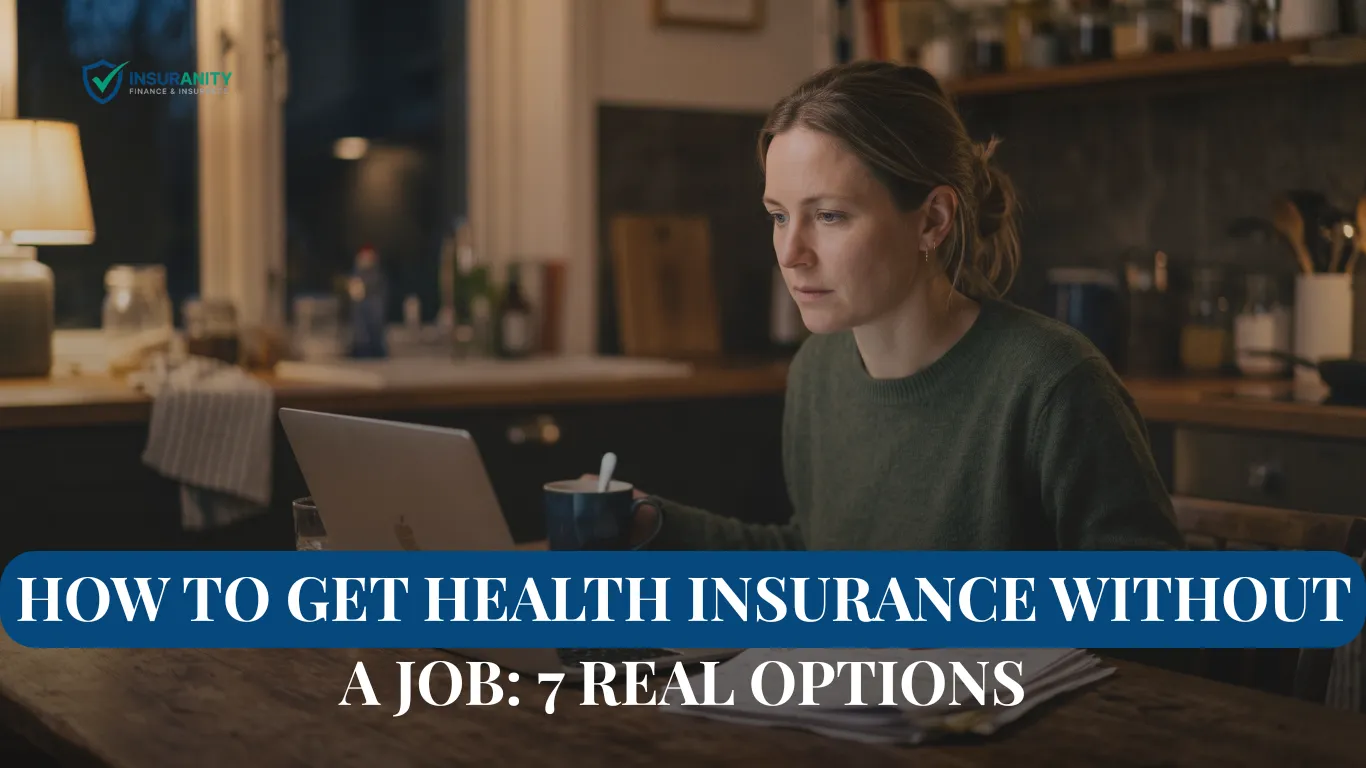
Maria lost her job on a Tuesday afternoon. By Wednesday morning, the panic wasn’t about rent or groceries. It was about her daughter’s asthma inhaler. No job meant no company health plan, and no health plan meant a $300 prescription she couldn’t afford. That night, she sat at her kitchen table with her laptop, typing the same question millions of Americans type every year: how to get health insurance without a job. What she found surprised her. She had more options than she thought, and she had them within days, not months.
If you’re in that same spot right now, take a breath. Losing a paycheck does not mean losing access to care. This guide walks through exactly how to get health insurance without a job, using the same options that helped Maria and thousands like her get covered again, often for less money than they expected.
Why Losing a Job Doesn’t Mean Losing Your Health Coverage
Health insurance in the United States has traditionally been tied to employment, and that link creates a lot of fear when a job disappears. But the system was built with gaps in mind. Federal law, state programs, and private insurers all offer paths that don’t require a pay stub. Understanding how to get health insurance without a job simply means knowing which door to walk through first, based on your income, your age, your family situation, and how soon you need coverage to start.
This is also where a lot of people get stuck. They assume insurance without a job means expensive insurance, or worse, no insurance at all. That assumption is usually wrong. Subsidies, income based programs, and short coverage windows exist specifically to soften a job loss, and they are more generous than most people expect.
The First Three Things to Do This Week

Before diving into each option for how to get health insurance without a job, there are three quick moves that make everything else easier.
- Find your last day of coverage. Ask your former HR department exactly when your old plan ends. Some plans run through the end of the month; others end the day you leave.
- Check your household income. Several programs are based on income, not employment status, so a rough number helps you figure out where you qualify.
- Mark your 60 day window. Losing job based coverage is considered a qualifying life event, which opens a Special Enrollment Period. You typically get 60 days to enroll in a new plan outside the normal open enrollment period.
Once those three things are handled, the real question becomes simple: how to get health insurance without a job that fits your budget and your timeline. Here are the seven real paths people use.
7 Real Ways to Get Health Insurance Without a Job
| Option | Best For | Typical Cost | How Fast |
|---|---|---|---|
| COBRA | Keeping the exact same plan and doctors | High, full premium plus a small fee | Fast, retroactive |
| ACA Marketplace | Most people, especially with reduced income | Low to moderate with subsidies | A few days |
| Medicaid | Low income households | Free or very low cost | A few days to weeks |
| CHIP | Children in moderate income families | Free or low cost | A few days to weeks |
| Spouse’s or parent’s plan | Married couples, adults under 26 | Employer dependent rate | Fast |
| Short term health insurance | Temporary bridge coverage | Low | Fast, often same week |
| Buying directly from an insurer | Healthy individuals wanting simple plans | Moderate | A few days |
This table alone answers the surface level question, but each option comes with tradeoffs worth understanding before you commit.
Option 1: COBRA Keeps Your Old Plan Alive
COBRA lets you stay on your former employer’s group health plan for up to 18 months, sometimes longer depending on the circumstances. Nothing about the coverage changes. Same doctors, same prescriptions, same network. That continuity is the entire appeal.
The catch is cost. Your employer used to pay a large chunk of that premium, and once you’re on COBRA, that contribution disappears. You’re billed the full premium plus a small administrative fee, which is why COBRA is often the most expensive of the seven options. It tends to make sense for people mid treatment, people with ongoing specialist care, or anyone who simply needs a short bridge and can absorb the cost for a month or two. If your monthly premium feels overwhelming, it helps to first understand how premiums are actually calculated before comparing COBRA against other routes.
Option 2: The ACA Marketplace Is Usually the Best Starting Point

For most people asking how to get health insurance without a job, the Affordable Care Act Marketplace is the first stop, and for good reason. Plans are sold based on income, not employment, and subsidies are calculated using your expected annual income for the year, not what you earned while employed.
This is where Maria ended up. Her household income dropped once she lost her job, which meant her subsidy went up. She ended up paying less for a Marketplace plan than she had been contributing to her old employer plan. That’s not unusual. An estimated majority of Marketplace shoppers qualify for some form of financial help, and many pay a very small amount for their monthly premium once subsidies are applied.
To enroll, you’ll need your Social Security number, household income estimate, and a list of your household size. The application is done online through your state’s exchange or the federal exchange, and coverage can often start within days of a qualifying event like a job loss.
Option 3: Medicaid Is Based on Income, Not a Job
Medicaid is a joint federal and state program, and it’s one of the most overlooked answers to how to get health insurance without a job, mostly because people assume they won’t qualify. Eligibility is determined by income and household size, not by whether you’re employed. If your income has dropped since losing your job, it’s worth checking, because the thresholds are often higher than people expect, especially in states that expanded Medicaid coverage.
Medicaid coverage is comprehensive and, in most cases, free or very low cost. There’s no enrollment period limit either. You can apply for Medicaid any time of year, which makes it a flexible safety net compared to other options tied to specific windows.
Option 4: CHIP Covers the Kids Even If You Can’t Afford Private Coverage
If your income is too high for Medicaid but too low for a comfortable private plan, the Children’s Health Insurance Program, known as CHIP, is built exactly for that gap. CHIP covers children under 19 and, in some states, pregnant individuals. Costs vary by state, but they’re generally low, and some states charge nothing at all.
This is a piece many general guides skip entirely, treating it as a footnote under Medicaid, but for a parent staring down a coverage gap for their kids specifically, CHIP deserves its own conversation, not a passing mention. If your household is trying to figure out how to get health insurance without a job while also covering multiple kids, checking your state’s CHIP portal is often faster than starting a full Marketplace application from scratch.
Option 5: A Spouse’s Plan or a Parent’s Plan
Sometimes the simplest answer to how to get health insurance without a job isn’t a new application at all, it’s joining a plan someone in your life already has. If you’re married, a job loss is a qualifying event that lets you join your spouse’s employer plan outside of the normal open enrollment window, even if you missed it originally.
If you’re under 26, you can typically be added to a parent’s employer sponsored plan regardless of whether you’re working, in school, or living independently. This rule has helped a huge number of young adults avoid a coverage gap entirely during career transitions. If you’re close to that age cutoff, it’s worth reviewing exactly how long you can stay on a parent’s plan before your birthday changes the math.
Option 6: Short Term Health Insurance for a Quick Bridge
Short term health insurance is designed for exactly the situation you’re in. Coverage typically runs anywhere from 30 to 90 days, sometimes longer, and can often start within a day or two of applying. Premiums are usually lower than Marketplace plans because the coverage itself is more limited.
That limitation matters. Short term plans often exclude preexisting conditions and may not cover preventive care the way ACA compliant plans do. They also don’t count as minimum essential coverage in every state. Think of this option as a stopgap while you sort out a longer term plan, not a permanent replacement. It fits well if you’re starting a new job in a few weeks and just need something in place until your new employer’s plan kicks in. Anyone searching for how to get health insurance without a job on short notice, say within 48 hours, will usually find short term coverage is the quickest to activate of all seven options.
Option 7: Buying a Plan Directly From an Insurer
You don’t have to go through the Marketplace at all. Insurance companies sell individual and family plans directly, sometimes called off exchange plans. These plans can offer similar coverage to Marketplace plans, though you won’t be eligible for subsidies if you buy this way. It’s generally the right move only if your income is too high to qualify for financial help, since otherwise you’re paying full price for something the Marketplace would have discounted. For higher earners specifically, this direct route is often the realistic answer to how to get health insurance without a job, since subsidy based options simply won’t apply. Reading up on how private health plans actually work is useful here, since off exchange plans follow the same underlying structure as any private policy.
How Much Coverage Without a Job Actually Costs
Cost is usually the deciding factor in how to get health insurance without a job, and it’s worth being honest about it. COBRA tends to sit at the top of the price range because you’re covering the full premium yourself. Buying directly from an insurer without subsidies lands somewhere in the middle. Marketplace plans with subsidies and Medicaid sit at the low end, often costing far less than people assume before they run the numbers.
A quick gut check helps here too. If you’ve ever looked at what a single urgent care visit costs without insurance, or priced out an MRI without coverage, the monthly premium for even a modest plan starts to look like the cheaper option compared to one bad accident or diagnosis. Going without any coverage at all is rarely the money saving move it appears to be on paper.
Common Mistakes People Make While Figuring Out How to Get Health Insurance Without a Job
A few patterns show up again and again when people work through how to get health insurance without a job on their own. People wait too long and miss their 60 day Special Enrollment window, forcing them to wait for the next open enrollment period. People assume they make too much for Medicaid without actually checking their state’s threshold. People default to COBRA out of habit because it feels familiar, without comparing it against a subsidized Marketplace plan that might cost a fraction as much.
Another overlooked step is understanding whether you’re required to carry coverage at all in your state, since a small number of states still enforce their own mandates separate from the federal rules. It’s worth confirming whether you’re legally required to have health insurance in your state, along with what penalties, if any, apply for going uninsured, since the answer varies depending on where you live.
If you’re juggling a transition period where two plans might briefly overlap, such as ending COBRA the same week a new employer plan starts, it also helps to understand how running two health plans at once actually works, and once you no longer need the older plan, how to properly cancel coverage you’re not using anymore so you’re not paying for two policies by accident.
FAQs
How fast can I get health insurance after losing my job?
Some options, like short term insurance, can start within a day or two. Marketplace and COBRA coverage can often begin within days of your enrollment.
Is health insurance free if I have no income?
Medicaid is often free or very low cost for eligible low income households. CHIP is also free or low cost in many states for children.
What happens if I miss the 60 day enrollment window?
You'll typically need to wait for the next open enrollment period, unless another qualifying life event occurs that reopens a special enrollment window.
Is COBRA or the ACA Marketplace cheaper?
The ACA Marketplace is usually cheaper because subsidies lower the premium based on income. COBRA requires paying the full premium yourself, which is often more expensive.
Getting Covered Faster Than You Think

Maria’s story didn’t end at the kitchen table. She applied through her state Marketplace two days after her job ended, qualified for a subsidy that dropped her premium to under $50 a month, and had an active plan before her daughter’s next refill was due. Her situation wasn’t unique. It’s the outcome most people land on once they actually work through the options instead of freezing up.
The full picture on navigating health insurance during a period of unemployment covers even more ground if you want to go deeper into specific state programs and timing rules. But the core answer to how to get health insurance without a job rarely comes down to a single perfect plan. It comes down to matching your income, your timeline, and your health needs to one of the seven paths above, and moving on it before the clock on your enrollment window runs out.
Whatever your situation looks like right now, know this. How to get health insurance without a job is a solvable problem, not a permanent condition. Millions of people have worked through this exact transition and came out the other side covered, often for less than they were paying before. You have more paths open to you than the panic of a job loss makes it feel like in the moment, and picking any one of these seven options today puts you ahead of where you were yesterday.
For the most current subsidy calculations and state specific eligibility rules, the official Healthcare.gov coverage tool is worth checking directly, since thresholds are adjusted periodically and can shift the numbers in your favor.