You wake up at 11 PM. Your throat is on fire, your ear feels like it’s about to explode, and your regular doctor can’t see you for another three days. The ER feels like overkill, and the bill that comes with it definitely is. So you think: urgent care. Then comes the next thought. How much is urgent care without insurance going to cost me?
That question stops a lot of people cold. And honestly, it’s the right question to ask before you walk through the door, not after.
The short answer is this: how much is urgent care without insurance costs depends on what you need, where you live, and which clinic you walk into. Most basic visits run between $100 and $300. But there’s a lot more to that number, and knowing the details before you go can save you real money.
What Does a Basic Urgent Care Visit Actually Cost Without Insurance?
How Much is Urgent Care Without Insurance? For a straightforward visit, a sore throat, a mild ear infection, a minor cut, a bad cough, how much is an urgent care visit without insurance typically fall between $100 and $200? That base fee usually covers the provider’s time, the physical assessment, and a basic diagnosis.
Think of it like a flat entry fee. You pay it just to be seen. What happens next determines how much the bill climbs.
Here’s a realistic breakdown of what a basic visit covers at that price:
- The provider is listening to your symptoms
- A physical exam
- A diagnosis and care plan
- A prescription (if needed, though the medication itself is billed separately)
Some clinics offer a flat self-pay rate. Others break it into tiers based on how complex your visit gets. That tiered model is worth understanding because it’s how a $165 visit quietly turns into a $235 one.
Why the Total Goes Up: Services That Add to Your Bill
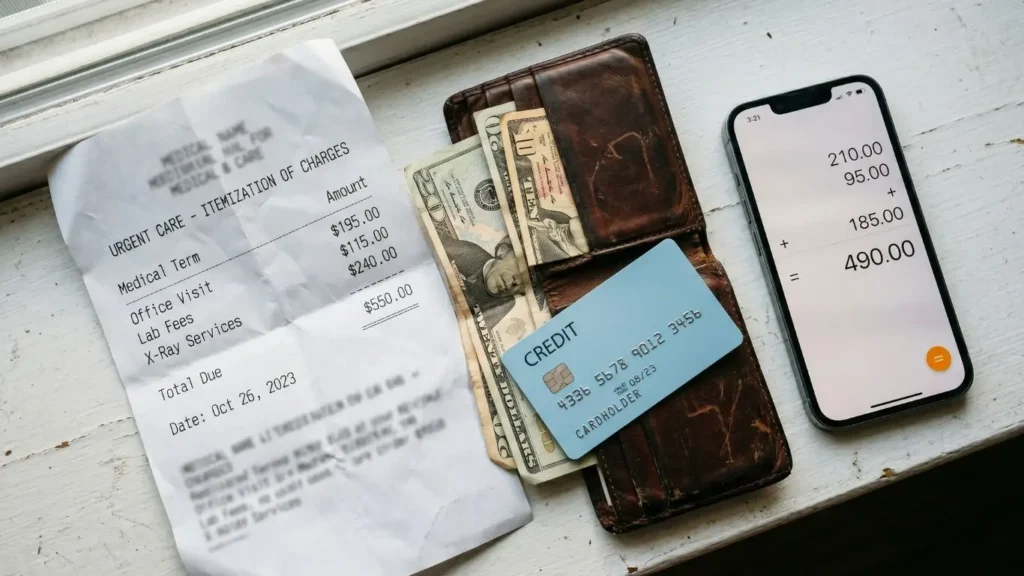
How much is a visit to urgent care without insurance doesn’t stop at the exam room fee. Once you factor in tests, procedures, or treatments, the number changes fast.
| Service | Estimated Out-of-Pocket Cost |
|---|---|
| Stitches/sutures | $100–$200 |
| Strep or flu rapid test | $25–$60 |
| Urinalysis | $30–$60 |
| X-ray (one view) | $100–$200 |
| Blood panel / CBC | $50–$150 |
| Wound cleaning and bandaging | $25–$75 |
| Stitches / sutures | $150–$300 additional |
| Breathing treatment | $50–$100 |
| Prescription on-site | $10–$80 |
| IV fluids | $150–$300 |
So if you walk in for a sprained ankle and the provider orders an X-ray, how much is urgent care without insurance for that visit could be around $300–$400 total. That’s still a fraction of what an ER would charge for the same thing. Emergency rooms regularly bill $1,000 to $3,000 for comparable care.
How Much is a Physical at Urgent Care Without Insurance?
How Much is Urgent Care Without Insurance? Not everyone goes to urgent care because something went wrong. Some people need a sports physical for their kid, a DOT physical for work, or just a general checkup because their primary care doctor is booked for weeks.
How much is a physical at urgent care without insurance is usually around $100–$150 for a basic preventive exam. Sports physicals tend to be on the lower end, sometimes $50–$75 at walk-in clinics. DOT physicals, required for commercial drivers, run $80–$150 depending on the location.
Take Marcus, a self-employed plumber in Houston. He needed a DOT physical renewed, but had no insurance at the time. He called three clinics before his appointment. The first quoted $145, the second said $110, and the third, an independent clinic not attached to a hospital system, offered $85. Same physical, same paperwork. He saved $60 just by spending 10 minutes on the phone.
That small habit, calling ahead and asking, is one of the most underused cost-saving moves for uninsured patients.
How Much is STD Testing at Urgent Care Without Insurance?
This is one of the most-searched sub-questions on this topic, and it deserves a direct answer.
How much is STD testing at urgent care without insurance depends heavily on which tests are ordered. A single-test panel for chlamydia or gonorrhea typically runs $50–$150. A comprehensive panel covering 8–10 infections can reach $200–$400 at standard urgent care rates.
Some clinics offer bundled self-pay rates for STD panels. Community health centers and federally qualified health centers (FQHCs) often charge significantly less for the same lab work, sometimes on a sliding scale based on income, with costs as low as $15–$25 per test. If you’re uninsured and cost is a serious concern, it’s worth looking up your nearest FQHC before defaulting to a standard urgent care center.
HIV tests range from $30–$100 depending on whether it’s a rapid result or a standard lab draw. Herpes testing costs roughly $50–$80. Hepatitis B and C panels typically run $30–$90 each.
Urgent Care vs. Emergency Room: The Cost Gap Is Real
A lot of uninsured people end up in the ER, not because they need emergency care, but because they don’t realize urgent care is an option, or they’re not sure it’s open.
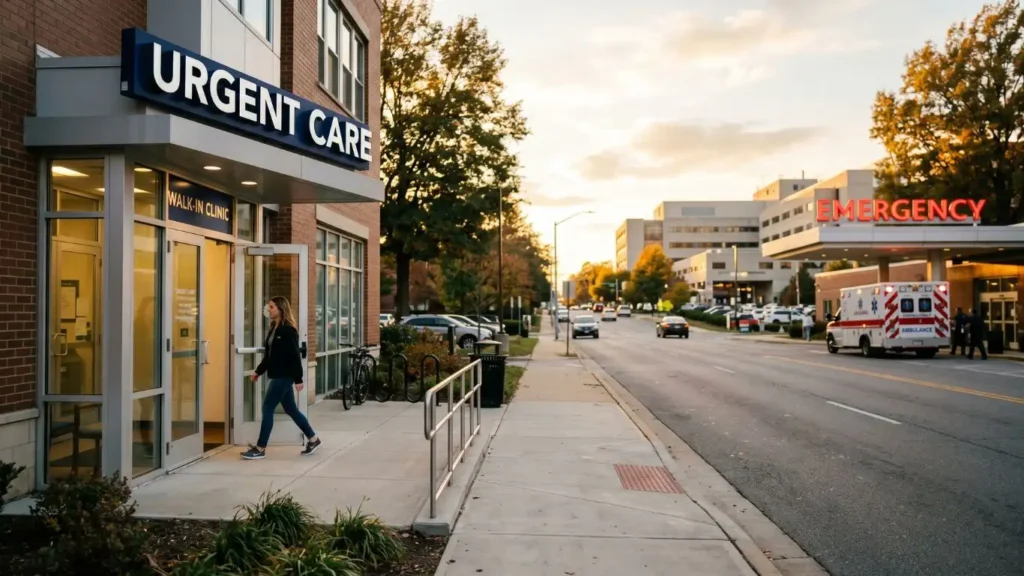
Here’s what the cost gap looks like in plain numbers:
| Condition | Urgent Care (Uninsured) | ER (Uninsured) |
|---|---|---|
| Sprained ankle | $200–$350 | $1,200–$2,500 |
| Sore throat / strep | $100–$160 | $700–$1,500 |
| UTI | $100–$150 | $800–$1,500 |
| Minor cut needing stitches | $200–$400 | $1,500–$3,000 |
| Ear infection | $100–$150 | $600–$1,200 |
How much is urgent care without insurance compared to the ER? On average, you’re looking at saving 60–80% on the same non-emergency care. That’s not a small difference.
The one caveat: urgent care can’t handle everything. Chest pain, difficulty breathing, suspected stroke, severe allergic reactions, or any life-threatening condition should go straight to the ER. Urgent care is built for the middle ground, not emergencies, but things that need same-day attention.
What Drives Cost Differences Between Clinics?
How much is a urgent care visit without insurance isn’t a single number because clinics operate very differently depending on ownership structure, location, and services offered.
Hospital-affiliated clinics tend to charge more. Because they’re connected to a larger health system, their billing structure often mirrors hospital pricing rather than standalone clinic pricing. An uninsured patient at a hospital-affiliated urgent care might pay $100–$200 more for identical care compared to an independent clinic down the street.
Geographic location plays a role, too. Urban areas, such as New York, Los Angeles, and Chicago, run about 20–40% higher than rural or suburban clinics for the same services. That’s overhead passed on to the patient.
Standalone, independent clinics are often the most affordable option for uninsured patients. They’re not bound to larger system pricing, and many actively advertise self-pay rates to attract cash-pay patients.
This is why calling ahead matters. Checking whether you’re dealing with a hospital-affiliated clinic or an independent one can make a real difference to your out-of-pocket cost.
If you’re also thinking about what longer-term coverage might look like, understanding what a health insurance premium actually is is a useful starting point before you compare plan options.
How to Lower What You Pay at Urgent Care Without Insurance
If you’re uninsured and facing an urgent care bill, you’re not without options. Several strategies can reduce what you actually pay.
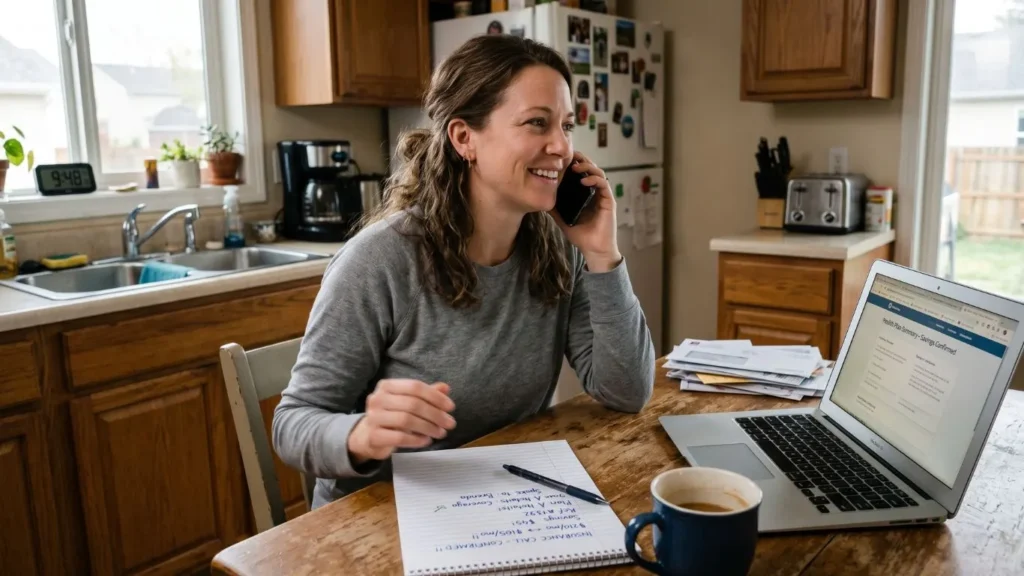
1. Ask for the self-pay or cash-pay rate before the visit starts
Many clinics offer a 10–30% discount for patients who pay upfront or at the time of service. This rate often isn’t advertised. You have to ask for it. Some facilities call it a “prompt pay discount.” Others just reduce the fee when you confirm you’re paying cash.
2. Call multiple clinics and compare prices
This takes 10–15 minutes and can save $50–$150. Prices are not standardized. The same sore throat visit can cost $115 at one clinic and $195 at another a mile away.
3. Ask about a sliding scale or financial assistance
Community health centers and federally qualified health centers offer income-based pricing. If your income is below 200–250% of the federal poverty level, you may qualify for significantly reduced rates. These clinics provide the same quality of care as any walk-in facility.
4. Skip hospital-affiliated urgent care when possible
As covered above, those locations tend to bill at hospital rates. An independent clinic is usually the better choice for uninsured patients comparing costs.
5. Consider telehealth for minor issues
A virtual visit for something straightforward, a sinus infection, a rash you can show on camera, or a prescription refill typically costs $40–$100. That’s well below how much is urgent care without insurance for an in-person visit, and most telehealth platforms see patients within the hour.
6. Ask about a payment plan before you leave
Most urgent care clinics will work with uninsured patients on installment payments. If the bill is $300 and that’s not manageable upfront, ask to split it into three or four payments. Many clinics offer this with no interest and no formal credit check.
The Self-Pay Tier System: What It Means For You
Some larger urgent care networks use a tiered pricing model for self-pay patients. It works like this:
- Tier 1 / Simple visit: Basic exam, diagnosis, up to two in-house lab tests, or one oral prescription. Typically $165–$185.
- Tier 2 / Moderate visit: Everything in Tier 1, plus one or two X-rays or injectable medications. Typically $225–$250.
- Tier 3 / Complex visit: Multiple X-rays, additional labs, IV medications, or more intensive care. Typically $300–$400.
Knowing this system exists helps you understand why how much is urgent care without insurance can change mid-visit. If your provider adds a test or an injection, your bill may move from Tier 1 to Tier 2 automatically. Before any additional service is performed, it’s reasonable to ask: “Will this change my pricing tier?”
That one question can prevent bill shock.
What Urgent Care Can and Cannot Treat
How Much is Urgent Care Without Insurance? Part of getting the most value out of an urgent care visit is knowing when it’s the right call. Urgent care handles a wide range of conditions well.
Conditions suited for urgent care:
- Sore throat, strep, tonsillitis
- Ear infections
- Sinus infections
- UTIs and bladder infections
- Mild to moderate asthma flare-ups
- Colds, flu, COVID
- Minor cuts, burns, and lacerations
- Sprains and fractures (X-ray capable facilities)
- Skin rashes, minor allergic reactions
- STD testing and treatment
- Sports and school physicals
- Minor eye and ear issues
When to go to the ER instead:
- Chest pain or pressure
- Difficulty breathing
- Signs of stroke (facial drooping, arm weakness, speech difficulty)
- Severe abdominal pain
- High fever in infants under 3 months
- Suspected poisoning or overdose
- Severe head trauma
Going to the ER for a condition that urgent care could handle costs you significantly more out of pocket, and given that you’re already uninsured, that bill matters. Making the right choice before you leave home can save hundreds of dollars.
It’s also worth understanding how costs relate to your broader health coverage picture. If you’re between jobs or evaluating options, knowing whether it’s illegal not to have health insurance in your state can affect your decisions. Some states have their own individual mandate rules.
Real Scenarios: What People Actually Pay
Sometimes the best way to understand how much is urgent care without insurance is to look at what real visits tend to cost from start to finish.
Scenario 1: Simple sore throat: Exam + rapid strep test + oral antibiotic prescription = $100–$160 total.
Scenario 2: Sprained ankle: Exam + two-view X-ray = $200–$350 total. No fracture found, no additional treatment needed.
Scenario 3: UTI: Exam + urinalysis + antibiotic prescription = $115–$175 total.
Scenario 4: Minor laceration: Exam + wound cleaning + four stitches = $250–$450 total, depending on complexity.
Scenario 5: STD testing (basic panel): Exam (sometimes waived for testing-only visits) + chlamydia/gonorrhea test = $75–$175 total.
Scenario 6: Sports physical for a child: No lab work, no treatment, flat physical fee = $50–$100 total.
These ranges give you a realistic anchor for budgeting a visit before you go.
Telemedicine: A Cheaper Alternative Worth Considering
For issues that don’t need a physical examination, prescription refills, respiratory symptoms, skin concerns you can photograph, basic questions about medication, a telehealth visit often costs $40–$100 and connects you with a licensed provider the same day.
How much is urgent care without insurance for an in-person visit versus telehealth? In-person averages $150–$250 for a basic visit. Telehealth averages $50–$75 for the same conditions that can be treated remotely. If you’re deciding between the two and your condition doesn’t require an X-ray, physical manipulation, or an on-site test, telehealth can cut your cost by more than half.
That said, telehealth isn’t always the right call. If your provider needs to look in your ear, test a wound, or physically assess a potential fracture, you need to be there in person.
Community Health Resources for Uninsured Patients
If how much is urgent care without insurance is a recurring concern for you rather than a one-time situation, it’s worth knowing what longer-term options exist at a lower cost.
Federally Qualified Health Centers (FQHCs) operate on a sliding fee scale based on income. They provide primary and urgent care, lab work, prescriptions, and preventive services. Many people who don’t qualify for Medicaid still qualify for reduced-cost care at an FQHC.
Free clinics serve uninsured patients at no cost and are available in most mid-to-large cities. Services vary, but many offer basic urgent care, chronic disease management, and preventive screenings.
State-run programs vary by state. Some states have expanded Medicaid eligibility broadly. Others have specific programs for low-income adults who don’t meet standard Medicaid criteria. Checking your state’s health department website takes five minutes and could open up coverage options you didn’t know existed.
If you’re currently uninsured and worried about the cost of an unexpected medical need, understanding your options around canceling or modifying health insurance may help you think through when switching plans makes sense.
A Quick Checklist Before You Go to Urgent Care Without Insurance
Before you walk into a clinic, run through this list. It takes five minutes and can save you real money.
- Call ahead: ask what the self-pay or cash-pay rate is for the type of visit you need.
- Ask if they’re hospital-affiliated: if yes, consider calling an independent clinic too.
- Describe your symptoms specifically: the more precise you are, the less likely unnecessary tests are to be ordered.
- Ask before every additional test or procedure: “Will this change my pricing tier or my total bill?”
- Ask about discounts for same-day payment: many clinics give 10–30% off for cash payment at the time of service.
- Ask about payment plans if the bill is high: most clinics will split the bill over 2–4 payments at no interest.
- Compare telehealth: if the issue doesn’t need a physical exam, a virtual visit at $40–$100 may be the smarter move.
FAQs
Does urgent care bill you later if you don't have insurance, or do you pay upfront?
It depends on the clinic. Most urgent care centers require payment at the time of service for uninsured patients. However, some facilities will see you first and send a bill afterward, especially if additional lab work is sent to an outside lab, which gets billed separately after results come back. In those cases, you may pay the visit fee upfront and receive a second bill for the lab component days later. The safest approach is to ask the front desk before your visit: "Will I receive any additional bills after today, or is today's payment the full amount?"
Can you negotiate an urgent care bill after the visit if you're uninsured?
Yes, and more people should do it. Many urgent care clinics, especially independent ones, are open to reducing the bill for uninsured patients who ask. You can call the billing department after receiving your invoice and explain that you're paying out of pocket. Ask specifically whether they offer a self-pay discount, a cash-pay reduction, or a hardship adjustment. Nonprofit facilities are legally required to offer financial assistance programs. Even for-profit clinics often reduce bills by 10–30% for patients who ask directly and offer to pay a lump sum. If the full amount isn't manageable, ask about a no-interest installment plan spread over 3–6 months.
Does getting care at urgent care without insurance affect your credit score?
A single urgent care visit paid on time won't affect your credit at all. Problems start if you receive a bill, ignore it, and it gets sent to a collections agency. Unpaid medical debt sent to collections can impact your credit, though recent federal rule changes have made it harder for medical debt under $500 to appear on credit reports. If you receive a bill you can't pay in full, contact the clinic's billing department before it reaches collections. Setting up even a small payment plan keeps the account in good standing and protects your credit. Always review the bill carefully first, billing errors in medical invoices are common, and disputing an incorrect charge is your legal right.
Is urgent care cheaper than a regular doctor's office visit when you don't have insurance?
Not always. A primary care doctor's office visit for an uninsured patient typically costs $75–$150 for a standard appointment, often slightly cheaper than an urgent care base fee of $100–$200. The tradeoff is availability. Most primary care offices require appointments booked days or weeks out and close evenings and weekends. Urgent care is same-day, walk-in, and open extended hours. If you have a regular doctor who offers cash-pay pricing and can see you the same day, that may be the more affordable option. But for after-hours needs, weekend illnesses, or situations where you have no established doctor, urgent care is the practical and still cost-effective choice compared to the ER.
The Bottom Line on How Much Urgent Care Costs Without Insurance
How much is urgent care without insurance for most people who walk in with a standard illness or minor injury? You’re realistically looking at $100–$250 for a basic visit, rising to $300–$500 if imaging, multiple lab tests, or procedures are involved.
That’s a wide range, but it’s a manageable one when you go in prepared. The clinics that cost the least are usually independent facilities, not hospital-affiliated. The biggest savings come from calling ahead, asking about self-pay rates, and knowing what your visit is likely to involve before it happens.
How much is urgent care without insurance compared to skipping care? That’s the comparison that really matters. A $150 urgent care visit for a UTI beats a $1,500 ER bill for the same infection that went untreated for two weeks.
Going uninsured doesn’t mean going without options. It means being more intentional about the ones you use.
For anyone navigating healthcare costs while uninsured, it’s also worth understanding how life insurance decisions and health insurance premiums factor into your overall financial picture, because medical costs and insurance planning are connected in ways that aren’t always obvious until you need care.
External resource: The Health Resources & Services Administration FQHC finder lets you locate federally qualified health centers near you by zip code. Many serve uninsured patients on a sliding fee scale.