
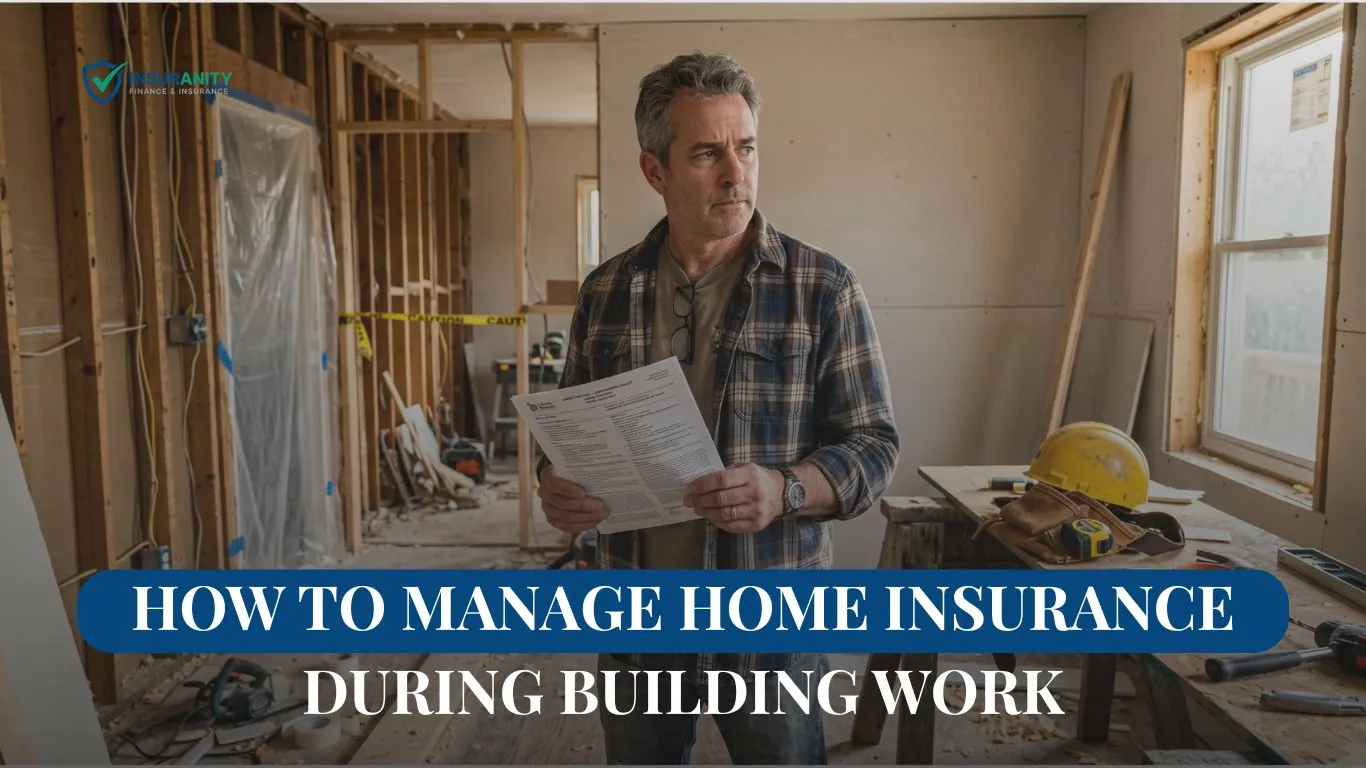
You finally got the permit approved. The contractor is lined up. You’re counting down the days until that kitchen extension or bathroom remodel actually begins. Then someone asks: “Did you call your insurance company?”
Silence.
Most Home insurance during building work never think about this until something goes wrong. A worker trips over a power cord and breaks their wrist. A pipe bursts and soaks $15,000 worth of new drywall. A storm tears through an open section of roof that the crew left exposed overnight. Without the right coverage in place, every one of those scenarios lands directly in your wallet.
Home insurance during building work is one of the most misunderstood parts of property ownership in the US, and it costs people real money every year. This guide walks you through exactly what to do, when to do it, and why your standard policy probably isn’t enough on its own.
Why Your Regular Home Insurance Policy Falls Short
Here’s something most homeowners don’t find out until it’s too late: Home insurance during building work policy is written to cover a finished, occupied home, not an active construction site.
Think about what a renovation actually involves. Contractors coming and going every day. Building materials stacked in your driveway. Parts of your home exposed to the elements. Tools, equipment, and strangers on your property. That’s a completely different risk profile than a quiet, locked-up house.
Standard policies often exclude or seriously limit coverage for:
- Damage to materials not yet installed
- Theft of building supplies from the job site
- Injuries to workers on your property (if the contractor doesn’t carry their own coverage)
- Structural damage that occurs during the build
- Vandalism to partially completed work
So before the first shovel breaks ground, the coverage question isn’t optional. It’s actually the first thing to get right.
Step 1: Call Your Insurance Company Before Work Begins
This is the step that most people skip, and it’s the one that matters most.
Contact your insurer and tell them exactly what you’re planning. Be specific: describe the type of work, the timeline, the contractor you’re using, and the approximate value of the project. Don’t downplay it.
Why does this matter? Because many policies have clauses that can void your coverage if you make significant changes to the property without notifying the insurer first. What counts as “significant” varies by policy, but structural work almost always qualifies.
When you call, ask these specific questions:
- Does my current policy cover damage that happens during renovation?
- Will coverage be affected if the home is partially unoccupied during the work?
- Is theft of building materials covered while they’re on site?
- Do I need to add an endorsement, or should I look at a separate policy?
Write down what they tell you and ask for it in writing if you can. Verbal assurances don’t hold up at claim time.
For a broader look at how property and casualty coverage works in situations like this, the property and casualty insurance guide explains the general framework well.
Step 2: Understand the Two Main Coverage Options
Once you know where your existing policy stands, you’ll likely need one of two things: a dwelling under construction endorsement or a builder’s risk insurance policy. These aren’t the same thing, and knowing the difference saves you from buying the wrong one.
Dwelling Under Construction Endorsement
This is an add-on to your existing homeowners policy. It extends coverage to the home while work is being done. It’s typically the right move for shorter projects, like a kitchen remodel or bathroom addition, where you’re still living in the Home insurance during building work during construction.
It generally covers:
- The home’s structure during the renovation period
- Fire, storm damage, and water damage
- Theft of materials at the property
It usually does not cover faulty workmanship, contractor errors, or damage that results from poor construction decisions.
Builder’s Risk Insurance
This is a standalone policy designed specifically for construction. It’s more comprehensive, carries higher coverage limits, and is typically recommended for larger projects like full additions, gut renovations, or new construction from the ground up.
Builder’s risk insurance usually covers:
- The structure itself during construction
- Materials stored on-site or in transit
- Soft costs if the project is delayed due to a covered loss
- Premises liability for injuries that happen during the build
One important note: if your contractor says they carry builder’s risk, verify it in writing. Sometimes contractors have policies that cover their interests but not yours as the homeowner. Don’t assume.
For more on how contractors should be Home insurance during building work and what your responsibilities are as a property owner, the builders risk insurance for homeowners breakdown is a helpful reference.
Step 3: Check What Your Contractor Actually Carries
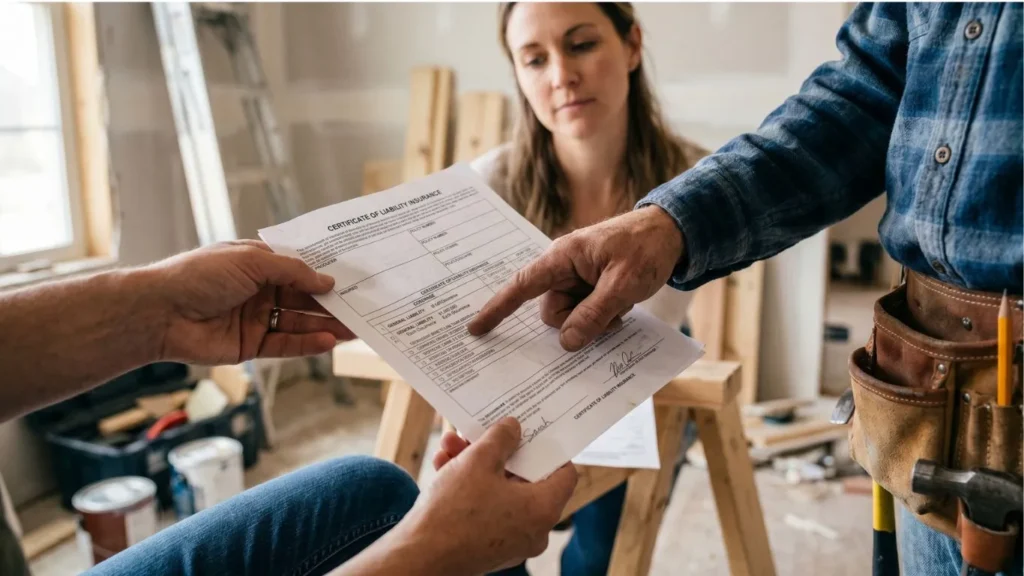
A lot of homeowners hand a contractor a check and assume insurance is handled. It usually isn’t, at least not in the way they think.
Ask every contractor for a Certificate of Insurance before they start. This document shows:
- General liability insurance Covers damage they accidentally cause to your property
- Workers’ compensation insurance Covers injuries to their crew while on your property
- Professional indemnity Covers design or planning errors in some cases
If a worker gets hurt on your property and the contractor doesn’t have workers’ comp, you could be on the hook for their medical bills. In some states, homeowners have been held liable in exactly this situation.
Also check that the contractor’s license is current. If you file a claim and your insurer finds out you used an unlicensed contractor, your claim will likely be denied regardless of what happened.
If you’re hiring for specialized work, knowing how liability coverage works in different trades helps. The electrical contractor public liability insurance article covers this from the trade side.
What Happens If You Stay in the Home During Renovations?
This changes the coverage picture in a few ways.
Living in your home during construction is common, especially for kitchen or bathroom remodels. But it introduces some complications that are worth knowing about upfront.
Your contents may not be fully covered
If a pipe bursts and damages furniture you moved to another room during the work, your standard contents coverage might not apply. Items stored off-site, in a pod, or in a rented unit might need separate coverage.
Liability stays in place, but it’s trickier
Your premises liability generally remains active, which is good. But proving a claim becomes harder when there are multiple people on your property daily and the conditions are constantly changing.
Check your vacancy clauses
If major portions of the home become uninhabitable during the Home insurance during building work, your insurer may classify it differently. Some policies reduce coverage or require special endorsements for homes that are partially occupied.
Speaking of contents coverage and what travels with you during a project, the renters insurance and storage units guide is worth reading if you’re moving belongings off-site temporarily.
The Coverage Gap Nobody Talks About: Between Completion and Policy Update
Here’s a scenario that plays out more often than it should.
The renovation wraps up. The contractor packs up. You’re thrilled with the new space. Life goes back to normal. Two years later, a pipe bursts, and you file a claim. The adjuster asks about the renovation. You mention the addition. They check the policy. The home’s insured value hasn’t been updated since before construction began.
That’s a problem.
Renovations increase your home’s replacement value. If you add a 500-square-foot addition and never update your coverage amount, you’re underinsured. In the event of a total loss, you’d receive a payout based on the old value, not what it would cost to actually rebuild.
As soon as the work is done:
- Have the Home insurance during building work reassessed or use your contractor’s final cost as a baseline
- Call your insurer and update the dwelling coverage amount
- Confirm that any temporary endorsements or builder’s risk policies have been closed out properly
- Ask whether any new features (like a detached garage, deck, or additional structure) need separate coverage
This last step is one most guides skip entirely. It’s also the one that closes the biggest financial gap.
A Quick Comparison: Which Coverage Fits Your Project?
| Project Type | Best Option | Why |
|---|---|---|
| Small kitchen or bath remodel (under $30K) | Endorsement on existing policy | Simpler, lower cost, sufficient for minor work |
| Major renovation (over $50K) | Builder’s risk insurance | Higher limits, broader coverage, better for large projects |
| Full addition or new structure | Builder’s risk insurance | Covers materials, liability, and delays |
| New construction build | Course of construction policy | Specifically designed for ground-up builds |
| Living in home during work | Endorsement + check contents coverage | Existing policy modified to cover active construction |
What About Workers Injured on Your Property?
This one makes homeowners uncomfortable, but it’s worth addressing directly.
If a contractor’s employee gets hurt while working in your home, who pays?
Ideally, the contractor’s workers’ compensation insurance handles it. That’s why verifying that coverage before anyone shows up is so important.
But if the contractor doesn’t carry it, or if their policy lapses mid-project, things get complicated. In some states, you as the property owner can be held liable for medical expenses or even a personal injury lawsuit.
Your homeowners policy’s liability section may provide some protection, but it’s not designed for this specific situation. The safest approach: Home insurance during building work‘ comp in writing, verify the policy is active (not just that the contractor says it is), and consider whether your umbrella policy applies.
For sole proprietors or independent contractors who show up without employees, the rules are different again. The workers’ compensation for sole proprietors article explains that side of it clearly.
When the Home Sits Empty During Major Work
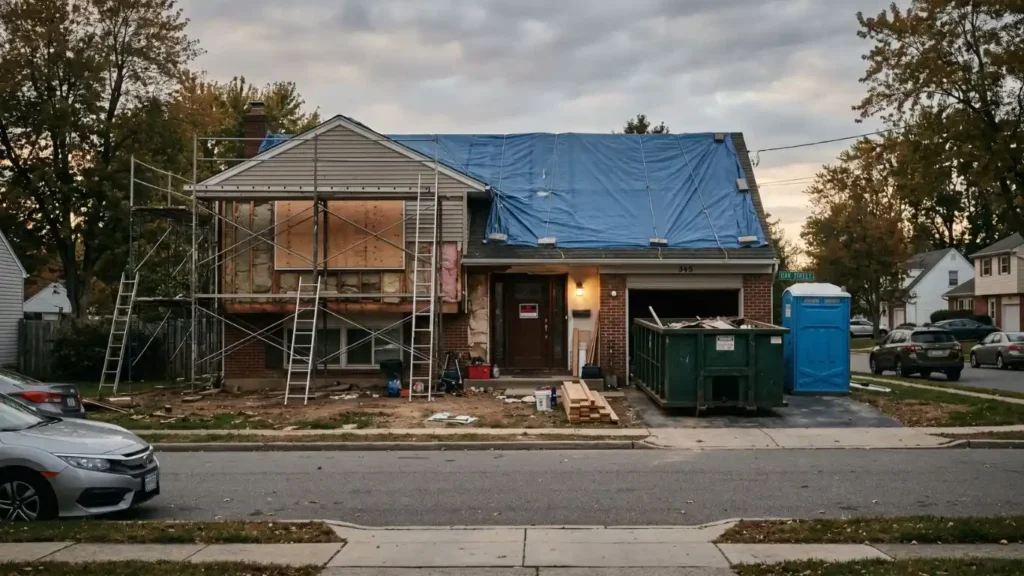
Some renovations are so extensive that you have to move out entirely. That’s when vacancy clauses become a real issue.
Most standard homeowners policies limit or void coverage after the home has been vacant for 30 to 60 days. A major gut renovation can easily run six months or longer. If a fire breaks out in an unoccupied home mid-renovation and you don’t have the right coverage in place, you could be looking at a denied claim.
If you’re moving out for an extended project:
- Tell your insurer immediately
- Ask specifically about vacant home or unoccupied property coverage
- See if your builder’s risk policy covers the structure while unoccupied
- Keep the property secure (locks, lighting, temporary boarding if needed) since many policies require reasonable security measures
This is also a situation where home insurance during building work intersects with landlord-style coverage. If you own the property as a rental and the tenant has to move out for renovations, a commercial property landlord insurance policy may be more appropriate than a standard homeowners policy.
The Real Cost of Skipping This Step
Take the story of a homeowner in Texas who added a 700-square-foot garage and workshop to his property. He called his insurer during the build, was told his policy “should be fine,” and didn’t ask any follow-up questions.
Six weeks in, a fire started in the partially framed structure overnight. The loss totaled around $40,000 in materials and completed framing. His claim was denied because the structure didn’t qualify as a “covered building” under his policy. It wasn’t finished, it wasn’t attached to the main house, and he never had it added to the policy.
That’s a $40,000 lesson in asking the right questions before work starts.
Home insurance during building work isn’t about paranoia. It’s about making sure the investment you’re making in your home is actually protected while it’s most exposed.
A Step-by-Step Checklist Before Your Project Starts
Use this before any contractor sets foot on your property:
Before work begins:
- Call your insurer and describe the project in full
- Ask whether your current policy covers active renovation
- Request an endorsement if needed, or shop for builder’s risk coverage
- Ask for your insurer’s confirmation in writing
When hiring contractors:
- Request a Certificate of Insurance from every contractor
- Verify general liability, workers’ comp, and license status
- Confirm their builder’s risk policy covers your interests (not just theirs)
During the project:
- Keep all building materials locked or secured at night
- Notify your insurer of any major scope changes
- Check your policy’s vacancy clause if you need to move out
After the project:
- Update your home’s insured replacement value
- Close out any temporary endorsements or standalone policies
- Make sure new structures (garages, decks, additions) are individually covered
One More Thing: Don’t Conflate Your Policy Types

A mistake that comes up often: homeowners think their home insurance during building work automatically extends to cover their contractor’s tools, equipment, or the materials the contractor owns.
It doesn’t.
Your policy covers your interests in the property. The contractor’s tools are their property. If their drill gets stolen off your driveway, that’s their problem to claim through their own commercial insurance, not yours.
What you do own: materials you purchased that are waiting to be installed. Those can often be covered under your builder’s risk or an endorsement, but you need to specify this when setting up the policy.
For a useful comparison of how business property coverage differs from personal property coverage in situations like this, the business personal property insurance article lays out the distinction well.
FAQs
Does home insurance during building work cover building materials that get stolen before they're installed?
It depends entirely on your policy type and what you've told your insurer. A standard homeowners policy typically won't cover building materials sitting in your driveway or stacked in your yard. They're not part of the home's structure yet, which means they often fall outside the standard dwelling coverage definition. A builder's risk policy or a properly set up dwelling under construction endorsement can cover materials on-site, but you need to specifically confirm this when the policy is written. Also worth knowing: if the materials belong to your contractor, those are their responsibility to insure, not yours. Only materials you personally purchased are potentially coverable under your policy.
What happens to your home insurance during building work if the project goes over the original timeline?
Most builder's risk policies are written with a set end date, commonly 3, 6, or 12 months. If your project runs long, which happens constantly in construction, your coverage doesn't automatically extend. It expires on the date in the policy. After that, you could have a partially finished home and zero coverage for it. The fix is straightforward but requires action on your part: contact your insurer before the policy end date and request an extension. Most will allow it, though the premium may increase. Don't wait until the deadline passes, because reinstating lapsed coverage often means a new application, a potential inspection, and a gap window where you're unprotected.
Does home insurance during building work cover mold or water damage caused by an open structure left exposed during construction?
This is a gap that catches a lot of homeowners off guard. If rain gets into a section of your home that was left open overnight because the framing isn't finished or a tarp shifted, that water damage may not be covered by either your standard policy or a basic builder's risk policy. Standard policies typically exclude damage resulting from ongoing construction exposure. Some builder's risk policies also exclude gradual water damage or weather exposure if reasonable precautions weren't taken. The key phrase insurers look for is "reasonable site security," which includes keeping the structure properly tarped and secured when workers aren't on-site. If you can show that was done and a sudden storm still caused damage, you're in a much stronger position at claim time. If the structure was left wide open with no protection, expect a fight.
If you're doing a DIY renovation without a contractor, how does home insurance during building work apply to you?
DIY renovations create a coverage situation that most guides completely ignore. When there's no licensed contractor involved, you lose access to their workers' comp and liability coverage. You also lose the credibility that comes with professional work if a claim is later disputed. For the actual project coverage, your homeowners policy may cover minor DIY work like painting or flooring, but anything structural, such as moving walls, adding electrical, or modifying plumbing, is a different story. Attempting structural work yourself without notifying your insurer can void your coverage entirely. Some insurers will still offer a dwelling under construction endorsement for owner-built projects, but they'll want details about the scope and your experience. If an injury happens during your DIY work, your medical payments coverage may apply, but a full liability claim from a third party who gets hurt on your active job site is a different exposure entirely. Always notify your insurer before starting any DIY work that touches the structure of the home.
Bottom Line
Home insurance during building work doesn’t have to be complicated, but it does require attention. The biggest mistake homeowners make isn’t choosing the wrong policy. It’s assuming their existing coverage is sufficient without ever checking.
Call your insurer before work starts. Verify your contractor’s coverage. Know whether you need an endorsement or a standalone builder’s risk policy. And when the project is done, update your coverage to reflect the new value of your home.
That’s it. Four steps that protect everything you’re spending money to build.
For related reading on how different types of insurance interact with home ownership and renovation projects, the bond and insurance guide for small businesses is useful if you’re also thinking about contractor vetting and financial protection from the hiring side.
If you want to understand your broader financial protection picture as a homeowner, the what is commercial umbrella insurance guide explains how umbrella policies can fill in gaps that neither your homeowners policy nor your builder’s risk coverage fully addresses.
And for homeowners who are managing the financing side of a big renovation, understanding how your overall insurance picture fits together is just as important as the build itself. The life insurance and income protection article isn’t directly about construction, but it’s a good reminder that protecting your income during a costly project period is part of the same financial planning.
Home insurance during building work isn’t just a box to check. It’s the difference between a renovation that builds equity and one that drains it.