Imagine this. A local cleaning company owner named Mia just landed a meeting with a hotel chain that could triple her income. Then the manager asked one simple question. “Are you bonded and insured?” Mia froze. She lost the contract that afternoon, not because her work was bad, but because she didn’t have the right paperwork. That tiny piece of proof would have changed her year. This is exactly why Bond and Insurance for Small Business is treated like the golden ticket of the small business world. It opens doors that price tags and promises simply can’t.
If you have ever felt confused about how bonding and insurance actually work, you are not alone. Most owners learn the hard way, after losing a job or facing a lawsuit. However, the good news is that the process is much simpler than it looks once someone breaks it down in plain words. Moreover, the rules around Bond and Insurance For Small Business owners are easier to follow than most people think. Let’s walk through it together, step by step, the way a friend would explain it over coffee.
What Bonded and Insured Really Means
Being “bonded” is a promise backed by a third company called a surety. If you don’t finish a job or break the rules, the surety pays your client and then asks you to pay them back. Being “insured” works differently. Your insurance company actually pays the bill when something goes wrong, like a customer tripping and falling, and you don’t owe that money back as long as you’ve paid your premium.
Think of bonding as a co-signer on your trust, while insurance is a financial shield that absorbs hits for you. Both tools are needed because they protect different people. A bond protects your client. Insurance is built to protect you. As a result, when you carry both, you become the kind of business that bigger clients are happy to pay more to work with. That’s the real magic behind Bond and Insurance for Small Business thinking.
Why Small Business Owners Can’t Skip This Step
A handyman in Texas once shared his story online about a $200 mistake that ended up costing him $18,000. He drilled into a hidden water pipe inside a customer’s wall, and the flooding ruined the basement. He had no general liability insurance. The customer sued, and his savings were drained to settle the case. One small policy would have covered the whole thing for less than $40 a month. Stories like his are common in trades like junk hauling, painting, and home services, which is why handyman and junk removal coverage is non-negotiable for those fields.
This is why insurance and bonding for small business owners is no longer a “nice to have.” It’s the difference between staying open and shutting your doors after one bad day. Beyond protection, here is what proper Bond and Insurance For Small Business planning unlocks for you.
- Bigger contracts with corporations, hotels, and government agencies
- Trust signals that help you charge premium rates
- Legal compliance in licensed industries like plumbing, electrical, and contracting
- Peace of mind when employees, clients, or the weather throws surprises at you
In many states, workers’ compensation is required if you have even one employee. Skipping it can lead to fines, license loss, or even criminal charges in some places. So while learning how to get bonded and insured for a small business may feel like extra homework, it saves you from massive financial pain later. Furthermore, insurance and bonding for small business owners give your name weight with bigger clients.
Bond vs. Insurance: A Quick Comparison
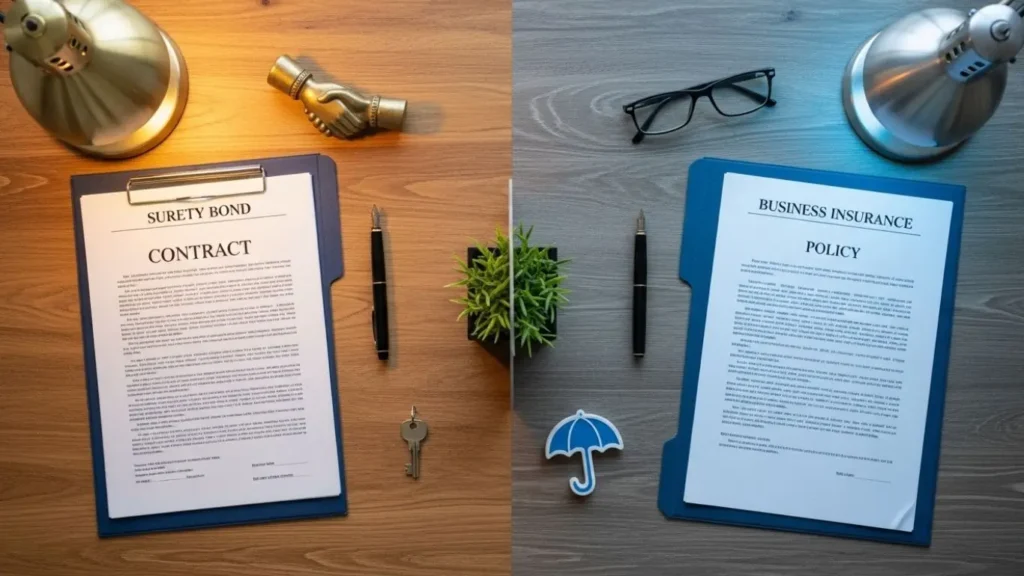
Most owners mix the two up, so here’s a clean side-by-side view to help things click instantly.
| Feature | Bond | Insurance |
|---|---|---|
| Who gets protected | Your client | Your business |
| Who pays the claim | Surety pays first, then you repay | Insurer pays, no repayment needed |
| Main purpose | Guarantee you’ll do the work | Cover accidents, lawsuits, damages |
| Common types | Surety, fidelity, license bonds | General liability, workers’ comp, BOP |
| Best for | Contracts, licensing, trust building | Daily risk protection |
When someone asks how to get insured and bonded for small business needs, this table is usually the easiest place to start. In addition, this view also helps when comparing how to get bonded and insured for a small business licensing requirements across different states.
Step 1: Know Exactly What Your Business Needs
Before you spend a single dollar, figure out what your state, your clients, and your industry actually require. A photographer doesn’t need the same coverage as a roofer. A few quick checks will save you from buying the wrong thing.
Start by visiting your state’s business licensing website. Many trades, like electricians, plumbers, auto dealers, and HVAC professionals, are required to carry specific license bonds before they can legally operate. Next, look at your client contracts. Larger clients often spell out the exact bond amount and insurance limits they expect. Finally, your daily risks should be reviewed carefully. If you handle other people’s property, drive between job sites, or store customer data, each of these creates different exposure.
If you are juggling a vehicle for both personal and business use, this guide on insuring a vehicle that’s not in your name is worth a quick read before any commercial auto policy is signed. As you map out your Bond and Insurance for Small Business plan, this is the smartest first move.
Step 2: Build Strong Personal and Business Credit
Surety companies look closely at your credit before they decide on your bond rate. A 700+ credit score can drop your bond cost by half compared to someone with a 580. Yes, it’s that big a difference. Therefore, fixing your credit before you apply is one of the smartest moves you can make.

Here’s how to clean up before you apply.
- Pay every personal and business bill on time for at least three months
- Pull your credit report and dispute any errors you find
- Keep credit card balances under 30% of your limit
- Open a business checking account and run all income through it
- Register your business with credit bureaus
Most owners who research how to get bonded and insured for small business licenses skip this step and end up paying triple. Don’t be that person. Spend two months strengthening your numbers, and the savings will pay for themselves many times over. This is also why how to get bonded and insured for small business searches keep growing year after year, since smart owners want to lower their costs early.
Step 3: Gather Your Paperwork Before Applying
Surety companies and insurers want to see your business clearly before they back you. The faster you can hand over clean documents, the faster you get approved. Get these ready.
- Business license and EIN
- Last two years of tax returns, both personal and business
- Profit and loss statement
- Bank statements from the past 6 months
- Resume showing industry experience
- References from past clients or contractors
- A list of equipment and property you own
Owners who track tools, gear, and customer-site equipment also benefit from layering business personal property coverage on top of their core policies. Treat your paperwork like you are already running something bigger, even if you are a solo shop today. This habit alone makes Bond and Insurance for Small Business approvals smoother and faster.
Step 4: Pick the Right Types of Coverage
Once your paperwork is solid, it’s time to match the right policies and bonds to your situation. The trick is to layer them, not pile them on. Carry only what you actually need. In other words, smart Bond and Insurance for Small Business planning is about choosing wisely, not buying everything.
Common Bonds Small Businesses Use
- Surety bonds for contracts, projects, and licensing
- Fidelity bonds for protection against employee theft
- License and permit bonds for state-required trades
- Performance bonds for guaranteeing project completion
Common Insurance Policies
- General liability covers slips, falls, and property damage
- Workers’ compensation is required if you have employees
- Professional liability covers service-based mistakes
- Commercial auto covers any vehicle used for work
- Business owner’s policy bundles liability and property into one
If your team uses vans or trucks short-term during busy seasons, layering temporary commercial vehicle protection is a smart move. And if your work involves staff traveling out of state, this guide on business travel accident protection is a helpful add-on. Owners in New Jersey can also bookmark this overview of business liability coverage in NJ for state-specific rules.
Step 5: Get Quotes From Multiple Providers

Never accept the first quote handed to you. Bonds and insurance prices swing widely between companies. A $25,000 surety bond might cost $250 from one surety and $750 from another, even with the same credit score.
Try collecting at least three quotes. Use online marketplaces, work with a local independent broker, and call a national carrier directly. Compare not just the price but also the deductibles, coverage limits, and exclusions. Some cheap policies hide huge gaps that hurt you later. As a result, comparing carefully is the most powerful step in shopping for Bond and Insurance for Small Business plans.
When evaluating bond and insurance for small business quotes, look for these red flags.
- Very low premiums with extremely high deductibles
- Vague wording about what’s actually covered
- No mention of legal defense costs
- Pressure to sign quickly without reviewing the fine print
Trustworthy agents welcome questions. If anyone rushes you, walk away.
Step 6: Understand the Real Costs
Most owners are shocked at how affordable basic coverage actually is. Surety bonds usually cost between 1% and 15% of the bond amount. So a $10,000 license bond might cost between $100 and $1,500, depending on your credit. General liability often runs $40 to $90 per month for solo operators. Workers’ compensation depends on payroll and risk class, often around $0.75 to $7 per $100 of payroll.
Industries with higher risk, like roofing or tree removal, pay more. On the other hand, lower-risk fields like consulting or photography pay less. For property-heavy businesses, this look at property and casualty coverage options helps you spot where your dollars actually go. The full picture of how to get bonded and insured for a small business comes into focus once you see how each industry’s pricing works. This is where Bond and Insurance for Small Business budgeting really starts to feel doable.
Step 7: Read, Sign, and Store Your Documents Properly
Once you choose your provider, read the policy carefully before signing. Don’t be afraid to ask for plain-English explanations. After signing, save digital and printed copies somewhere safe. You will need them for client meetings, contract bids, and license renewals.

Set calendar reminders for renewal dates. Coverage gaps, even one day long, can void contracts or trigger penalties. If you ever expand into new states or add employees, update your policies right away. A growing business with old coverage is a lawsuit waiting to happen.
If you ever consider stepping away from a policy temporarily, this guide on whether you can cancel insurance any time explains what happens behind the scenes.
Common Mistakes to Avoid
Even smart owners trip over these when learning how to get insured and bonded for small business licenses. Watch out for these traps.
- Buying only the minimum required by law
- Forgetting to add commercial auto for work vehicles
- Listing old revenue numbers and being underinsured later
- Mixing personal and business finances, which raises bond rates
- Letting policies lapse during slow seasons
Each of these has cost real owners thousands. Avoid them, and your Bond and Insurance for Small Business setup will instantly stand ahead of most of your competition.
FAQs
Does being bonded and insured cover damage caused by my subcontractors?
Not automatically. Most general liability policies cover only your direct employees, not independent subcontractors. To stay protected, you should either require every subcontractor to carry their own bond and insurance, add them as "additional insured" on your policy, or purchase a contractor's pollution and protective liability rider. Always request proof of coverage from subs before they step on a job site, since you can be held liable if their work causes harm.
What happens to my bond and insurance if I shut down my business or sell it?
Bonds and insurance don't transfer automatically. If you close, you must notify your surety and insurer in writing, and most bonds have a "tail period" of 30 to 90 days where claims can still be filed for past work. If you sell the business, the buyer normally needs to apply for fresh bonds and policies under their own name. Some insurers refund unused premium on a pro-rated basis, so always ask about cancellation refunds before terminating coverage.
Can a freelancer or solo home-based business owner be bonded and insured?
Absolutely. Freelancers, consultants, virtual assistants, and home-based service providers can apply for the same coverage as larger businesses, often at lower rates. A solo cleaner, for example, can get a $10,000 janitorial bond for under $100 a year and pair it with a basic general liability policy for around $30 a month. Carrying both adds instant credibility on platforms like Upwork, Thumbtack, and Angi, and it often unlocks higher-paying clients who only hire bonded and insured pros.
How much coverage amount do I actually need for my industry?
Coverage limits depend on contract size, industry risk, and state rules. A general rule of thumb is to carry liability insurance worth at least the size of your largest possible lawsuit. Most service businesses start with $1 million per occurrence and $2 million aggregate. Bonds usually match the value of the contract or license requirement, so a $50,000 contract often needs a $50,000 performance bond. Roofers, electricians, and HVAC pros often need higher limits, while consultants and writers can stay on the lower end. Reviewing limits yearly keeps your coverage matched to your actual risk.
How Long Does It Actually Take?
Plan for 3 to 14 days from start to finish. Smaller surety bonds can be issued the same day. Bigger contract bonds with detailed underwriting can take a couple of weeks. General liability insurance can often be activated within 24 hours online. If you are bidding on a big contract, give yourself at least 30 days of buffer.
Once your Bond and Insurance for Small Business package is in place, your name carries weight. You can confidently say “yes, I’m fully bonded and insured,” and that single sentence often wins the job. The whole effort behind insurance and bonding for small business comes down to one truth. You are buying trust at scale, and trust is the most valuable asset any business can own. With the right Bond and Insurance For Small Business plan, your future jobs are safer, your reputation is stronger, and your peace of mind is locked in.