
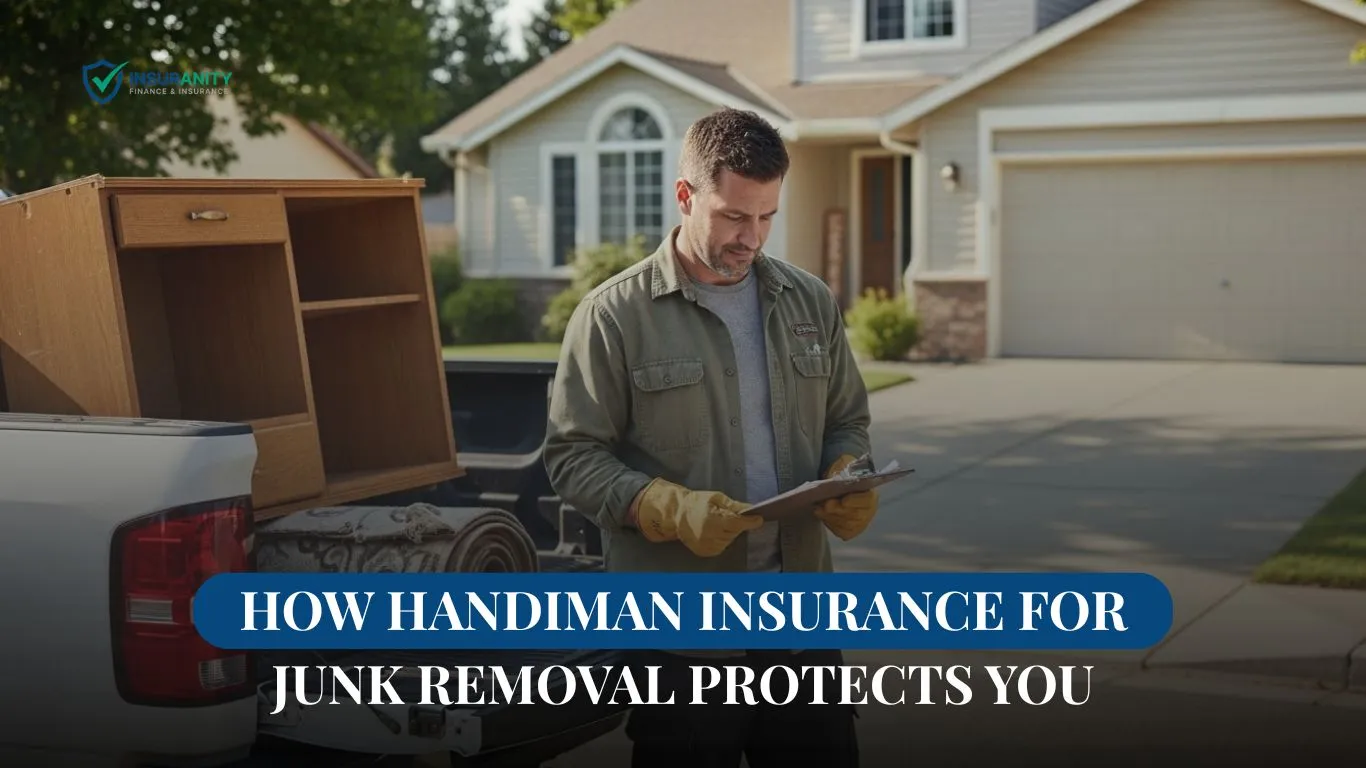
Imagine this. You show up at a client’s house on a Tuesday morning. She hired you to haul away an old refrigerator, a broken dresser, and a pile of junk from the garage. Simple enough job. But as you drag the fridge down the hallway, the corner of it scratches straight through her freshly painted wall. She’s furious. Now she wants $1,200 to fix it.
Do you pay out of pocket? Do you lose the client? Or does your insurance handle it?
If you have the right Handiman Insurance for Junk Removal, that story ends with a phone call to your insurer. If you don’t, it ends with money coming out of your own wallet, and maybe a bad online review that costs you future jobs.
This article breaks down exactly how Handiman Insurance For Junk Removal works, what it covers, why it matters more than most people think, and how to make sure you have the right protection before your next job.
Why Handymen Who Do Junk Removal Face Unique Risks
Most handymen wear many hats. One day, you’re fixing a leaky faucet. The next day, you’re hauling old furniture out of a basement. That combination of trades is what makes your work valuable. But it also makes your risk exposure different from a regular junk removal company.
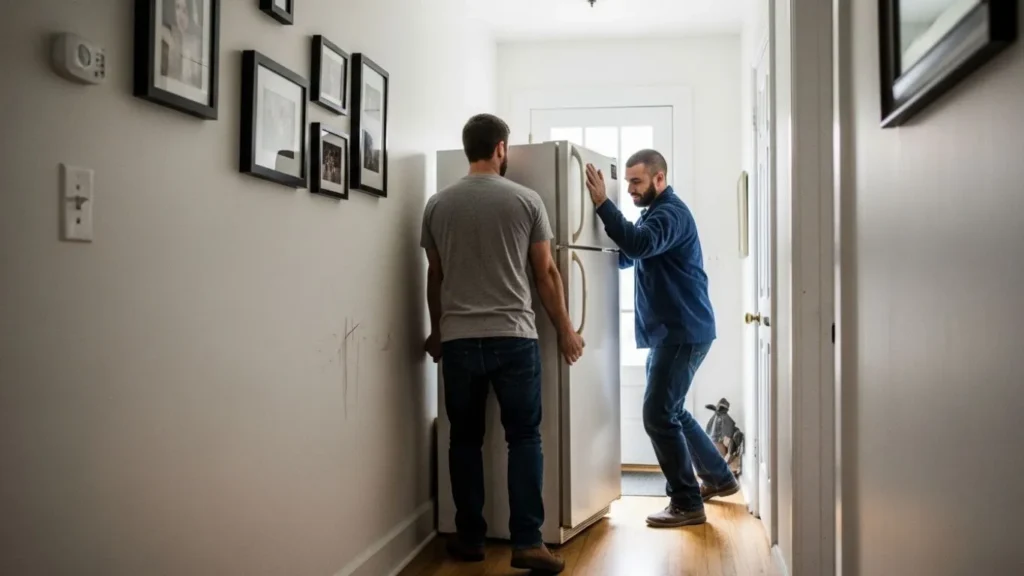
When you offer junk removal as part of your handyman services, you are dealing with:
- Heavy lifting in tight spaces like hallways and staircases
- Loading bulky items into trucks or trailers
- Driving those items to a dump or recycling facility
- Working inside clients’ homes and on their property
Each of these steps carries its own risk. A scratched floor, a pulled muscle, a fender bender on the way to the dump, any of these can turn into a costly claim quickly.
Standard business liability insurance covers many handyman jobs, but junk removal adds layers that need specific attention. That’s why understanding Handiman Insurance for Junk Removal as its own topic matters.
What Exactly Does Handiman Insurance For Junk Removal Cover?
Handiman Insurance for Junk Removal is not one single policy. It is a combination of coverage types that work together to protect you from the specific risks that come with this kind of work. Here is how each piece fits in.
1. General Liability Insurance
This is the foundation. General liability insurance protects you when something goes wrong on a client’s property that is not related to your employees getting hurt.
Think of it this way. If you are hauling a heavy sofa out of a second-floor bedroom and you accidentally knock it into the wall, cracking the drywall, general liability pays for that repair. If a client trips over your equipment in the driveway and gets hurt, general liability covers their medical costs and any legal fees.
Most clients and property managers will not hire you unless you carry this coverage. It is commonly required before a single job starts. For Handiman Insurance for Junk Removal, general liability coverage of $1 million per occurrence is a solid starting point.
According to industry data, handyman contractors pay around $67 per month on average for general liability insurance. That is less than $1 a day for coverage that can protect you from claims worth tens of thousands of dollars.
2. Commercial Auto Insurance
Here is the part many handymen miss. Your personal car insurance does not cover your truck or van when it is being used for work. If you are driving to a client’s house to pick up junk and you get into an accident, your personal auto policy can deny the claim entirely.
Commercial auto insurance steps in to cover accidents that happen while you are driving for business purposes. This includes damage to your vehicle, damage to the other person’s vehicle, and injury costs.
If you use a pickup truck, a cargo van, or even a trailer to haul junk, you need commercial auto as part of your Handiman Insurance For Junk Removal package. This is required by law in nearly every state for vehicles used for business.
For more details on how vehicle coverage works across different business contexts, see this guide on temporary commercial vehicle insurance for a related look at coverage options.
3. Workers’ Compensation Insurance
Do you have a helper? A part-time assistant? Does anyone work alongside you on junk removal jobs? If so, workers’ compensation is something you likely need by law in most states.
Workers’ comp covers your workers if they get injured on the job. Junk removal is physically demanding work. Back injuries from lifting, cuts from sharp objects, falls from truck beds, these happen. Without workers’ comp, you could be personally responsible for an injured worker’s medical bills and lost wages.
Even if you are a solo operator, some states require workers’ comp for self-employed individuals in certain trades. It is worth checking your state’s specific rules.
4. Tools and Equipment Insurance
Your dollies, hand trucks, straps, power tools, and safety gear are what make your business run. If your truck gets broken into overnight and your equipment is stolen, you could be looking at thousands of dollars in replacement costs and days of lost income.
Tools and equipment insurance, sometimes called inland marine insurance, covers your gear whether it is at a job site, in your truck, or in storage. For most junk removal operations, coverage in the $15,000 to $25,000 range is enough to protect the essentials.
This is one area where Handiman Insurance For Junk Removal directly protects your day-to-day operations in a way that general liability does not.
5. Professional Liability Insurance
Also known as errors and omissions insurance, this covers you if a client claims your service caused them financial harm. For example, if you accidentally haul away an item that was not meant to be removed, and the client sues you for the value of that item, professional liability can cover your legal defense costs.
This is not always the first coverage people think of for junk removal, but it fills a real gap. Understanding all the layers of business personal property insurance can help you see where professional liability fits into your overall protection plan.
A Quick-Reference Coverage Table
| Coverage Type | What It Covers | Avg. Monthly Cost |
|---|---|---|
| General Liability | Property damage, client injuries | ~$67/month |
| Commercial Auto | Vehicle accidents during work | ~$173/month |
| Workers’ Comp | Employee injuries on the job | ~$130/month |
| Tools & Equipment | Stolen or damaged gear | ~$25–$50/month |
| Professional Liability | Negligence or service disputes | ~$67/month |
Costs are national averages and vary by state, revenue, and number of employees.
Step-by-Step: How To Get the Right Coverage
Getting Handiman Insurance for Junk Removal is not complicated. Here is how to do it in a clear, simple way.

Step 1: List every service you offer
Write down everything you do, repairs, installations, hauling, and cleanup. This tells an insurer the full picture of your risk exposure.
Step 2: Know if you have employees or helpers
Even occasional helpers can trigger workers’ comp requirements. Be honest about this when getting quotes.
Step 3: Check your vehicle situation
Do you use your personal truck for work? If yes, you need commercial auto added to your Handiman Insurance for Junk Removal policy.
Step 4: Get at least three quotes
Insurance prices vary a lot between carriers. Compare quotes that include the same coverage types so you are making an apples-to-apples comparison.
Step 5: Ask for a Certificate of Insurance (COI)
Once you are covered, get your COI right away. Many clients and property managers will ask for it before you start. You should be able to produce it within hours of getting a policy.
Step 6: Add clients as additional insured when needed
Some commercial clients and apartment complexes require you to add them to your policy. This is usually a free or low-cost add-on that keeps bigger contracts accessible to you.
Step 7: Review your policy each year
As your business grows, your coverage needs to grow with it. If you add employees or buy a new truck, update your policy.
What Happens When You Work Without It
Let’s go back to the refrigerator story from the beginning. Now imagine a worse version. Your helper slips on a wet floor while carrying that fridge down the stairs. He breaks his wrist. Surgery, physical therapy, and missed work weeks add up to over $40,000 in costs.
Without the right Handiman Insurance for Junk Removal, that bill lands on you. With workers’ comp in place, the insurer handles it. That is the difference between a business that survives a bad day and one that does not.
Beyond financial protection, being properly insured also helps you win better clients. Property managers, real estate agents, and estate cleanout coordinators almost always require proof of insurance before hiring. When your Handiman Insurance For Junk Removal is in place, you can take those jobs. Without it, you cannot.
You can also review how home daycare insurance handles a similar situation of service-based businesses operating inside client properties, which shows the same pattern: the right policy protects both the business and the client.
How Junk Removal Differs From Standard Handyman Work, And Why Your Policy Needs To Reflect That
Standard handyman policies are built around repair and installation work. Junk removal adds a whole separate risk category: hauling and transport. That is why your insurer must know you offer junk removal services.
If you tell your insurer you are a handyman but do not mention junk removal, they may classify your policy under a lower-risk category. That feels fine until you file a claim for a hauling incident and find out the claim is denied because your actual work was not fully disclosed.
Always be specific. Tell your insurer: “I am a handyman and I also offer junk removal and debris hauling.” That way, your Handiman Insurance For Junk Removal is built to cover everything you actually do.
This is also why general handyman policies sometimes need to be supplemented with debris removal or contractor-specific endorsements. Your business liability coverage should reflect the full scope of your services, not just the most basic version of your job title.
The Costs Are Smaller Than Most People Expect
One of the biggest reasons handymen skip insurance is the assumption that it costs too much. The reality is different.
A basic Handiman Insurance For Junk Removal package, including general liability and commercial auto, can start at around $150 to $200 per month for a solo operator. Add tools and equipment coverage, and you might be at $200 to $250 per month total.
Compare that to a single uncovered claim. A scratched hardwood floor averages $2,000 to $5,000 in repairs. A client injury can run $50,000 or more. One bad day without insurance costs more than a full year of premiums.
For a deeper understanding of how coverage costs are structured for similar service businesses, the article on business personal property insurance offers a useful comparison.
The math is simple. Handiman Insurance For Junk Removal is one of the lowest-cost, highest-value investments a working handyman can make.
Pollution Liability: The Coverage Most People Miss
Here is something most articles do not bring up. Junk removal sometimes involves items that contain hazardous materials. Old refrigerators can contain refrigerants. Paint cans, batteries, and certain electronics can be classified as regulated waste.
If you haul something that later causes an environmental issue, pollution liability insurance protects you from cleanup costs and legal claims related to that disposal. This is a niche add-on, but it is worth asking about if you handle construction debris, old appliances, or commercial cleanouts.
Not every handyman doing junk removal will need it, but knowing it exists helps you make an informed decision about your full coverage package.
Making Sure Your Coverage Travels With You
One thing that catches people off guard is that different job sites may have different insurance requirements. A homeowner might not ask for anything. A property management company might require $1 million in general liability. A commercial client might want $2 million in coverage plus additional insured status.
Your Handiman Insurance For Junk Removal policy should be flexible enough to meet these varying requirements. Talk to your insurer about your policy limits and whether they can be increased for specific jobs. In most cases, bumping your coverage limit for a larger contract is possible with a short-term endorsement or policy adjustment.
Understanding how policies flex to meet different job requirements is also covered well in resources on long-term travel insurance (which handles similar variable-coverage concepts for another type of mobile work), showing that coverage flexibility is a common need across service industries.
The Real Value of Handiman Insurance For Junk Removal
At its core, Handiman Insurance For Junk Removal is not just about money. It is about being able to do your job with confidence. When you know that a scratched wall, a minor accident, or a worker’s injury will not wipe out your business, you can focus on doing the work well.

It also signals professionalism to clients. Showing a client your certificate of insurance before the job starts tells them that you are serious, organized, and accountable. That small gesture can be what tips a hesitant client into hiring you over an uninsured competitor.
The handyman market in the US is competitive. The ones who grow their businesses beyond weekend side jobs into real, sustainable operations are usually the ones who treat it like a business from day one, and that means getting properly insured.
Every time you haul junk, you are entering someone’s home, using their driveway, driving through their neighborhood, and representing your business. Handiman Insurance for Junk Removal is what makes sure one bad moment does not undo all the good work you have built.
FAQs
If I only do junk removal part-time alongside my handyman work, do I still need full coverage?
Yes. The frequency of the work does not change the risk. One junk removal job is enough to cause a property damage claim, a vehicle accident, or a worker injury. Insurance companies base coverage on what you do, not how often you do it. A part-time handyman doing occasional junk removal on weekends faces the exact same legal exposure as someone doing it full time. In fact, part-time operators are often more vulnerable because they assume their risk is lower and skip coverage entirely, which leaves them personally liable for any incident that happens on those jobs.
What is an employee dishonesty bond and does a handyman doing junk removal need one?
An employee dishonesty bond protects your business if one of your workers is accused of stealing from a client during a job. Junk removal work puts your workers inside people's homes and garages, often unsupervised, which makes this bond worth considering. It is not technically insurance, but it works alongside your coverage to protect your business reputation and finances if a theft accusation comes up. It is typically available for around $150 per year per employee and covers monetary losses up to a set limit, usually around $25,000. Note that the business owner is not covered under this bond, and it does not protect against criminal charges for the employee.
Can a client sue a handyman personally if the business does not have proper junk removal insurance?
Yes, and this is one of the most serious risks of operating without proper coverage. If your business is a sole proprietorship and you do not have the right insurance in place, a lawsuit from a client can reach your personal assets, your savings, your vehicle, even your home in some states. Forming an LLC offers some protection, but it does not make you immune, especially if a court finds that you personally acted negligently. Carrying proper handyman insurance for junk removal creates a financial barrier between a claim and your personal life, which is exactly why it is considered a foundational step for any handyman taking on hauling work.
Does handyman insurance for junk removal cover damage that happens after items are loaded onto the truck?
This is one of the most misunderstood areas of coverage. Once an item is in your possession and being moved toward your truck, any damage that occurs is typically covered under your commercial auto policy, not your general liability policy. General liability covers incidents that happen in the client's space during the job, such as bumping a wall while maneuvering around the home. Commercial auto covers damage related to loading, transport, and anything that happens once items are in your care and moving toward the vehicle. This is why both policies are necessary and why having only one or the other leaves a real gap in your protection.
One Last Thing To Know
Getting insured is not the finish line. It is the starting line. Once you have your Handiman Insurance For Junk Removal policy in place, keep your COI updated, review your coverage annually, and always tell your insurer when your services or team size change.
Insurance is only as useful as the accuracy of what it covers. Keep it current, keep it honest, and it will keep you protected.
For more on how different types of business insurance interact and protect service professionals, explore resources on business travel accident insurance and general property and casualty coverage to round out your understanding.
External reference for further reading on general contractor insurance standards: U.S. Small Business Administration, Business Insurance Guide
This article is for informational purposes only. It does not constitute insurance advice or an offer to sell any insurance product. Always consult a licensed insurance professional to find coverage that fits your specific business needs.