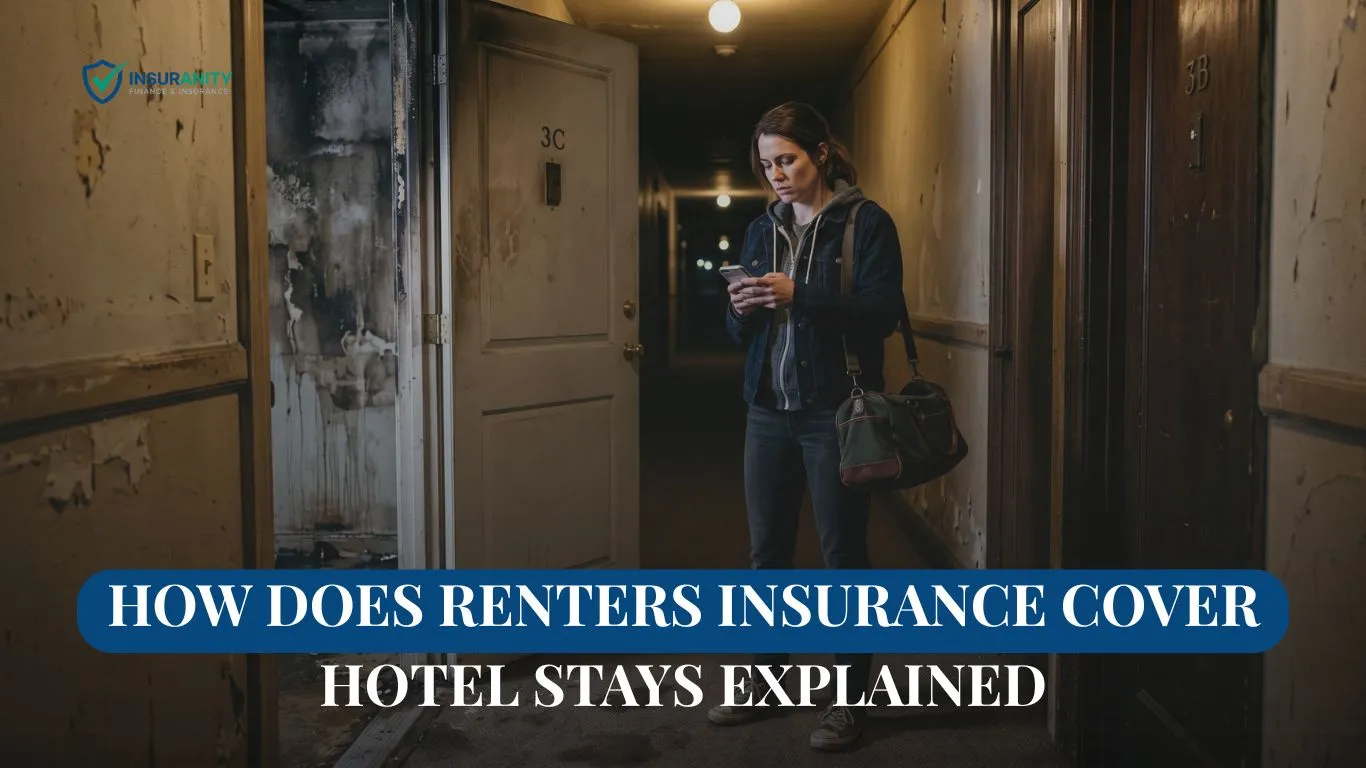
Picture this: You come home after a long day at work, and your apartment door won’t open properly. You force it open and immediately smell smoke. A fire broke out in the unit above yours. Your ceiling is damaged, water is dripping from the sprinklers, and a firefighter tells you, “You can’t sleep here tonight.”
This is exactly the moment renters insurance was built for. And if you’ve ever asked yourself, ” Does renters insurance cover hotel stays, How Does Renters Insurance Cover Hotel Stays, or ” Does renters insurance cover hotel, the answer is yes in many cases. But there’s more to it than a simple yes or no. The answer is yes; in many cases, it does. But there’s more to it than a simple yes or no. Knowing how it works, when it applies, and what you actually get paid can save you hundreds of dollars when disaster strikes.
What Is Renters Insurance, and Why Does It Matter for Hotel Stays?
Does Renters Insurance Cover Hotel Stays is a policy that protects you as a tenant. It doesn’t cover the building itself; that’s your landlord’s job. What it covers is you, your belongings, your legal liability, and your living costs if something goes seriously wrong.
Most standard renters insurance policies are made up of three main parts:
- Personal property coverage pays to replace your stuff if it’s stolen or damaged
- Liability coverage protects you if someone gets hurt in your place
- Loss of use coverage pays for your temporary living expenses, including hotel stays
That third piece loss of use coverage, is the one that answers the question of whether renters insurance covers hotel stays. It is also called Additional Living Expenses (ALE) coverage, and it is included in almost every standard renters policy automatically.
You don’t have to add it separately. It’s already there. The key is knowing when it kicks in.
The Core Rule: Your Home Has to Be Uninhabitable
But if a covered event genuinely forces you out, that’s when loss of use coverage steps in and helps pay for your hotel room, your meals, your laundry, and more
Does renters insurance cover hotel stays? Only when your rental unit is considered uninhabitable because of a covered event.
Uninhabitable means it’s not safe or livable for normal day-to-day life. Think: no electricity because of fire damage, a flooded bedroom from a burst pipe, or a roof caved in from a windstorm. These situations make it impossible for you to stay there safely.
If the damage is minor, say, a small water stain on the ceiling that doesn’t affect your ability to live there, your insurer likely won’t approve a hotel claim.
But if a covered event genuinely forces you out, that’s when loss of use coverage steps in and helps pay for your hotel room, your meals, your laundry, and more.
What Events Are Typically Covered?
Not every disaster triggers hotel coverage. The event that caused the damage has to be a covered peril under your policy. Here are the most common ones that typically qualify:
| Covered Event | Does Hotel Coverage Apply? |
|---|---|
| Fire or smoke damage | ✅ Yes |
| Burst pipe or plumbing failure | ✅ Yes |
| Windstorm or tornado damage | ✅ Yes |
| Vandalism that makes home unsafe | ✅ Yes |
| Government-ordered evacuation (wildfire area) | ✅ Yes, in many policies |
| Flooding from rain or rising water | ❌ Usually not covered |
| Earthquake damage | ❌ Usually not covered |
| Routine maintenance or pest issues | ❌ Not covered |
| Voluntary relocation | ❌ Not covered |
| Power outage (city-wide, not from covered damage) | ❌ Usually not covered |
One thing worth noting here: if a wildfire is raging near your neighborhood and the government orders you to evacuate, many policies will cover your Does Renters Insurance Cover Hotel Stays costs even if your unit wasn’t physically damaged. This is a detail that most people miss, and most competitor articles barely mention it.
If you’re curious about how renters insurance protects your belongings beyond just the home, it’s worth knowing that your policy often extends further than you’d expect.
What Does Loss of Use Actually Pay For?
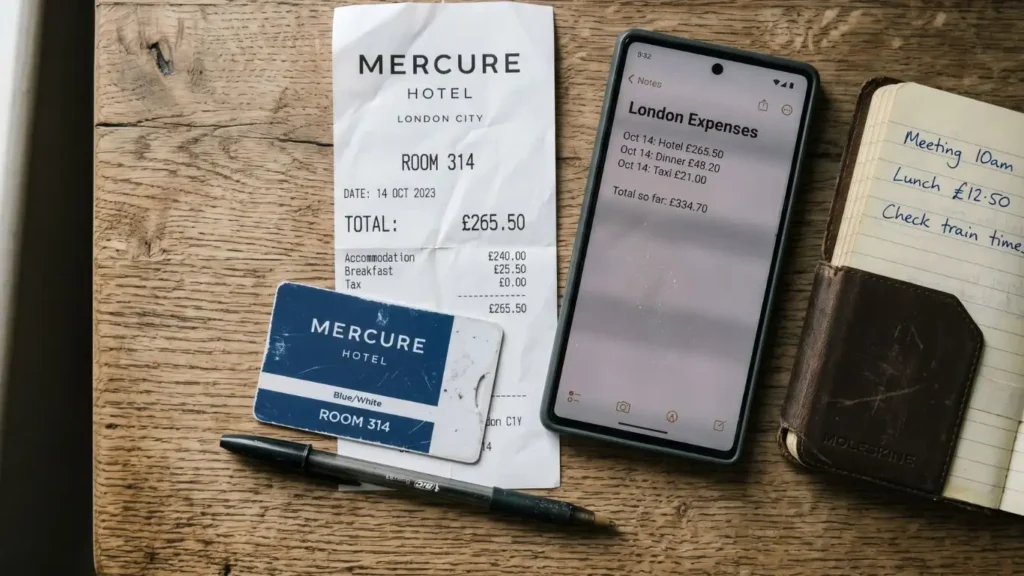
This is where things get really practical. If you’re wondering whether renters insurance pays for hotel expenses or will renters insurance cover hotel stay after a covered loss, the answer is that Loss of Use (Additional Living Expenses) coverage doesn’t just pay for your hotel room; it may also cover several other necessary living expenses. It covers the extra costs you’re now facing because you can’t live at home.
Here’s what is typically covered under loss of use:
- Hotel or motel stays comparable to your normal living standard
- Short-term apartment rentals (Airbnb, extended stays)
- Restaurant meals above what you’d normally spend on groceries
- Laundry and dry cleaning since you don’t have access to your washer
- Pet boarding if your temporary housing doesn’t allow pets
- Storage unit fees to keep your belongings safe during repairs
- Extra transportation costs if your new location adds commute expenses
The key word in all of this is additional. Your insurer reimburses you for costs above and beyond what you’d normally spend. If your rent is $900 a month and your hotel costs $1,200, you may be reimbursed for the difference, around $300.
This also means your normal rent or mortgage is still your responsibility. Loss of use coverage doesn’t replace that payment. It supplements what’s extra.
A Real-Life Example: How It Actually Works
Let me paint a real picture for you.
Maria rents a two-bedroom apartment in Chicago. One freezing January night, a pipe in the wall bursts and floods her bedroom, bathroom, and part of her living room. The building manager says repairs will take at least three weeks.
She calls her renters insurance company the next morning. Here’s what happens:
Step 1
Her insurer sends a claims adjuster to assess the damage and confirm it’s a covered event (burst pipe, yes, covered).
Step 2
The adjuster confirms the apartment is temporarily uninhabitable.
Step 3
Maria is approved for loss of use coverage. She books a nearby hotel at $85 per night. Her rent was $900/month, or about $30/day.
Step 4
Her insurer reimburses her $55/night, the extra amount above what she normally spends.
Step 5
Over three weeks (21 days), she receives about $1,155 in hotel reimbursement, plus some extra for restaurant meals she couldn’t cook at home.
Maria kept all her receipts. That detail mattered. Without receipts, insurers can’t process reimbursements accurately.
How to File a Claim for Hotel Costs: Step-by-Step
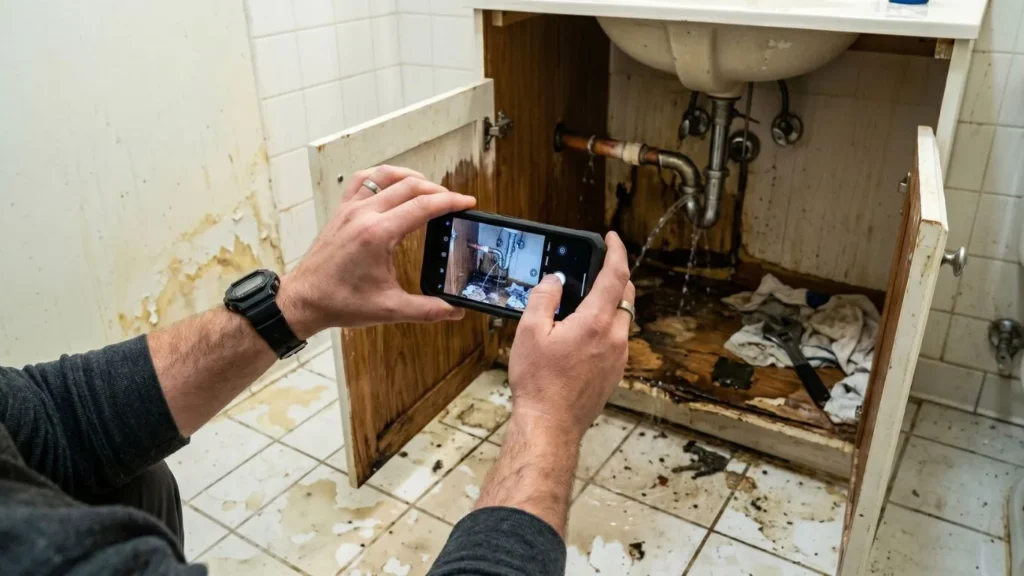
If you’re ever in a situation where you need to use this coverage, here’s exactly what to do:
Step 1: Leave and get safe first
Never stay in a dangerous or damaged property to gather information. Your safety comes before anything else.
Step 2: Document everything
Before you leave, if it’s safe to do so, take photos and videos of all the damage. Date-stamped photos are especially useful.
Step 3: Contact your insurer immediately
Call the claims line as soon as possible. Most insurers want to be notified within 24 to 72 hours. The sooner you call, the sooner the process begins.
Step 4: Ask about pre-approval
Before you book a hotel, ask your insurer if there’s a specific price range or type of accommodation that will be covered. A five-star resort suite will likely not be reimbursed if you normally live in a studio apartment.
Step 5: Keep every single receipt
Hotel bills, restaurant receipts, laundry tabs, pet boarding invoices save them all. These are what get you reimbursed.
Step 6: Stay in contact with your adjuster
Check in regularly on the status of your home repairs. Loss of use coverage has limits, and the clock is running.
Step 7: Submit your expenses
Your insurer will tell you how to submit receipts. Many now allow digital uploads through an app or online portal.
Understanding how to switch or manage your insurance policy well before an emergency gives you confidence to navigate claims without stress.
How Long Will Your Renters Insurance Pay for a Hotel?
This is one of the most common questions people have, and it’s one that most articles answer vaguely. Let’s be specific.
Loss of use coverage has a limit. That limit is usually expressed in one of two ways:
- A dollar cap, for example, $5,000 or $10,000 total
- A percentage of your personal property limit, commonly 20% to 30%
So if your personal property is insured for $30,000 and your ALE is set at 20%, you’d have $6,000 in hotel and living expense coverage.
Most policies also have a time limit, typically 12 to 24 months. Your coverage lasts until your unit is repaired, you find a new permanent place to live, or you hit your dollar or time limit, whichever comes first.
If repairs take longer than expected, contact your insurer. Extensions are sometimes granted if the delay is beyond your control.
What Happens If You Stay With Family Instead of a Hotel?
Here’s something very few people know: you don’t have to stay at a hotel to get reimbursed.
If you choose to stay with a friend or family member and pay them for meals Does Renters Insurance Cover Hotel Stays, a room, or shared utilities, your renters insurance may still reimburse those extra costs. The requirement is that the expense is reasonable and documented.
So even if you couch-surf at your sister’s place and chip in $200 toward her grocery bill, that $200 may still be a reimbursable additional living expense depending on your policy.
This gives you flexibility. You’re not forced into a hotel if you’d rather be around people you know.
What Renters Insurance Will NOT Cover for Hotel Stays
Let’s be very clear about the situations where renters insurance covers hotel stays: the answer is no.
- Floods caused by rain or rising bodies of water: standard renters policies don’t include flood damage. Flood coverage is a separate policy.
- Earthquakes: same situation. You’d need a separate earthquake rider.
- Mold or pest infestations: these are generally excluded from standard policies.
- Landlord renovations: if your landlord decides to renovate and asks you to leave, that is not a covered event.
- Choosing to leave voluntarily: if your home is still habitable and you just prefer a hotel, your policy won’t pay for it.
- Luxury accommodations: If your normal housing is modest, an insurer won’t pay for a suite at a five-star hotel.
Understanding these exclusions is just as important as knowing what’s included. Many renters are surprised to learn that flooding is not covered under a standard Does Renters Insurance Cover Hotel Stays policy. It’s one of the most common coverage gaps in the US.
The “Comparable Housing” Rule: What It Means for You
Insurers use a principle called comparable housing. What this means is that your temporary accommodation should be roughly equivalent to what you normally live in.
If you rent a studio apartment, your insurer expects you to book a standard hotel room, not a two-bedroom suite. If you live in a modest one-bedroom, a mid-range hotel is appropriate.
This doesn’t mean you have to suffer. But it does mean your coverage has reasonable limits built in. Always confirm with your insurer before booking, especially if you’re considering an extended-stay apartment or a furnished rental. If you’re wondering, “does renters insurance cover hotel stays,” remember that coverage depends on whether your temporary accommodation is reasonable and approved under your policy.
Knowing the full scope of what your renters policy covers helps you make smarter decisions long before you ever need to file a claim.
Does Renters Insurance Cover Hotel Stays for Roommates?
If you share your apartment with a roommate, here’s something important: each renter typically needs their own individual policy to be covered.
A roommate listed on your lease but not on your insurance policy is not automatically covered under your loss of use benefits. If a fire forces you both out, your policy covers your hotel costs. Your roommate would need their own renters insurance to cover theirs.
This is a detail that many Does Renters Insurance Cover Hotel Stays in shared housing overlook. Renters insurance is personal; it follows the policyholder, not the address.
For anyone who shares a space, understanding whether you need your own coverage or how dual coverage works across household members is worth exploring before anything goes wrong.
Does It Cover an Airbnb or Extended-Stay Apartment Instead of a Hotel?
Yes. Most policies don’t limit temporary housing strictly to traditional hotels. If your home is uninhabitable and you choose to stay at an Airbnb, a furnished short-term apartment, or even an extended-stay property, those costs are generally eligible for reimbursement under loss of use coverage, as long as the accommodation is comparable to your normal living situation. So, if you’re asking, “does renters insurance cover hotel stays?” the answer is generally yes, provided the loss is covered under your policy.
The important step is always to confirm with your insurer before you book. Get it in writing or documented via your claims portal if possible.
How to Make Sure You’re Adequately Covered Before Anything Happens
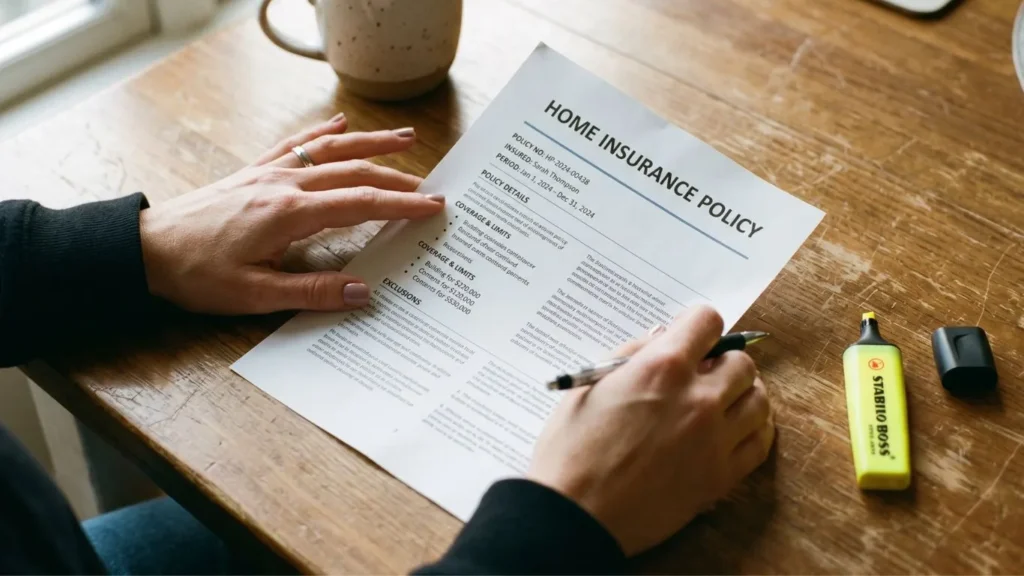
The best time to review your policy is not when you’re standing outside your flooded apartment at 11 PM.
Here are a few things to check today:
1. Know your ALE limit
Look at your declarations page and find your loss of use or additional living expenses limit. Is it enough to cover a few weeks in a hotel in your city?
2. Check your covered perils list
Make sure you understand what events trigger coverage and what doesn’t.
3. Review your deductible
Your deductible applies to the underlying event (like fire damage), not to the loss of use claim separately. So if your deductible is $500, that comes out of your property damage claim not your hotel reimbursement.
4. Consider higher limits if you live in an expensive city
In New York, San Francisco, or Miami, a comparable hotel may cost $200+ per night. Make sure your ALE limit reflects real-world costs in your area.
5. Store your policy digitally
Keep a copy of your declarations page in your email, cloud storage, or a photo in your phone. In an emergency, you’ll need that claims number fast.
People who take time to understand their personal financial protection broadly, not just Does Renters Insurance Cover Hotel Stays insurance, are far better prepared when unexpected events disrupt their lives.
The Hidden Value of Renters Insurance Most People Ignore
Most renters think of their policy as something that covers stolen laptops or damaged furniture. And yes, it does that. But the ability to cover hotel stays and temporary housing costs is one of the most financially significant benefits that often gets overlooked.
Think about it this way: if you’re forced out of your home for three weeks with no coverage, you could easily spend $3,000 to $5,000 out of pocket on hotels, food, and transportation. If you’ve ever wondered, does renters insurance cover hotel stays, this is where the value becomes clear. With renters insurance, most of those additional living expenses may be covered through Loss of Use coverage, helping reduce the financial burden during a difficult time.
And the average cost of a renters policy in the US? Less than $20 per month in many cases.
The math makes this one of the most practical financial tools available to anyone who rents. Whether you’re renting your first apartment or you’ve been a tenant for years, understanding how your overall insurance needs should grow alongside your life stage helps you build real financial security.
Quick Reference: Does homeowners insurance cover hotel stay
| Situation | Covered? |
|---|---|
| Fire makes apartment uninhabitable | ✅ Yes |
| Burst pipe floods your bedroom | ✅ Yes |
| Storm damage forces you out | ✅ Yes |
| Government evacuation order (wildfire) | ✅ Often yes |
| Vandalism leaves home unsafe | ✅ Yes |
| Flood from heavy rain | ❌ No |
| Earthquake damage | ❌ No |
| You voluntarily choose to leave | ❌ No |
| Landlord renovations | ❌ No |
| Luxury hotel above comparable standard | ❌ No |
FAQs
Does renters insurance cover belongings stolen from a hotel room during displacement?
Yes, in most cases it does. Your personal property coverage generally follows you wherever you go including a hotel room you're staying in because your apartment is uninhabitable. If someone breaks into your hotel room and steals your laptop, phone, or other belongings, your renters insurance personal property coverage can reimburse you, subject to your policy limits and deductible. This is something most renters don't realize and most competing articles never mention. Just keep in mind that certain high-value items like jewelry or camera equipment often have sub-limits, so those may not be fully covered without a scheduled personal property endorsement.
Can your landlord's insurance pay for your hotel stay instead of your own renters policy?
No. Your landlord's insurance covers the building structure walls, roof, plumbing systems not your temporary living costs. If a fire destroys your apartment, your landlord's policy helps them repair the unit. It does nothing for where you sleep tonight. That responsibility falls entirely on your own renters insurance policy through loss of use coverage. This is one of the biggest misconceptions renters have, especially those who assume their landlord's coverage extends to them in some way. It does not. Your coverage is your responsibility.
Does renters insurance cover a hotel stay if a neighbor's fire damages your unit?
Yes, it can. Even if the fire started in your neighbor's apartment and spread to yours, what matters is whether the damage to your unit makes it uninhabitable not who caused it. If a covered peril (fire, smoke, water from firefighting efforts) renders your rental unlivable, your loss of use coverage applies regardless of the fire's origin. You may also have a separate liability claim against your neighbor if their negligence caused the fire, but your own renters policy doesn't make you wait for that outcome. You can file your claim and get into a hotel right away.
What happens to your renters insurance hotel coverage if repairs take longer than expected?
Your coverage lasts until your unit is repaired and livable again, or until you hit your policy's dollar or time limit whichever comes first. Most policies cap ALE coverage at 12 to 24 months. If repairs are delayed because of contractor issues, permit backlogs, or supply chain problems, contact your insurer and document the delay. Many insurers will work with you on extensions when the hold-up is genuinely outside your control. The key mistake people make is assuming coverage ends on a fixed date. It doesn't. It ends when your home is habitable again or when your limits run out so staying in communication with your adjuster throughout the repair process matters more than most people realize.
Final Thoughts
So, does renters insurance cover hotel stays? Yes, when your home is made uninhabitable by a covered event, your policy’s loss of use coverage steps in to help pay for a hotel, meals, laundry, pet boarding, and more.
The catch is that it’s not unlimited. It applies to covered perils only, it covers comparable housing only, and it has a dollar or time cap built into your specific policy.
But when it works, and it does work in the right situations, it can be one of the most valuable things you’ll ever benefit from in your renters policy.
The most important thing you can do right now is pull out your policy, check your additional living expenses limit, and make sure you understand what’s covered. Don’t wait for an emergency to figure this out.
If you’re also thinking about whether your current coverage levels make sense for your situation across all types of insurance, that’s always a smart conversation to have sooner rather than later.
And if you’re wondering what happens to the belongings you store outside your apartment during a displacement your Does Renters Insurance Cover Hotel Stays insurance may cover those too. You can read more about how renters insurance handles off-site belongings in storage for a complete picture of your coverage.