
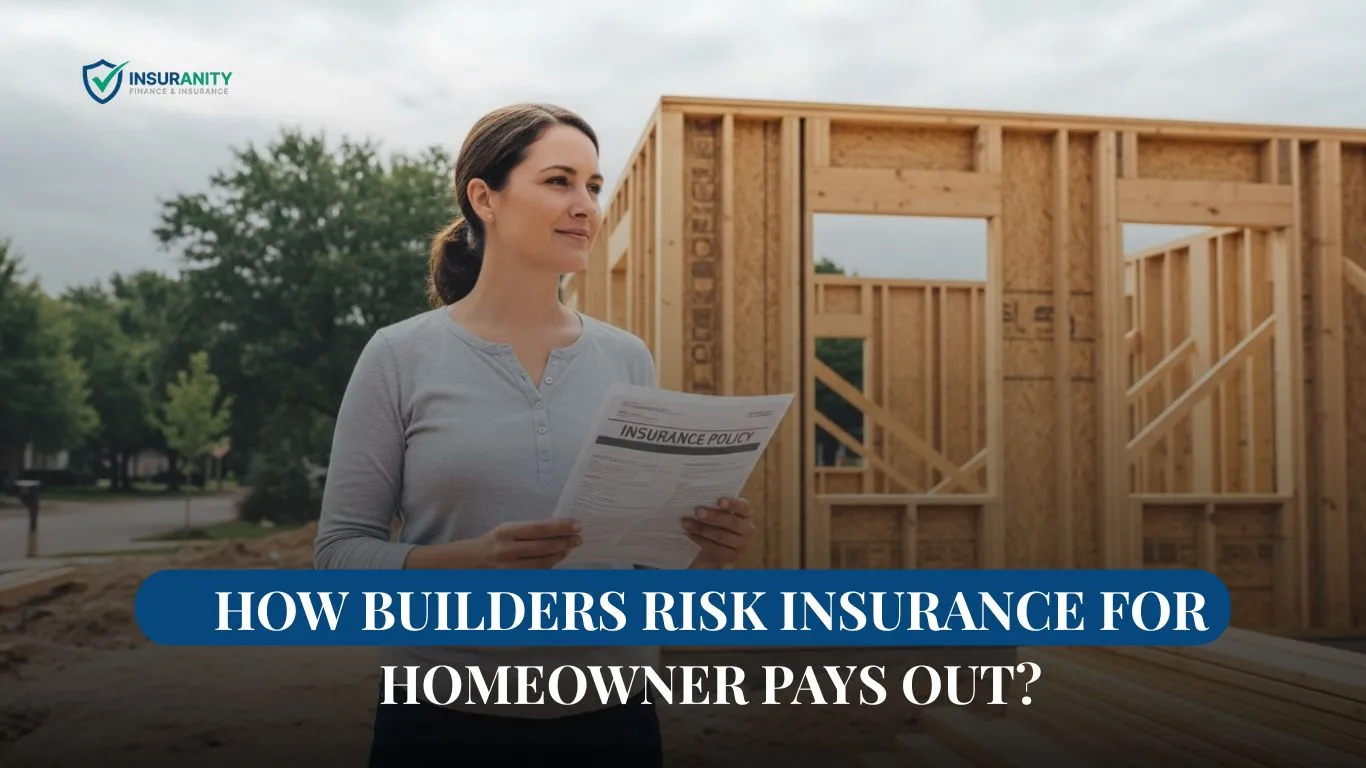
You finally broke ground on your dream home. The framing is up, the roof deck is going on, and then a storm rolls through overnight and takes half of it down with it. No warning. Just wood, nails, and hours of work scattered across the yard.
That is exactly the moment you find out whether you bought the right insurance, or whether you just assumed your regular homeowners policy had you covered.
Spoiler: it usually does not.
Builders risk insurance for homeowner projects is a completely different type of policy, and knowing how it pays out could save you from writing a very large check out of pocket.
What Is Builders Risk Insurance For Homeowner Projects?
Think of it this way. Your regular homeowners insurance protects a finished, lived-in home. It is designed for the house you eat breakfast in, watch TV in, and sleep in every night.
But a house that is still being built? That is a different animal. Walls are open. Materials are stacked in the yard. The roof is not sealed. Workers are coming and going. There is no furniture, no functioning plumbing, and sometimes no front door.
Builders risk insurance for homeowner projects, also called course of construction insurance, is specifically built to protect a property during the in-between phase. It covers the structure, the materials on-site, and in many cases, materials that are on a truck heading to your property.
Standard homeowners’ policies list construction as a straight exclusion. That means if a fire breaks out while your walls are still open, your regular policy is not going to pay a dime toward rebuilding the framing. That gap is exactly what builders risk insurance for homeowner coverage is designed to fill.
If you are also dealing with related property coverage questions, reading up on commercial property and landlord insurance can help you understand how property-specific policies generally work before diving deeper into construction coverage.
How the Claim Payment Process Actually Works
This is the part most homeowners are genuinely confused about. Here is a real-world walk-through so you know what to expect before something goes wrong.
Step 1: Something Happens on the Job Site
A covered event occurs. That might be a fire, a windstorm, vandalism, theft of materials, or water damage from a burst pipe. The clock starts from the moment of the loss.
Step 2: You File a Claim Right Away
Do not wait. Most builders risk insurance for homeowner policies have strict reporting requirements. Some require you to notify the insurer within 24 to 72 hours. Missing that window can complicate or delay your payout.
Document everything immediately. Photos, video, and a written description of what happened and when. If materials were stolen, file a police report too.
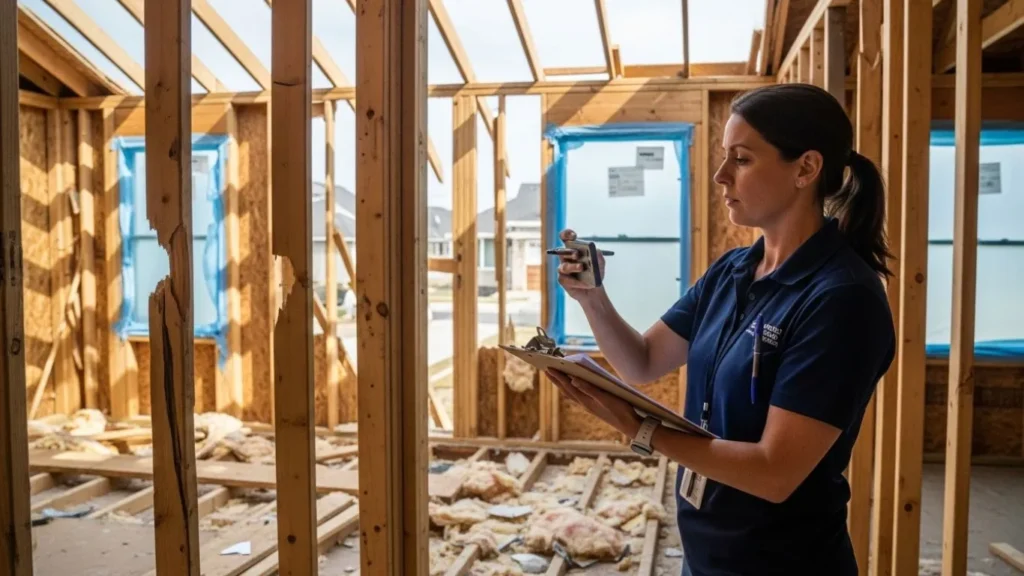
Step 3: The Adjuster Comes Out
An insurance adjuster is sent to inspect the damage. They assess the loss based on the policy’s valuation method, which is either actual cash value or replacement cost value. This matters a lot.
Actual cash value pays you what the damaged material or structure was worth at the time of the loss, accounting for depreciation. So if lumber prices dropped between the time you bought it and the time it burned, you might get less than you paid.
Replacement cost value pays what it actually costs to replace the item at today’s prices. This is almost always the better option for homeowners building new construction, since material costs can shift significantly over the course of a project.
Step 4: The Payment Is Calculated Against Your Policy Limit
Your builders risk insurance for homeowner policy should be set up to match the total projected cost of the completed structure, not the land, just the building. If your home costs $400,000 to build and you only insured it for $250,000, you are underinsured. The payout will be proportionally reduced.
This is one of the most common mistakes homeowners make when setting up their policy. Work with your contractor to get a solid estimate before you set your coverage limit.
Step 5: Your Deductible Is Applied
Like any insurance policy, a deductible comes out first. Construction policies often have higher deductibles than standard homeowners policies, sometimes $2,500 to $10,000, depending on the insurer and the project size. The net payout after the deductible is what gets sent to you or directly to your lender if a mortgage is involved.
Step 6: The Build Resumes
With the claim paid, construction can resume. If the policy also covers soft costs, things like architect re-draws, permit re-applications, or additional loan interest caused by delays, those expenses can be submitted separately.
What Builders Risk Insurance For Homeowner Coverage Actually Pays For
Here is a breakdown of what is generally covered under a standard builders risk insurance for homeowner policy:
| Covered Item | Notes |
|---|---|
| The structure itself | Framing, walls, roofing, foundation |
| Materials on-site | Lumber, fixtures, plumbing, electrical components |
| Materials in transit | Coverage while supplies are being delivered |
| Temporary structures | Scaffolding, site offices, construction trailers |
| Theft of materials | Must usually meet a minimum value threshold |
| Fire damage | One of the most common claims filed |
| Wind and hail damage | May require a separate endorsement in high-risk zones |
| Water damage (non-flood) | Burst pipes, rain through an open roof |
| Vandalism | Graffiti, intentional damage to the structure |
This is also a good time to understand how business personal property insurance handles owned equipment, relevant if you own any tools or machinery on the job site.
What It Does Not Pay For
Understanding the exclusions of builders risk insurance for homeowner policies is just as important as knowing what is covered. Here is what typically falls outside the policy:
Flood damage
Standard policies do not cover flooding. If your build site is in a flood zone, you need a separate flood policy or a specific flood endorsement.
Earthquake damage
Same situation. Earthquakes require their own coverage in most states.
Employee theft
If a worker steals materials, that is generally not covered under builders’ risk. A crime or fidelity bond handles that.
Contractor errors
If the framing is wrong and has to come down, that is a workmanship issue, not an insurable loss. Builders risk insurance for homeowner coverage pays for sudden, accidental physical damage, not faulty work.
Wear and tear
If materials deteriorate because they sat exposed to weather for six months, that is maintenance, not a loss.
Completed portions that are occupied
The moment part of your home is occupied, even partially, the builders’ risk policy may stop covering that portion. This is a detail worth confirming with your insurer before you move into a finished wing while other parts of the house are still under construction.
For context on how occupation status changes coverage rules, the concept is similar to how home daycare insurance requires different coverage the moment a home takes on a commercial use. The use of the property changes everything.
Who Actually Buys the Policy, You or the Contractor?
This question causes more confusion than almost any other part of builders risk insurance for homeowner situations. The honest answer is: it depends on the contract.
In most residential builds, the property owner, that is, you, is responsible for the builder’s risk policy. But some general contractors carry their own builders’ risk and roll that cost into their bid. Read your construction contract carefully. The policy should name all parties with a financial interest in the project as additional insureds: the property owner, the lender if a construction loan is involved, and sometimes the general contractor.
If your contractor says they have coverage, ask to see the certificate of insurance and confirm that your name and the property address are on it. Do not take anyone’s word for this. A verbal assurance that “we’re covered” has left more than a few homeowners with a gap in coverage they discovered only after filing a claim.
If you are hiring independent tradespeople for smaller renovation work, understanding workers’ compensation insurance for sole proprietors is important so you know what they are and are not covered for on your property.
How Much Does Builders Risk Insurance For Homeowner Coverage Cost?
Premiums for builders risk insurance for homeowner policies typically run between 1% and 4% of the total construction value.
So, for a $300,000 home build, you are looking at roughly $3,000 to $12,000 for the policy term. Policy terms are usually 6, 9, or 12 months. Extensions are possible if the build runs over schedule, though they often require underwriter approval.
Several factors push the cost up or down:
- Location. Coastal areas with hurricane exposure, wildfire zones, and tornado-prone regions all carry higher premiums.
- Construction type. A wood-frame house costs more to insure than a concrete or steel structure because wood burns.
- Project value. Larger projects mean higher coverage limits and higher premiums.
- Deductible choice. Taking a higher deductible lowers your premium but means more out of pocket if you file a claim.
- Coverage add-ons. Soft cost coverage, flood endorsements, and equipment breakdown coverage all add to the base premium.
A Real-World Scenario: What Happens When You Skip It
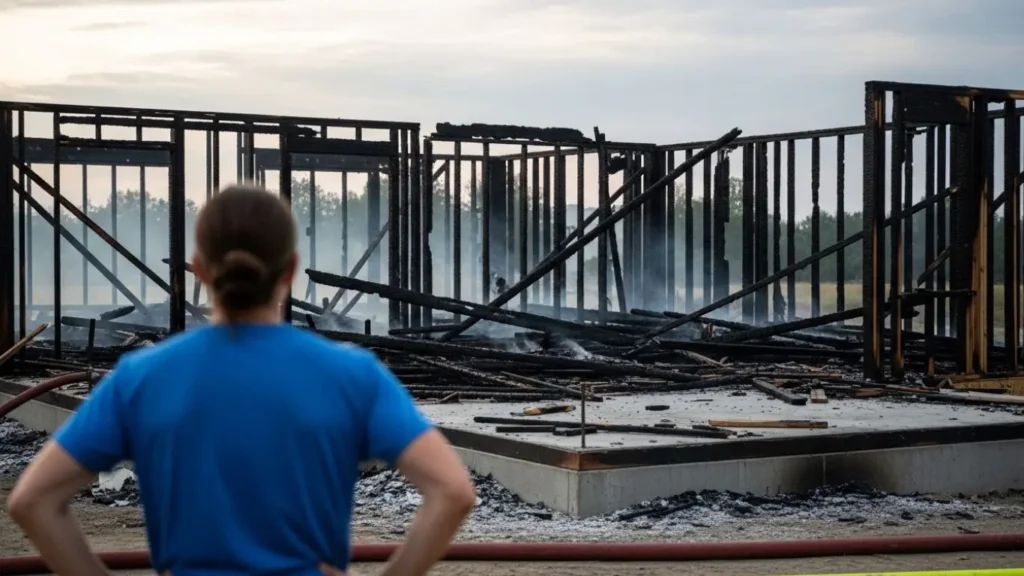
Consider what happened to one homeowner in the Midwest who was building a new home with a general contractor. The contractor verbally assured him that the project was “insured.” What the contractor actually had was general liability coverage, which protects against third-party bodily injury claims, not builders’ risk. When a fire started in the framing from a construction heater left running overnight, the entire first floor had to be torn down and rebuilt.
The contractor’s liability policy paid nothing toward the structural rebuild because the loss was to the property under construction, not a third party. The homeowner had no builders’ risk of his own. He paid $47,000 out of pocket to get the framing back to where it was.
That story plays out more often than most people realize. Builders risk insurance for homeowner projects is not optional protection. It fills a real gap that nothing else covers.
When Coverage Starts and When It Ends
Builders risk insurance for homeowner policies is not retroactive. Coverage starts on the date the policy is bound, and only covers damage that occurs after that date. Any work already done before the policy starts is not covered if it is later damaged.
This means you need the policy in place before the first nail goes in. Not after the foundation is poured. Not once framing starts. Before construction begins.
Coverage ends when one of these things happens:
- The policy term expires
- The project is completed, and the certificate of occupancy is issued
- The property is occupied or put into use
- The policy is cancelled
Once construction wraps up, your builders risk insurance for homeowner policy is replaced by a standard homeowners insurance policy. There should be no gap between the two. Coordinate the transition in advance so your new home is insured from the moment it is finished.
This transition is similar in logic to how term vs. whole life insurance works, the right product for the right phase of life, and a clear handoff from one to the next when circumstances change.
Renovation Projects vs. New Builds: Is There a Difference?
Yes, and it matters. Builders risk insurance for homeowner coverage for renovation works a little differently than for a ground-up new build.
When you are renovating an existing home, you may have the option to insure just the renovation work, or the entire existing structure plus the renovation. If a fire starts during construction and destroys both the new addition and part of the original home, you want coverage on both, not just the addition.
For renovation projects, policy terms are often shorter: 3, 6, or 9 months. And your existing homeowners policy may be suspended or modified while major structural work is underway, since most standard homeowners policies exclude dwellings that are under heavy renovation.
Talk to your insurance agent before any major renovation starts. The window where you have neither adequate homeowners coverage nor a builders risk policy in place is when real financial exposure happens.
How to Set Up Builders Risk Insurance For Homeowner Coverage the Right Way
Here is a practical checklist for getting this right before construction starts:

1. Get a firm construction cost estimate from your contractor
This number drives your coverage limit. If you underestimate, you are underinsured.
2. Decide who buys the policy
Read the construction contract. If it is not spelled out, assume it is your responsibility.
3. Confirm the policy covers all named interests
Your name, your lender’s name, and possibly the contractor’s name should all appear on the certificate.
4. Choose replacement cost value, not actual cash value
Material costs change. You want coverage that rebuilds, not coverage that pays yesterday’s prices.
5. Ask about soft cost endorsements
Delays cost money. Permit re-applications, additional loan interest, and architect re-work fees add up fast. Many standard policies do not cover these automatically.
6. Bind coverage before day one of construction
Not after. Not once the slab is poured. Before.
7. Keep documentation throughout the build
Photos, receipts, and inspection reports. If you ever file a claim, this documentation speeds up the process considerably.
8. Plan the transition to homeowners’ insurance
Know the expected completion date and have your permanent policy ready to go.
For more on how property-related coverage layers work in commercial and residential settings, commercial property landlord insurance covers some of the same layering principles that apply to construction projects.
If you run a small business alongside managing your build, also look at how bond and insurance for small businesses work, particularly if your contractor is a sole operator who may carry bonding in place of some coverage types.
The Part Most Articles Skip: Soft Costs
Almost every article on builders risk insurance for homeowner coverage talks about what happens when materials are stolen or the framing burns. Very few talk about what happens to your finances when the project just… stops.
Construction delays are expensive in ways that are not obvious until you are in them. If your home is unlivable and under major renovation, you might be paying rent somewhere else. If you have a construction loan, interest is accruing while nothing is being built. If the architect has to redraw plans because the inspection found something wrong after a covered loss, that is another bill.
Soft cost endorsements on builders risk insurance for homeowner policies can cover all of this: additional loan interest, re-inspection fees, permit re-application costs, architect and engineering fees that have to be redone, and sometimes even lost rental income if you planned to rent out part of the property after completion.
These endorsements are not usually expensive. But they are rarely part of the base policy. You have to ask for them.
This kind of detail, the things that quietly drain money during a construction delay, is the same reason understanding what a health insurance premium matters in medical coverage: the base premium is just the starting point, and the real cost picture is in the details.
FAQs
What happens if I am underinsured and a loss occurs during construction?
If your coverage limit is set below the actual replacement cost of the project, a co-insurance penalty kicks in at the time of a claim. Here is how it works: if your home costs $400,000 to build and you only insured it for $300,000, the payout on any claim is reduced proportionally. A $100,000 loss would only pay out $75,000 because you only carried 75% of the required coverage. The remaining $25,000 comes out of your pocket. This is one of the most financially painful mistakes homeowners make, and it is entirely avoidable by setting your coverage limit at 100% of the projected completed value from the start.
Does builders risk insurance cover mold that develops during construction?
Typically, no. Mold and pollution are standard exclusions on most builders risk policies. If rain gets into an unsealed structure and mold grows over several weeks, that is generally not covered because it is considered a gradual condition rather than a sudden accidental loss. However, if mold results directly from a covered water event, for example, a burst pipe causes flooding and mold develops as a result, some policies may cover the mold remediation as part of the larger water damage claim. The key is whether the mold stems from a covered peril or from a slow, preventable condition. Read your policy exclusions carefully and ask your agent specifically about mold before signing.
Can I live in part of my house while a builders risk policy is active?
This is a question that catches a lot of homeowners off guard. In most cases, partial occupancy while a builders risk policy is in force can affect or void your coverage, particularly for the occupied portion of the home. Builders risk policies are designed for properties that are actively under construction, not for occupied residences. If you move into a finished section of the home while other areas are still being built, the insurer may consider the occupied portion as no longer within the scope of the builders risk policy. Some policies specifically state that coverage ends or is reduced the moment any part of the structure is put to its intended use. Confirm this with your insurer before moving in, and coordinate the transition to a standard homeowners policy for any completed, occupied sections.
Does my lender require builders risk insurance for a construction loan?
In most cases, yes. Lenders who issue construction loans almost always require proof of builders risk coverage before releasing funds. This is because the lender has a financial interest in the property being built, and the loan is secured by a structure that does not yet fully exist. Without insurance in place, there is no protection for their collateral if something goes wrong mid-build. Some municipalities also require proof of builders risk coverage before issuing a building permit, separate from any lender requirement. If you are financing your build, check your loan agreement, the insurance requirement is usually listed there, along with minimum coverage limits and the requirement to name the lender as an additional insured on the policy.
Final Thought
Builders risk insurance for homeowner coverage is not complicated. But it is easy to skip because it feels like one more thing during an already overwhelming process.
The homeowner who pays for it and never files a claim considers it money spent and gets on with their life. The homeowner who skips it and has a fire in week six of framing learns, the hard way, that assumption is not coverage.
Get the policy before construction starts. Set the limit correctly. Confirm who is named on it. Then build.
If you are working through related insurance decisions during a project, media liability insurance and business liability insurance NJ are resources available on this site for contractors and project managers who need to understand their own side of the coverage equation.
Builders risk insurance for homeowner projects exists for one reason: because the most expensive thing you will ever build deserves to be protected while it is being built, not just after.