
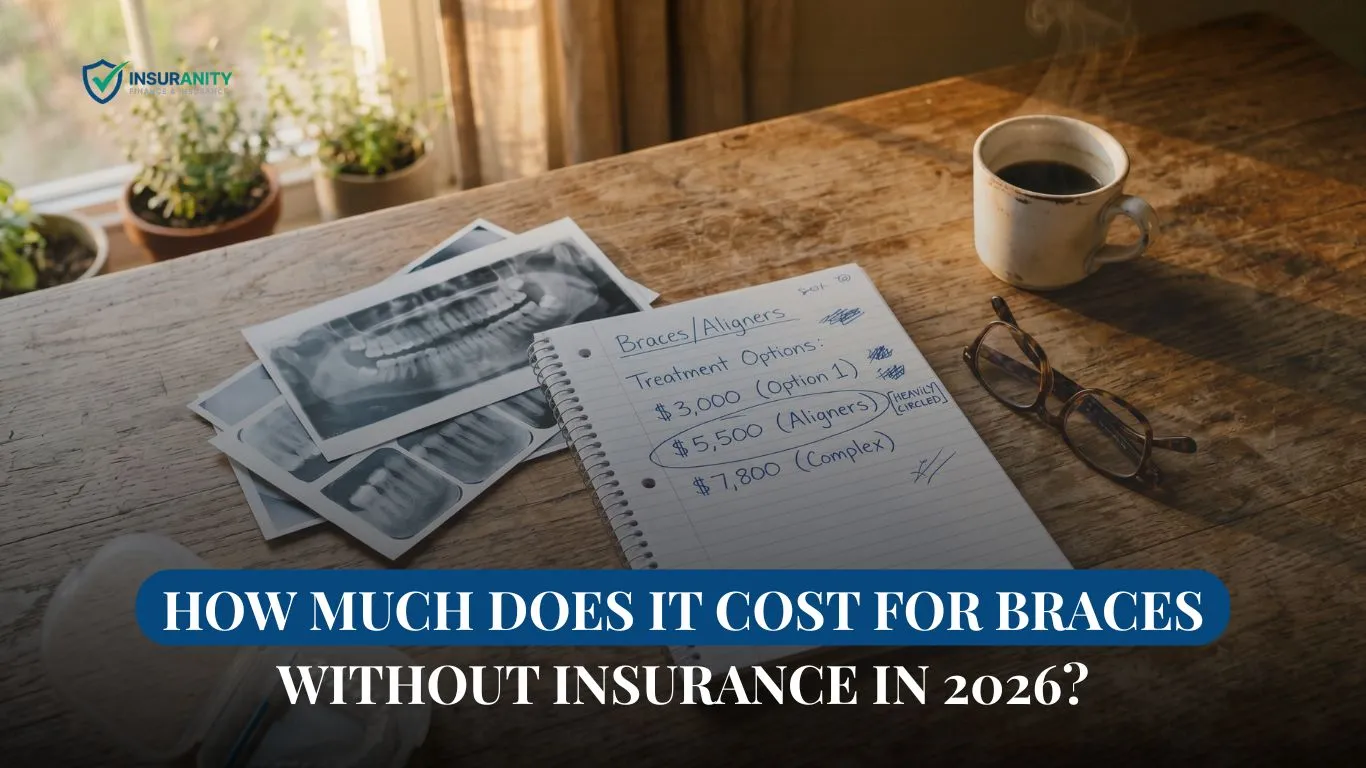
A mom in Ohio walked into an orthodontist’s office last spring expecting a $4,000 quote for her teenage daughter’s braces. She walked out with a treatment plan of $7,800 and no dental insurance to soften the blow. Her first thought wasn’t relief that her kid would finally get a straight smile. It was how on earth am I going to pay for this?
How Much Does It Cost For Braces Without Insurance? If you’re reading this, you’re probably standing in a similar spot. So let’s answer the question plainly, then walk through every piece of the puzzle so nothing surprises you at the consultation.
The Short Answer
How Much Does It Cost For Braces Without Insurance in 2026? On average, the cost of braces without insurance falls between $3,000 and $10,000, with most U.S. families paying somewhere around $5,000 to $6,000 for traditional metal braces. The exact price depends on what type of braces you pick, how complicated your case is, where you live, and how long you wear them.
Here’s the price snapshot in one table:
| Type of Braces | Average Cost Without Insurance | Best For |
|---|---|---|
| Traditional Metal Braces | $3,000 – $7,000 | Most cases, kids and teens |
| Ceramic Braces | $4,000 – $8,500 | Adults wanting a discreet look |
| Clear Aligners (Invisalign-style) | $3,000 – $8,500 | Mild to moderate cases |
| Lingual Braces (behind teeth) | $7,000 – $13,000 | People who want them invisible |
| Self-Ligating Braces | $4,000 – $7,500 | Faster, fewer adjustments |
That’s the headline. Now let’s get into the why, the how, and the where-do-I-find-the-money part, because How Much Does It Cost For Braces Without Insurance is only useful if you also know how to bring that number down.
Why Braces Cost So Much in the First Place
Braces aren’t just wires and brackets. The price covers x-rays, scans, the orthodontist’s training (a four-year specialty after dental school), every adjustment appointment over 18 to 30 months, retainers afterward, and emergency visits when a bracket pops off during a popcorn night.
When you ask How Much Does It Cost For Braces Without Insurance, you’re really asking about a service that stretches across two to three years of care. Spread out that way, even $6,000 is roughly $200 to $250 a month. Still a lot. But less scary than the lump sum.
A few things drive the price up or down:
- Case complexity. A small crowding fix is cheap. Underbites, overbites, and crossbites can stretch treatment by a year and add 20 to 30 percent to the bill.
- Geographic location. Manhattan, San Francisco, and L.A. orthodontists routinely quote $1,500 to $3,000 more than offices in rural Tennessee or Iowa.
- Age of the patient. Adult teeth move more slowly. Adults usually pay a few hundred dollars more than teens for the same alignment job.
- Type of appliance. Metal is cheapest, lingual is priciest. The aesthetics tax is real.
Want to compare this to other big out-of-pocket dental bills? Our breakdown of what a crown actually costs when you’re paying cash follows the same logic.
Breaking Down the Cost By Type of Braces
Traditional Metal Braces
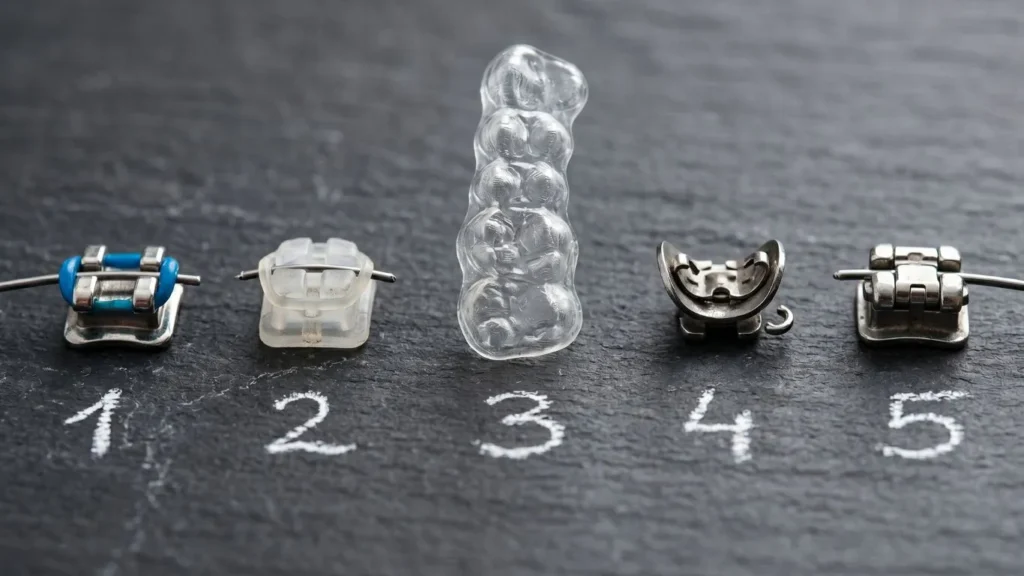
These are the workhorses. Stainless steel brackets, archwires, and little colored elastic bands kids love picking out. The cost of braces without insurance for metal options usually runs $3,000 to $7,000 for a full course.
Metal braces have stayed popular for one boring reason: they work on every case, from crooked front teeth to severe bite problems. Your orthodontist isn’t pushing them because they’re old-school. They’re pushing them because they’re predictable and durable.
Ceramic Braces
Same mechanics as metal, but the brackets are tooth-colored or clear. From two feet away, most people won’t notice them. Ceramic runs $4,000 to $8,500 without insurance.
The catch is that the brackets stain if you drink coffee, red wine, or curry sauces without rinsing. They also chip more easily than steel. Many adults pick them anyway because nobody at the office board meeting needs to know about your dental situation.
Clear Aligners
Invisalign and its competitors. You wear a series of removable plastic trays, each one nudging your teeth a little further. How Much Does It Cost For Braces Without Insurance when you go the aligner route? Usually $3,000 to $8,500, with most paying around $5,000.
Aligners aren’t right for everyone. Severe rotations, tall canines that need to be pulled into the arch, big bite corrections, those usually still need fixed braces. But for mild crowding or relapse after old orthodontic work, they’re often the comfortable pick.
Lingual Braces
These get glued to the back of your teeth, facing your tongue. Completely invisible from the outside. Custom-made to fit each tooth, which is why they cost $7,000 to $13,000, sometimes more. They take longer to get used to because of how they sit against your tongue, and not every orthodontist offers them.
Self-Ligating Braces
Self-ligating brackets hold the wire in place with a small built-in door instead of elastic ties. Fewer adjustments needed, sometimes shorter treatment time. Average cost without insurance: $4,000 to $7,500.
What Most People Don’t Budget For
Here’s where many families get tripped up. The headline price isn’t everything. Before you commit, ask exactly what’s bundled in. These add-ons can quietly tack on $500 to $2,000:
- Initial consultation and records. Some offices charge $100 to $300. Plenty offer it free, so shop around.
- X-rays and 3D scans. $200 to $500 if not included.
- Tooth extractions. $150 to $400 per tooth if you need them pulled to make room.
- Retainers after treatment. $200 to $1,000 for a set. Crucial. Skip the retainer and your teeth drift back within months.
- Replacement retainers. Lose one, and you’re paying $150 to $500 again.
- Emergency repairs. A popped bracket from biting an apple wrong: $30 to $100 a visit.
When calculating How Much Does It Cost For Braces Without Insurance for your specific situation, get a written treatment plan that lists every line item. A good orthodontist will hand you this without flinching.
A Step-By-Step Guide to Paying Less
This is the part that other articles rush through. Here’s a practical sequence that actually saves money.

Step 1: Get Three Consultations Before Choosing
Most orthodontists offer free initial consultations. Use that. Walk into three different offices. You’ll often see quotes vary by $1,500 to $3,000 for the same treatment plan. Bring the written estimates with you to the third visit and ask if they can match or beat the best one. Many will.
Step 2: Ask About Pay-in-Full Discounts
If you can swing the lump sum, ask point-blank: “What’s your discount for paying the entire treatment upfront?” Standard discounts range from 5 to 10 percent. On a $6,500 case, that’s $325 to $650 back in your pocket.
Step 3: Use HSA or FSA Money
Both Health Savings Accounts and Flexible Spending Accounts let you pay with pre-tax dollars. Depending on your tax bracket, this is effectively a 20 to 30 percent discount. If your employer offers an FSA and you haven’t enrolled, check the next open enrollment window.
The IRS treats orthodontic treatment as a qualified medical expense, which is one reason these accounts work so well against the cost of braces without insurance.
Step 4: Look Into In-House Monthly Payment Plans
Most orthodontists offer their own payment plans, often with zero interest if you stick to the schedule. Typical structure: down payment of 20 to 30 percent, then monthly payments spread across the treatment duration. So on a $5,000 case with $1,000 down, you’d pay around $170 a month for 24 months.
This is usually a better deal than CareCredit or third-party financing, which can hit you with deferred-interest traps if you miss a payment.
Step 5: Check Dental Schools in Your Area
Dental schools with orthodontic residency programs offer supervised treatment at 30 to 70 percent off standard prices. The catch: appointments take longer, you’re seen by a resident (with a licensed orthodontist supervising), and there’s often a waiting list. For families asking How Much Does It Cost For Braces Without Insurance and feeling sticker-shocked, this is the single biggest lever you can pull.
Step 6: Consider Dental Discount Plans
These aren’t insurance. They’re membership programs, usually $100 to $200 a year, that get you 15 to 25 percent off at participating providers. On a $6,000 treatment, that’s $900 to $1,500 saved, minus the membership fee. Worth running the math.
Step 7: For Kids, Check Medicaid and CHIP
If braces are medically necessary, Medicaid covers them in every state for children under 21. “Medically necessary” usually means a severe overbite, cleft palate, or other conditions that affect chewing and speech. Pure cosmetic cases won’t qualify. The Children’s Health Insurance Program (CHIP) works similarly for families that earn too much for Medicaid but can’t afford private coverage.
Eligibility rules vary by state, so it’s worth reading how state programs handle health and dental coverage rules before assuming you don’t qualify.
Adults vs. Kids: The Cost Difference Nobody Mentions Upfront
Two patients walk into the same office. One is 14. One is 34. They have the same crowding pattern. Why does the adult get quoted $800 more?
A few reasons. Adult bone is denser, so teeth move more slowly, meaning longer treatment. Adults are more likely to have existing dental work, such as crowns, bridges, or implants, which can complicate bracket placement. Adults also tend to want ceramic or lingual options, which cost more by default.
If you’re an adult wondering How Much Does It Cost For Braces Without Insurance, budget for the upper end of each range. A teen’s $4,500 case is often a $5,500 case for the same person 20 years later.
Regional Price Differences You Should Actually Know About
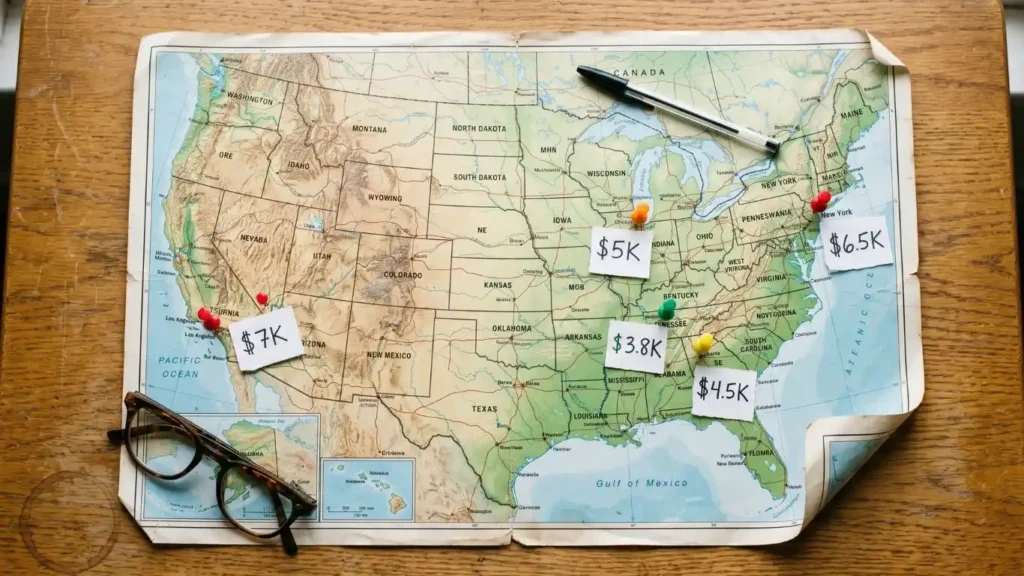
Where you live changes the answer to How Much Does It Cost For Braces Without Insurance more than most people realize.
| Region | Typical Metal Braces Cost |
|---|---|
| Northeast (NYC, Boston) | $5,500 – $8,000 |
| West Coast (LA, SF, Seattle) | $5,500 – $8,500 |
| Midwest (Chicago, Detroit, Indianapolis) | $4,000 – $6,500 |
| Southeast (Atlanta, Charlotte, Tampa) | $3,800 – $6,200 |
| Rural areas (any state) | $3,000 – $5,500 |
If you live in an expensive metro and have flexibility, driving an hour to a suburban or rural orthodontist for monthly adjustments can save you a few thousand dollars over the full treatment. The math isn’t crazy when you write it out.
This kind of geographic price gap shows up across healthcare. We saw the same pattern in how MRI prices swing dramatically by zip code, and the lesson translates: location is leverage.
What About Going Without Treatment?
Some people read these numbers and start wondering if they can just skip braces. Here’s the honest answer. For cosmetic-only cases (mildly crooked teeth, small gaps), skipping is a legitimate personal choice. Plenty of adults live their whole lives with imperfect teeth and zero problems.
But misalignment that affects your bite causes real, measurable damage over decades. Uneven pressure wears down enamel. Crowded teeth trap food and lead to faster decay. Severe bite problems can trigger jaw pain, headaches, and TMJ disorders that cost more to treat than braces ever would. According to research published by the National Institute of Dental and Craniofacial Research, untreated malocclusion is linked to higher rates of tooth loss and gum disease later in life.
If your orthodontist tells you braces are medically warranted, that’s not a sales pitch. It’s worth taking seriously.
Insurance Could Still Help, Even Without a Plan Today
A quick detour. If you’re currently uninsured but might enroll soon, dental plans with orthodontic coverage typically pay 50 percent of treatment up to a lifetime maximum of $1,500 to $3,000. Premiums for adult orthodontic add-ons run around $30 to $50 a month.
The catch most people don’t see coming: most plans have a 6 to 12 month waiting period before orthodontic benefits kick in. So buying coverage the week before getting braces won’t help. Plan, ideally a year ahead.
Some families also consider keeping their kid on a parent’s plan longer. Our guide on how long kids can stay covered on a parent’s policy breaks down the age cutoffs and what’s still covered.
A Quick Word on Mail-Order Aligners
You’ve seen the ads. $2,000 for clear aligners sent to your door, no orthodontist visits required. The pricing looks amazing compared to the $5,000+ in-office number.
Here’s what the ads don’t tell you. Orthodontists across the country regularly treat patients who used mail-order aligners and ended up with shifted bites, gum recession, or teeth that moved in directions nobody planned. The correction often costs more than just doing it right the first time. The American Association of Orthodontists has issued formal warnings against unsupervised tooth movement. Take that seriously.
Yes, mail-order is cheaper. But the real answer to How Much Does It Cost For Braces Without Insurance should include the cost of fixing what goes wrong, and that’s where the math flips.
FAQs
How long do I have to wear braces if I'm paying out of pocket?
Treatment length isn't affected by how you pay. Most cases run 18 to 24 months, with mild corrections finishing in 6 to 12 months and complex bite issues taking up to 36 months. Paying out of pocket doesn't speed things up or slow them down. The only way to shorten treatment is choosing accelerated options like Propel or AcceleDent, which add $500 to $1,500 to your total cost.
What happens if I stop paying for braces mid-treatment?
This is a real problem more people face than they admit. If you fall behind on payments, your orthodontist can pause treatment, which usually means leaving the brackets on but skipping adjustments until you catch up. Some practices will remove the braces entirely and hand you a partial refund minus work completed. Worst case, the account goes to collections and damages your credit. The smart move is calling the office before missing a payment and asking about a temporary lower amount.
Are second-hand or used braces a real option?
No, and anyone telling you otherwise on Reddit or Facebook Marketplace is putting your teeth at risk. Brackets are custom-bonded to individual teeth and contoured to specific tooth shapes. Using someone else's hardware can cause uneven pressure, root damage, and infection. The closest legitimate option is a smaller-scale tune-up if you had braces years ago and your teeth shifted slightly, which some orthodontists offer for $1,500 to $3,000.
Will my taxes cover any of the braces cost?
Possibly. The IRS lets you deduct medical and dental expenses that exceed 7.5 percent of your adjusted gross income, and orthodontic treatment qualifies. So if you earn $60,000 a year, any medical costs above $4,500 are deductible. A $6,500 braces bill paid in one tax year would give you a $2,000 deduction. You need to itemize rather than take the standard deduction, which only makes sense if your total itemized deductions beat the standard amount. A quick chat with a tax preparer settles whether it's worth it for your situation.
Putting It All Together
So one more time, with the full picture: How Much Does It Cost For Braces Without Insurance in 2026?
For a typical case, expect to pay between $3,000 and $10,000, with the middle of that range ($4,500 to $6,500) being where most families end up. Metal is the cheapest. Lingual is the priciest. Adults pay a bit more than kids. City prices beat rural ones by 20 to 40 percent.
You can knock that number down meaningfully by combining tactics: pay-in-full discount, HSA or FSA dollars, dental school programs, in-house monthly plans, and shopping three offices instead of one. Real-world families using two or three of these strategies often pay 30 to 50 percent less than the sticker price.
The mom from the start of this article? She got a second opinion 25 minutes down the road, paid the down payment out of her FSA, and locked in 24 months at zero interest. Came out at $5,400 instead of $7,800. Same kid, same braces, same outcome. Two thousand four hundred dollars were saved because she didn’t take the first number as gospel.
That’s really the only trick. The first quote is a starting point. Get two more. Ask about discounts they won’t volunteer. Run the HSA math. The final answer to How Much Does It Cost For Braces Without Insurance isn’t a fixed number. It’s a range, and you’re allowed to push toward its bottom.
How Much Does It Cost For Braces Without Insurance? Before signing anything, also think about how this fits your wider household budgeting. If you’re juggling other big out-of-pocket health expenses, our piece on smart ways to handle uncovered medical costs walks through similar trade-offs. For dental-specific cost planning, the parallel guide on paying out of pocket for routine dental cleanings is a good companion read. If you’re weighing whether to add dental coverage going forward, our breakdown of how health insurance premiums actually work explains what you’re really paying for. And if a recent imaging bill is also on your radar, the typical pricing for a CT scan with coverage gives you a fair benchmark.