
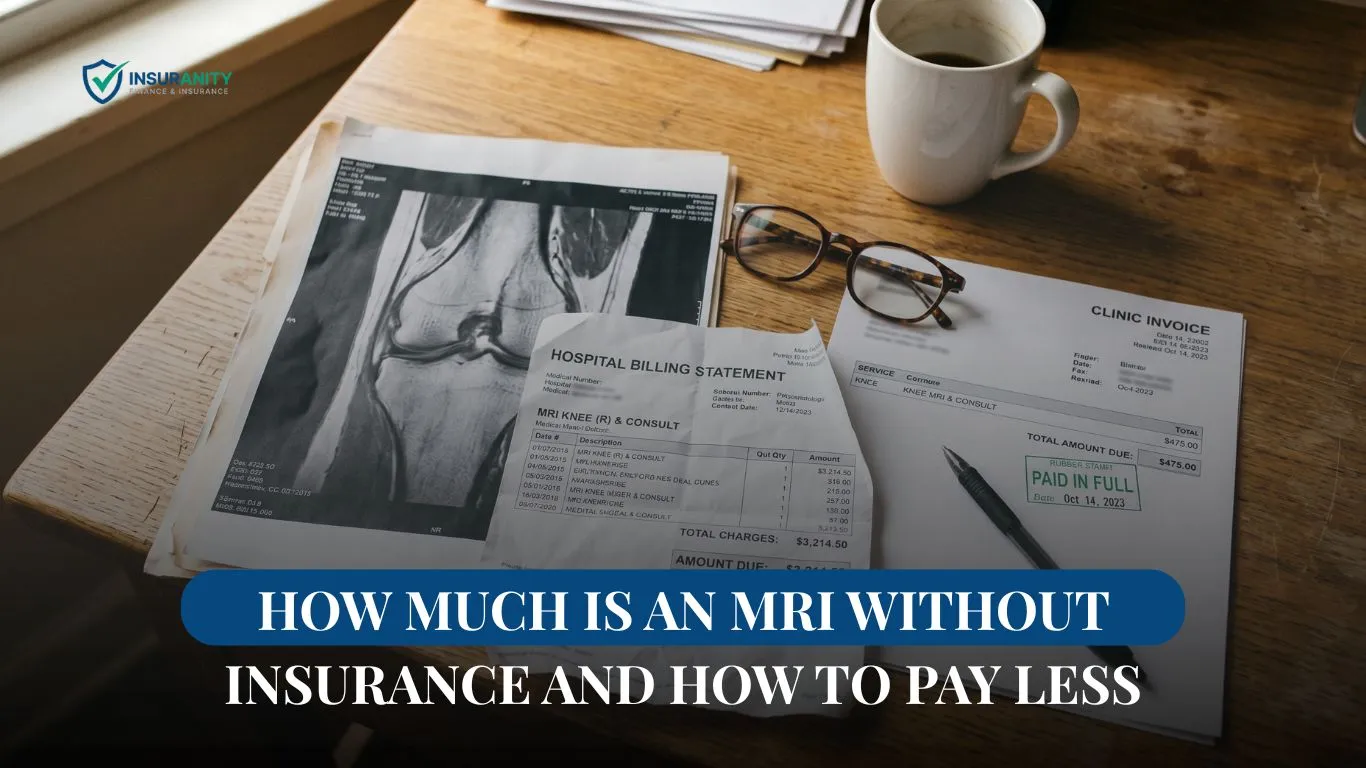
You walk out of the doctor’s office holding a slip that says you need an MRI. The first thing you do isn’t worry about your health. It’s pull out your phone and search how much is an MRI without insurance, hoping the number won’t ruin your month.
Then the search results show $400 on one site and $12,000 on another. That isn’t a price range. That’s chaos.
Here’s the truth nobody tells you upfront: the same scan can swing thousands of dollars depending on which building you walk into. A friend in Atlanta got a knee MRI last year. The hospital across the street from her job quoted $3,200. A standalone imaging center 15 minutes away charged her $475 cash. Same scan. Same machine type. Same kind of radiologist credentials. The only thing different was the front door she walked through.
This guide breaks down what an MRI actually costs when you’re paying out of pocket, why prices look so wild, and the exact moves that bring the bill way down.
What an MRI Really Costs Without Coverage
An MRI uses big magnets and radio waves to take detailed pictures of soft tissue, like your brain, spine, joints, and organs. No radiation. Just a loud machine and about 30 to 60 minutes of holding still.
So how much is an MRI without insurance in plain dollars? The honest answer sits between $400 and $5,000 for most people, with a national average around $1,300 to $2,000. Hospitals are the high-end. Independent imaging centers are the low end. Cash-pay clinics are usually the lowest of all.
Here’s a quick look at the spread:
| Where You Get It | Typical Cash Price |
|---|---|
| Hospital outpatient department | $1,800 to $5,000+ |
| Hospital-owned imaging center | $1,200 to $3,500 |
| Independent imaging center | $400 to $1,500 |
| Cash-pay only clinic (no insurance billing) | $250 to $750 |
People often ask how much is an MRI scan without insurance at a hospital versus a strip-mall imaging place. The hospital almost always wins the “most expensive” award by a wide margin, often double or triple the cost. You’re paying for the building, the cafeteria, the ER downstairs, and a billing department that knows how to charge insurers $4,000 even when the actual cost of running the machine for an hour is closer to $200.
Why the Same Scan Costs $400 in One Place and $4,000 in Another
How Much Is An MRI Without Insurance? A few real reasons this happens:
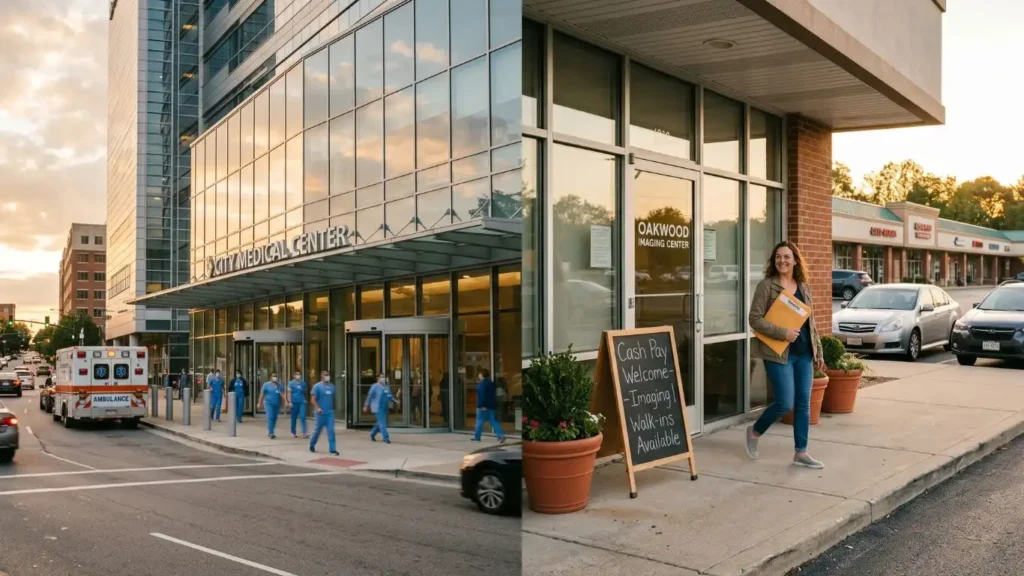
Facility fees. Hospitals tack on a charge just for using their building. Imaging centers usually don’t.
Negotiated rates. Hospitals set sticker prices that assume insurance will haggle them down. If you walk in uninsured, that full sticker can hit you unless you ask for the cash-pay rate.
Equipment age and strength. A 3T MRI machine costs more to run than a 1.5T machine. A 3T is sharper, but you usually only need it for the brain, prostate, or some specific orthopedic work. Most people get fine results from a 1.5T.
Contrast dye. If your doctor wants the scan with contrast (a special dye injected into your vein to light up certain tissues), add $100 to $500. Wondering how much is an MRI with contrast without insurance? It typically runs $700 to $3,500 at fair-priced centers. The dye, the IV setup, and the extra monitoring time all push the bill up.
Body part. A small joint scan is faster and cheaper than a full spine scan. A brain MRI without contrast might cost around $600 to $2,500 cash. A full lumbar spine MRI with contrast can cost $4,000 at a hospital.
When folks Google how much is it to get an MRI without insurance in a panic, they’re usually picturing a hospital bill. But you’re never required to get the scan where your doctor first sent you. That’s the single most expensive assumption people make.
A good comparison point: when you look at what urgent care actually costs without coverage, you see the same pattern. The hospital ER might bill $2,000 for the exact treatment urgent care handles for $150. MRI pricing plays the same game, just with bigger numbers.
A Quick Look at MRI Costs by Body Part
These are typical cash-pay ranges at independent imaging centers. Hospitals will be higher.
| Body Part Scanned | Without Contrast | With Contrast |
|---|---|---|
| Brain / Head | $500 to $2,500 | $700 to $3,200 |
| Cervical spine (neck) | $500 to $2,000 | $700 to $2,800 |
| Lumbar spine (lower back) | $550 to $2,200 | $750 to $3,000 |
| Knee | $400 to $1,500 | $600 to $2,000 |
| Shoulder | $450 to $1,600 | $650 to $2,100 |
| Abdomen | $700 to $2,800 | $900 to $3,500 |
| Pelvis | $700 to $2,800 | $900 to $3,500 |
| Full body screening | $1,500 to $5,000 | N/A |
So when someone asks how much is an MRI in the US without insurance, the real answer depends on which body part, which city, and which type of facility. There’s no single number, but most uninsured patients end up paying somewhere between $500 and $2,500 if they shop around.
How Much Is an MRI Without Insurance in Texas?
How Much Is An MRI Without Insurance? Texas is actually one of the better states for cash-pay medical pricing. Big cities like Houston, Dallas, and Austin have intense competition among independent imaging centers, and many publish their prices online.
Real-world ranges for how much is an MRI without insurance in Texas:
- Houston independent centers: $400 to $900 for most single-region scans
- Dallas-Fort Worth: $450 to $1,100
- Austin: $500 to $1,200
- San Antonio: $400 to $950
- Smaller Texas towns: often $350 to $700, surprisingly cheap because rural centers compete hard for patients
If you’re in Texas and a hospital quotes you $3,000, drive 20 minutes. There’s almost certainly a cash-pay imaging center nearby charging a quarter of that.
This pattern holds across most states. People asking how much is an MRI without insurance in Texas, specifically, often discover they were quoted hospital prices when there was a $399 option ten miles away the whole time.
The Hidden Costs Nobody Warns You About
When you get a quote, ask exactly what’s included. Three sneaky charges show up later:
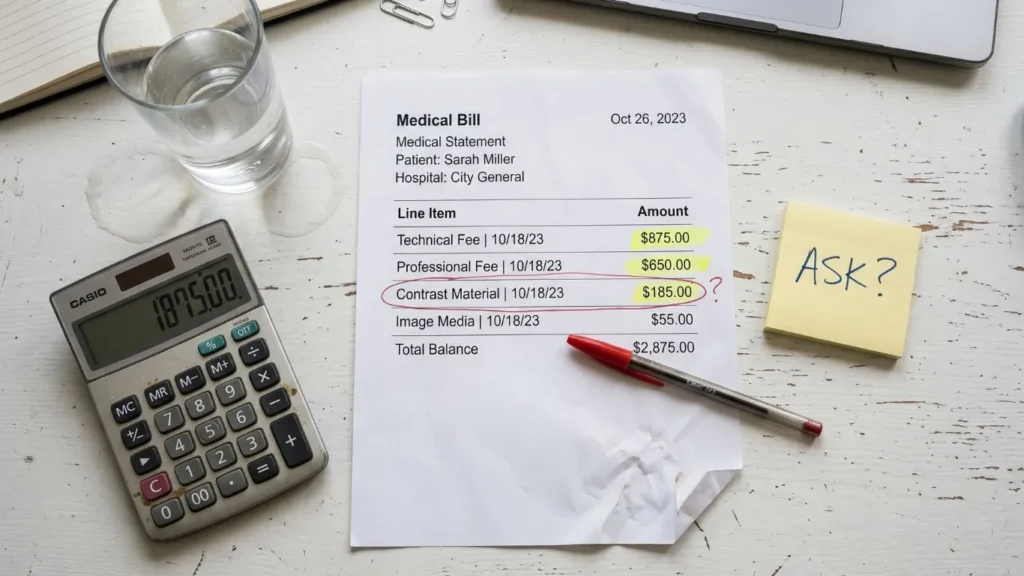
- The radiologist reads the fee. Someone has to look at the images and write the report. Some centers bundle this in. Others bill it separately, usually $100 to $300.
- Contrast dye charge. Already mentioned, but worth repeating. Confirm whether your scan needs contrast and whether the quoted price includes it.
- Image disc or upload fee. Want a copy of your images to take to a specialist? Some places charge $25 to $75 for that.
A clean cash-pay quote looks like this: “$650 all-inclusive, no contrast needed, includes radiologist report and CD.” Anything vaguer than that, push back.
This is the same thing that happens with crown procedures and other dental work without coverage. The headline price is rarely what you actually pay until you nail down every line item.
Step-by-Step: How to Pay Way Less for Your MRI
How Much Is An MRI Without Insurance? This is the part most of them skip. Here’s exactly what to do, in order.

Step 1: Get the Exact Scan Order in Writing
Ask your doctor for the specific order: which body part, with or without contrast, and the CPT code. The CPT code is a 5-digit number that tells imaging centers exactly what scan you need. Without it, you can’t comparison shop accurately.
Step 2: Call At Least Five Imaging Centers
Search for “outpatient imaging center” or “radiology” near you. Skip the hospital websites for now. Call each one and say: “I’m self-pay. What’s your cash price for CPT code [your code]?”
If they hem and haw, that’s your answer. Move on. The good ones will quote you a number in 30 seconds.
Step 3: Ask About Cash Discounts at Every Place
Even hospitals will sometimes drop the price 30 to 60 percent if you say upfront, “I have no insurance and need to pay cash today.” They’d rather get $800 in cash than chase you for $3,000 they’ll never collect.
Step 4: Check Discount Imaging Programs
There are nationwide programs that pre-negotiate cash rates with imaging centers. Some scans go as low as $250. You pay the program, they handle scheduling, and you walk in like any other patient.
Step 5: Look Into Community Health Centers and Teaching Hospitals
Federally Qualified Health Centers and university teaching hospitals often offer sliding-scale pricing based on income. If you make under a certain amount, a $2,000 MRI might drop to $200 or be fully covered.
Step 6: Ask About Payment Plans Before You Scan
If you’ve found a fair price but can’t pay it all at once, most imaging centers offer 0% payment plans, often 6 to 12 months, with no credit check. Get this in writing before the appointment.
Step 7: Reconsider Whether You Even Need an MRI
This sounds wild, but ask your doctor if an ultrasound or X-ray would answer the same question. Sometimes it will, for a tenth of the cost. MRI is an amazing technology, but it gets overprescribed.
If your situation has you reconsidering your bigger coverage picture, it’s worth understanding whether you’re legally required to have health insurance at all before you decide what to do next.
How Much Is an MRI Out of Pocket Without Insurance vs. With a High-Deductible Plan?
How Much Is An MRI Without Insurance? Here’s a twist: if you have a high-deductible health plan and haven’t met your deductible, you might actually pay MORE through insurance than as a cash-pay patient. The hospital will bill insurance the full $4,000 sticker price, your insurance applies it to your deductible, and you owe the whole thing.
If you’d just walked in saying “self-pay,” they’d have charged you $1,200.
So when comparing how much is an MRI out of pocket without insurance versus running it through your plan, do this math:
- Cash-pay quote from imaging center: ____
- Insurance-billed price after your deductible kicks in: ____
- How close you are to meeting your deductible already: ____
If you’re already close to meeting your deductible, run it through insurance. If you haven’t touched it yet, paying cash is often cheaper. This is also why understanding what a health insurance premium really pays for matters before you assume coverage is automatically the cheaper route.
How Much Is an MRI for a Dog Without Insurance?
Quick detour for pet owners. Veterinary MRIs cost $1,000 to $3,500, depending on body part, anesthesia (dogs always need to be sedated), and whether it’s a specialty veterinary hospital or a university vet school.
The big driver here is anesthesia. Your dog can’t lie still for 45 minutes, so general anesthesia adds $300 to $800 to the bill. If you’re researching how much is an MRI for a dog without insurance, university veterinary teaching hospitals are almost always cheaper than private specialty clinics, sometimes by half.
Pet insurance can help if you bought it before the issue came up. Most plans won’t cover anything that happened before the policy started, so the question of how much is an MRI for a dog without insurance is one many pet owners face after the fact, not before.
Watch Out for the Hospital Pricing Trap
How Much Is An MRI Without Insurance? The federal price transparency rule requires hospitals to publish their cash prices online. The reality? Most hospital websites bury this in a downloadable spreadsheet with 50,000 rows of medical codes that mean nothing to a regular person.
But the data IS there. The federal CMS hospital price transparency information page explains your rights and how to ask for prices in plain English. If a hospital refuses to give you a clear cash price for an MRI, that’s against federal rules. Mention this on the call. The tone usually changes fast.
Smart Money Moves That Add Up
A few extra plays that work:
Use HSA or FSA dollars
if you have either. That $1,200 MRI becomes about $850 after tax savings.
Negotiate the bill after the fact
Got a $4,000 hospital bill in the mail? Call billing and say, “I can pay $1,500 today to settle this in full.” A surprising number say yes.
Apply for hospital charity care
Nonprofit hospitals are required to offer financial assistance. A lot of people who would qualify never apply because they don’t know it exists. Even middle-income families sometimes get 50 to 100 percent forgiveness.
Get a second cash-pay quote in another city
If you live near a state border, a 45-minute drive can save four figures. Real example: a guy I know in northern New Jersey drove to Pennsylvania for a $475 MRI instead of paying $2,800 at his local hospital.
For broader cost planning around medical surprises, the same thinking that goes into whether you can cancel health insurance whenever you want applies here. Coverage decisions and out-of-pocket decisions aren’t separate problems. They’re the same problem viewed from two sides.
What to Bring to Your Cash-Pay Appointment
Show up with:
- Your doctor’s order (paper or fax confirmation)
- ID
- Payment method (most accept credit, debit, HSA card, sometimes cash)
- A list of metal in your body (implants, screws, pacemakers, old shrapnel)
- Comfy clothes with no metal
The whole thing usually takes 30 to 90 minutes from check-in to walking out. Results go to your doctor within 1 to 3 business days, sometimes the same day if you ask for a stat reading.
People sometimes worry about long-term financial fallout from a single big medical bill. Understanding how to think about life insurance and family financial protection gives a fuller picture, especially if you’re the household earner, and one bad bill could ripple outward.
FAQs
How long does it take to get MRI results when I pay out of pocket?
Standard turnaround is 1 to 3 business days for the radiologist's written report to reach your doctor. If you ask for a "stat" or "rush" read at the time of scheduling, many cash-pay centers will get the report out within 4 to 24 hours, sometimes for no extra charge. Self-pay patients often get faster results than insured patients because there's no insurance pre-authorization paperwork slowing things down. You can also ask for a copy of the report directly so you don't have to wait for your doctor's office to call you.
Can I get an MRI without a doctor's referral if I'm paying cash?
In most states, yes. Roughly 30+ states allow direct-access imaging, meaning you can walk into an imaging center, pay cash, and get scanned without a physician's order. The catch is that you'll get the images and report, but you'll still need a doctor to interpret what to do about the findings. Some cash-pay clinics specifically market to people who want answers fast without going through their primary care first. A few states (like Florida and a handful of others) still require a referral, so call ahead and ask before you assume.
Why is my MRI bill higher than the original quote I got?
Almost always one of three reasons: a separate radiologist read fee was billed under a different provider, contrast dye was added during the scan that wasn't in the original quote, or the facility billed extra for a CD/image transfer fee. To avoid this, get the quote in writing and use the phrase "all-inclusive cash price covering the technical fee, professional fee, contrast if needed, and any image media." If the bill still comes in higher, call billing, point to the written quote, and ask them to honor it. Many will adjust the bill on the spot rather than fight you.
Is an open MRI cheaper than a closed MRI without insurance?
Usually no, and sometimes it's actually more expensive. Open MRIs are designed for comfort (claustrophobic patients, larger body sizes, kids), not affordability. They typically use lower-strength magnets, which means longer scan times and sometimes lower image quality, so radiologists may charge the same or more for the read. If your only goal is paying less, a standard closed MRI at an independent imaging center is almost always your cheapest option. Choose open MRI for comfort reasons, not cost reasons.
The Bottom Line on MRI Prices
So how much is an MRI without insurance? Realistically, $400 to $2,500 if you shop smart. $3,000 to $5,000+ if you don’t. The difference between those two numbers isn’t luck. It’s whether you spent 30 minutes calling around before the appointment.
The system is set up assuming you won’t ask questions. Asking questions saves money. Every single time.
If you’re also weighing big-picture coverage choices, looking at the difference between gap insurance and standard coverage or even whether life insurance is worth the monthly cost helps you see where MRI pricing fits in your overall financial planning.
How Much Is An MRI Without Insurance? You don’t have to accept the first quote. The hospital your doctor mentioned isn’t the only option, and sticker price isn’t the price you have to pay. The same scan exists for less, usually within driving distance, and the people running those cheaper centers are happy to see you.