
You walk out of the dentist’s office holding a treatment plan with one number circled in pen. $1,800. For one tooth. No insurance. Your stomach drops a little, and the first question that pops into your head is the same one half the country types into Google every month: how much is a crown without insurance, really, and is this quote fair?
How Much is a Crown Without Insurance? The short version: in 2026, a dental crown without insurance costs between $800 and $3,000 per tooth in the United States, with most people paying around $1,000 to $1,500. The price depends on the material, which tooth is being capped, where you live, and whether other work needs to be done first.
That’s the headline. The rest of this article is about why the range is so wide and how to land on the lower end of it.
What a Dental Crown Actually Is
A crown is a custom cap that slides over a tooth too damaged for a regular filling. Think of it like a helmet for your tooth. The dentist shaves down the broken part, takes a mold or digital scan, and a lab builds a cap shaped like your old tooth. A few weeks later, it’s cemented in place, and you chew on it as if nothing happened.
People usually need a crown after a deep cavity, a cracked tooth, a big filling that finally gave out, or a root canal. Skip it and the tooth keeps breaking down until it has to come out, which costs far more to fix later. The bill stings, but a crown is often the cheaper long-term call.
How Much Is a Crown Without Insurance in 2026?
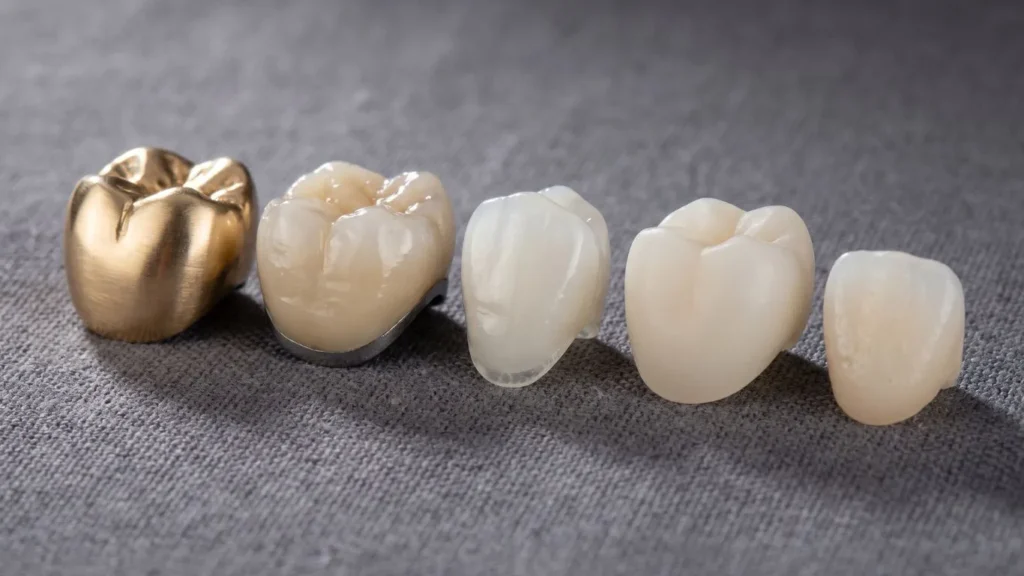
The full cost depends mostly on what your crown is made of:
| Crown Material | Price Range (No Insurance) | Best For |
|---|---|---|
| Resin / Composite | $300 – $800 | Short-term use, kids |
| Metal (gold or alloy) | $800 – $2,500 | Back molars, heavy chewers |
| Porcelain-Fused-to-Metal | $800 – $2,400 | Mix of strength and looks |
| All-Porcelain / Ceramic | $1,000 – $3,000 | Front teeth, natural look |
| Zirconia | $1,000 – $2,500 | A mix of strength and looks |
| Same-Day CAD/CAM | $1,000 – $2,300 | Quick turnaround |
So when someone asks how much is a crown without insurance, the honest answer is: it depends on what’s going in your mouth. A gold crown on a back molar might run $1,400. A porcelain crown on a front tooth at a high-end practice in Manhattan can hit $3,000.
How Much is a Crown Without Insurance? A friend of mine in Ohio got a zirconia crown last spring for $1,150. I checked with another friend in San Francisco who’d had similar work done, and her bill was over $2,000. Different zip codes, different prices for similar work.
The Hidden Costs Nobody Warns You About
How Much is a Crown Without Insurance? The crown itself is rarely the only line on the bill. Before the cap goes on, the tooth often needs prep work, and that prep work is its own charge:
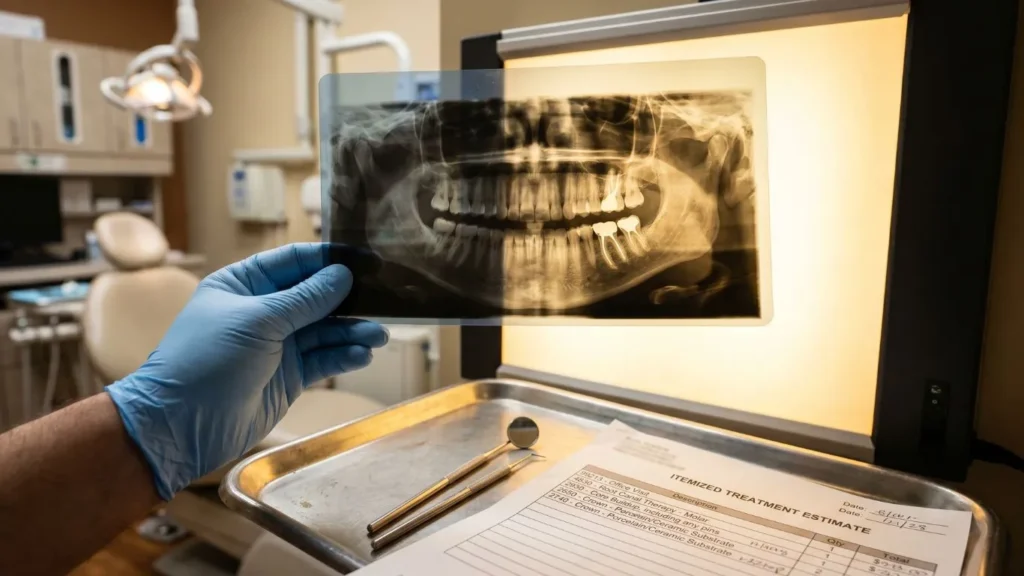
- Exam and X-rays: $50 – $250
- Tooth buildup or core: $150 – $400
- Root canal (if needed): $700 – $1,800
- Crown lengthening (gum work): $300 – $1,200
- Temporary crown: Usually included, sometimes billed at $200 – $700
- Post and core (after root canal): $200 – $600
If you’re wondering how much is a root canal and crown without insurance costs, expect to pay anywhere from $1,500 to $4,500 for both. That’s the total when a deep cavity reaches the nerve and the tooth must be saved from the inside out before being capped. The how much is a root canal and crown without insurance question really has two answers stacked on top of each other, which is why those treatment plans look brutal.
Why the Price Swings So Much by Location
Geography matters more than most people think. A crown in rural Alabama might cost $850. The same crown in downtown Los Angeles might cost $2,400. The dentist’s rent, lab partners, and local cost of living all bake into your invoice.
How Much is a Crown Without Insurance? If you live near a state border, it can be worth driving an hour for a quote. People in New Jersey routinely cross into Pennsylvania for cheaper dental work. Folks in Southern California sometimes head down to Tijuana, where the same crown runs $300 to $700, though that opens up a separate conversation about travel costs and warranties.
For a wider look at how out-of-pocket healthcare costs pile up without coverage, this breakdown of why being uninsured gets expensive fast is worth a read.
Temporary Crowns: The Short-Term Option
While your permanent crown is being made at the lab, the dentist places a temporary one. So how much is a temporary crown without insurance? Usually $200 to $700, though it’s often folded into the total crown fee rather than charged separately. Ask before the work starts so you’re not blindsided.
A temporary crown is made from acrylic or composite. It lasts two to three weeks, which is exactly how long the lab needs to build the real one. Don’t chew sticky candy on it. Don’t floss aggressively around it. It will fall off, and then you’re back in the chair on a Saturday paying for a re-cement.
People sometimes ask how much is a temporary crown without insurance when they’re considering walking away mid-treatment. A temp is not a permanent fix. The exposed tooth underneath is vulnerable, and waiting too long means the prep work breaks down and you’re starting over from scratch.
How Much Is a Tooth Crown Without Insurance Based on Position?
Front teeth and back teeth aren’t priced the same. How much is a tooth crown without insurance also depends on which tooth is being capped:
- Front teeth (incisors and canines): Tend to cost more because they need natural-looking porcelain or ceramic. Expect $1,200 to $3,000.
- Premolars: Middle of the road. Usually $1,000 to $2,200.
- Molars (back teeth): Cheaper materials usually work since nobody sees them. $800 to $2,000.
When you’re getting how much is a tooth crown without insurance quotes from multiple dentists, ask each office to itemize the material, the tooth number, and any prep work separately. That’s the only way to compare apples to apples.
Step-by-Step: How to Pay Less Without Insurance
A practical playbook if the bill is more than your bank account is happy about.

Step 1: Get Two or Three Quotes
Call three dental offices. Give each the same info: which tooth, what material, and any other work needed. Prices for the same procedure can differ by 40% in the same city. This one step often saves $500 to $1,000.
Step 2: Ask About a Dental Savings Plan
Dental savings plans are not insurance. You pay an annual fee (usually $100 to $200) and get 15% to 50% off procedures at participating dentists. No waiting periods, no annual caps, no claim forms. For people who only need one big procedure, savings plans almost always beat traditional insurance on a single-year math basis.
Step 3: Check Local Dental Schools
How Much is a Crown Without Insurance? Dental schools offer crowns for 40% to 60% less than private practice. A licensed faculty dentist supervises every step. The trade-off: appointments take longer because the student is learning. If you have time and want quality work cheaply, this is the move.
Step 4: Ask About In-House Financing or CareCredit
Most dental offices offer payment plans. Some do 0% interest for 6 to 24 months through CareCredit or in-house financing. Spreading $1,500 over a year turns “I can’t afford this” into “$125 a month.” If you’ve ever worked through how a health insurance premium works, the logic is the same: predictable monthly payments beat lump sums.
Step 5: Use HSA or FSA Funds If You Have Them
If you have a Health Savings Account or Flexible Spending Account through work, dental crowns qualify. Pre-tax dollars effectively cut the cost by 20% to 30%, depending on your tax bracket. Most people forget the account exists until April.
Step 6: Ask for a Cash Discount
Many dental offices give a 5% to 10% discount if you pay the full amount upfront in cash or check. They save on credit card fees and collections risk, so they pass some of it back. Worth asking.
The Material Question: What’s Actually Worth It
Capping a back molar nobody sees? Gold or zirconia is the smart play. Gold lasts 30+ years and is gentle on the opposing teeth. Zirconia is nearly unbreakable. Both look metallic, but who’s looking at your back teeth?
For a front tooth, the answer flips. You want all-porcelain or layered ceramic for the natural translucency. Spending an extra $400 to make your smile look right is worth it for something you’ll see in every photo for the next 15 years.
Porcelain-fused-to-metal crowns used to be the default, but they’re falling out of favor. Over time, the gum line recedes, and a thin gray metal edge shows up at the top of the tooth. Newer materials avoid that problem entirely.
How Much Is a Dental Crown Without Insurance vs. With Insurance?
Even with insurance, a crown isn’t free. Most dental plans cover crowns at 50%, with a yearly maximum of $1,000 to $2,000. So how much is a dental crown without insurance versus with insurance breaks down like this:
- Without insurance: $800 – $3,000 out of pocket
- With insurance: $400 – $1,500 out of pocket (after the 50% coverage kicks in)
There’s a catch. Dental insurance usually has a 6 to 12-month waiting period before major work, like crowns, is covered. Buying a plan today doesn’t help if you need the crown next week. That’s why dental savings plans are often a better fit for people in active need, since they kick in within a few business days.
If you’re weighing whether to buy a policy at all, this comparison of different insurance coverage approaches explains the same trade-off logic that shows up in dental: pay regularly for predictability, or pay big when something happens.
When Does a Crown Actually Make Sense Financially?
Sometimes the question isn’t how much is a dental crown without insurance, but whether the crown is even the right move.
A crown makes sense when:
- The tooth still has a healthy root structure
- A filling won’t hold the remaining tooth together
- You’ve had a root canal, and the tooth needs reinforcement
- The tooth is visible and cracked
A crown might not make sense when:
- The tooth is too far gone, and an implant or bridge is the better long-term play
- You can’t afford the proper prep work and would be cutting corners
An extraction plus an implant runs $3,000 to $6,000. A bridge costs $2,000 to $5,000. So even at $2,500, a crown on a salvageable tooth is usually the cheapest path forward. The American Dental Association has a useful patient resource at mouthhealthy.org for understanding when each option fits.
FAQs
Does getting a dental crown hurt?
The procedure itself is not painful. The dentist numbs the tooth with local anesthesia before any drilling or shaping happens, so you'll feel pressure and vibration but no actual pain. Mild soreness, gum tenderness, or sensitivity to hot and cold is common for a few days after the appointment and usually fades within a week. If sharp pain lingers beyond that or you feel pain when biting down, call your dentist because the crown might need an adjustment.
Can I eat normally with a dental crown?
Yes, but with a few caveats. Once the permanent crown is cemented, you can eat almost anything. Avoid chewing ice, hard candy, popcorn kernels, and sticky caramel-type foods, since these can crack porcelain or pull the crown loose. With a temporary crown, you need to be more careful: skip sticky foods, hard nuts, and chewing on that side until the permanent one is placed, usually within two to three weeks.
What happens if I just leave a damaged tooth and skip the crown?
The tooth keeps breaking down. A cracked or heavily decayed tooth left untreated usually leads to one of three outcomes: the crack spreads until the tooth splits and needs extraction, bacteria reaches the nerve and you end up needing an emergency root canal, or an infection develops and spreads to the jaw. Replacing an extracted tooth with an implant or bridge later costs $3,000 to $6,000, which is far more than the original crown would have cost.
Will Medicaid or Medicare cover a dental crown?
Medicare does not cover routine dental work, including crowns, in most cases. Medicaid coverage varies wildly by state. Some states cover crowns for adults as a medically necessary procedure, others only cover them for children under 21 through CHIP, and a few don't cover crowns for adults at all. Contact your state's Medicaid office directly to find out what's included in your plan. If you're on Medicare, look into standalone dental plans or dental savings plans to bring the cost down.
What to Do Right Now
If you’re staring at a quote and trying to decide your next step, work through it in this order.
How Much is a Crown Without Insurance? Get the treatment plan in writing with each line item priced separately. Call two more offices for quotes on the same procedure with the same materials. Check whether a dental savings plan brings the cost down enough to justify the annual fee. Ask the office about financing, cash discounts, and HSA/FSA payment. If the gap is still too wide, look into a local dental school.
For anyone thinking about whether dental coverage is worth picking up, the same math applies: how often will you actually use it, and does the premium beat the procedure cost over the long run?
You don’t have to accept the first quote. Dental pricing has wide latitude, and the people who pay the least are almost always the ones who shop around, ask questions, and stack two or three savings strategies together. Knowing exactly how much is a crown without insurance costs in your area gives you the leverage to negotiate or walk to a better-priced option.
How Much is a Crown Without Insurance? The crown itself takes two visits and a couple of weeks. The shopping-around work takes one afternoon of phone calls. That afternoon is usually worth somewhere between $400 and $1,200.