
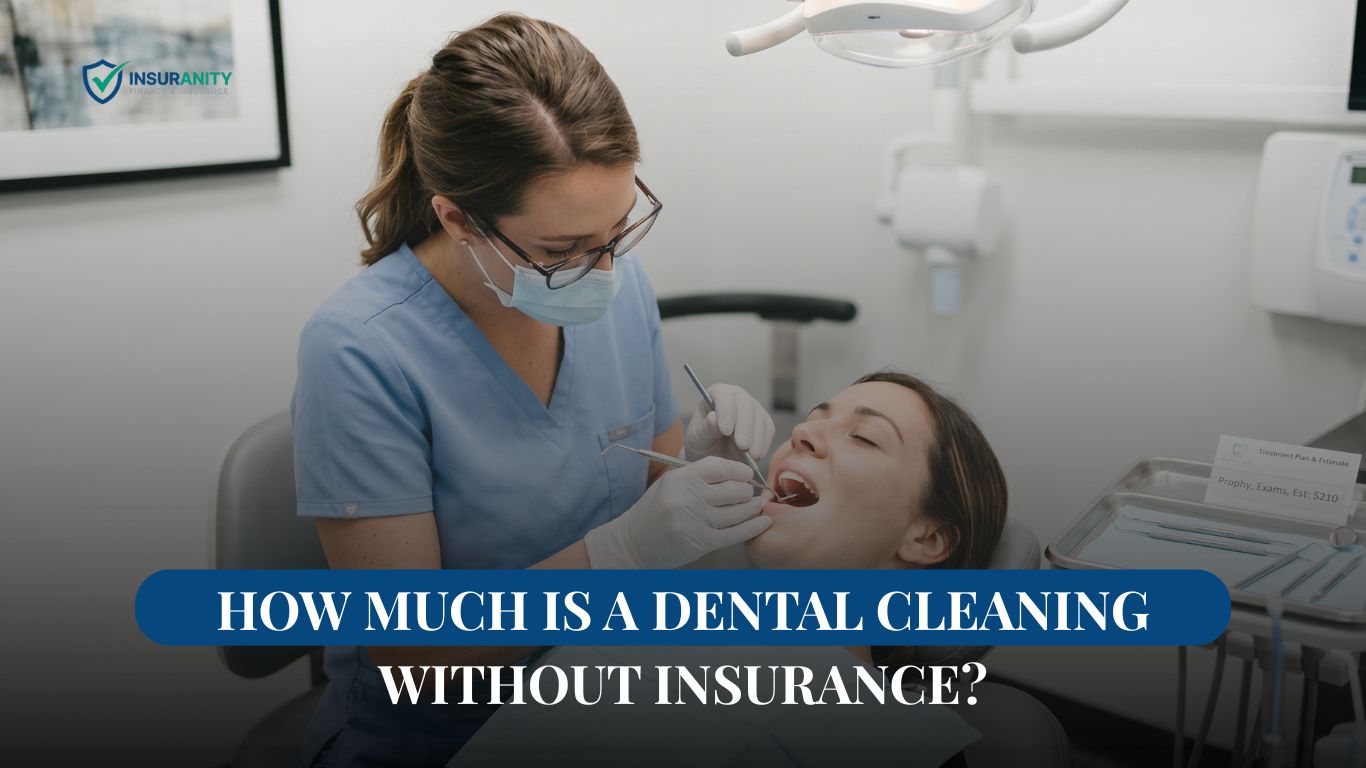
My neighbor Sarah skipped her dental cleanings for three years. No insurance, tight budget, she figured her teeth felt fine, so why bother? Then one morning, she woke up with jaw pain that sent her to an emergency dental clinic. The bill? Over $2,400 for a root canal and crown. A routine cleaning would have cost her $120. That story is more common than most people think, and it all starts with one honest question: how much is a dental cleaning without insurance, and is there a smarter way to handle it?
This article gives you every real number, every cost factor, and every money-saving strategy so you can walk into any dentist’s office with full confidence.
What Does a Dental Cleaning Actually Cost Without Insurance?
When people ask how much is a dental cleaning without insurance, the short answer is: between $75 and $200 for a routine cleaning. The national average lands around $100 to $120. But that number shifts depending on where you live, what type of cleaning you need, and whether your first visit includes x-rays or a full exam.
Here is a quick snapshot:
| Cleaning Type | Average Cost Without Insurance |
|---|---|
| Routine Prophylaxis (standard) | $75 – $200 |
| Child’s Cleaning | $70 – $150 |
| Deep Cleaning per quadrant (scaling & root planing) | $150 – $350 |
| Full-mouth Deep Cleaning | $600 – $1,400 |
| Periodontal Maintenance | $115 – $450 |
| Dental Exam (added to cleaning) | $50 – $200 |
| Bitewing X-rays | $25 – $75 |
| Full-mouth X-ray series | $175 – $428 |
| Fluoride Treatment (optional) | $25 – $50 |
So how much is a dental cleaning without insurance on a typical first visit? If your dentist adds an exam and basic X-rays, expect to pay anywhere from $200 to $400 total. That sounds like a lot, but spread across two visits per year, it is still far less than one filled cavity.
The 5 Types of Dental Cleanings Explained
Not all cleanings are the same, and knowing the difference helps you understand why prices vary. Competitors rarely explain this clearly, so read this section carefully.
1. Routine Prophylaxis
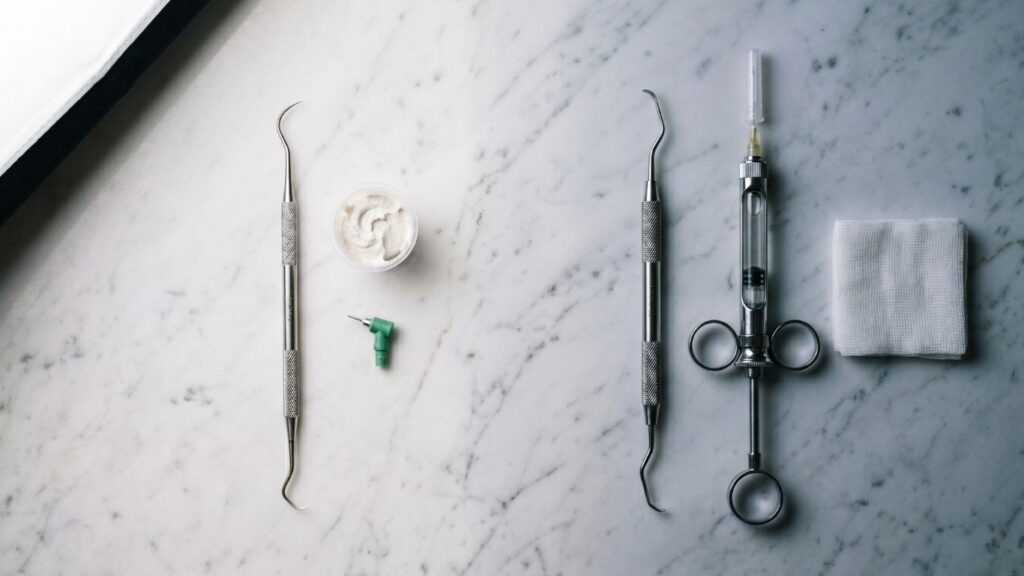
This is the standard twice-a-year cleaning most adults know. A dental hygienist removes plaque, tartar, and surface stains from your teeth. The whole appointment takes 30 to 60 minutes. Cost: $75 to $200 without insurance.
2. Child’s Cleaning
Children’s teeth and gums are generally easier to clean with less tartar buildup. Appointments are shorter and less complex. Cost: $70 to $150 without coverage.
3. Deep Cleaning (Scaling and Root Planing)
If you have not been to the dentist in years, or if you have early gum disease (gingivitis or periodontitis), a routine cleaning is not enough. The hygienist must clean below the gumline, scraping away hardened tartar from tooth roots. This is done one quadrant at a time, often across two to four separate visits. Local anesthesia is usually required. This is where how much is a dental cleaning without insurance gets more expensive, ranging from $150 to $350 per quadrant, or $600 to $1,400 for the full mouth.
4. Periodontal Maintenance
After a deep cleaning, your dentist may recommend more frequent follow-up cleanings every three to four months. These are more intensive than a basic prophylaxis but less involved than a full deep cleaning. Cost: $115 to $450 per visit.
5. Gross Debridement
If years of buildup block the dentist from even evaluating your teeth properly, a gross debridement is done first to clear the way. This is a preliminary cleaning, not a substitute for a prophylaxis. Cost: $100 to $300.
What Actually Drives the Cost?
Understanding how much is a dental cleaning without insurance means understanding why one dentist charges $80 and another charges $250 for what looks like the same service.
Location matters most
Dental offices in New York, California, or Massachusetts pay more for rent and staff, so their fees are higher. In states like Texas, Ohio, or rural areas, prices tend to run lower. A cleaning that costs $163 on average in California may cost $75 to $125 in Massachusetts, where dentist-per-capita competition keeps prices down.
Urban vs. rural
A downtown Manhattan dental office has a completely different overhead than a suburban clinic in Iowa. That overhead is passed on to patients.
Private practice vs. dental chain vs. community clinic
Private practices often charge more but offer more personalized care. Corporate chains use volume to lower prices. Community health centers charge on a sliding-scale income basis, sometimes as little as $20 to $40 per cleaning.
Experience level
A dentist with 20 years of experience and advanced equipment charges more than a newly licensed provider. That is not necessarily better or worse. It is just a pricing reality.
Technology in the office
Offices using ultrasonic scalers, digital x-rays, and intraoral cameras have higher operating costs, which are factored into appointment fees.
How long since your last cleaning
If it has been three or more years, you likely have more tartar buildup, which takes longer to remove. Some offices charge an extended cleaning fee for this reason.
Your First Visit: What to Expect and What It Will Cost
Here is a step-by-step breakdown of a typical first dental visit without insurance:
Step 1: Check-in and paperwork. You fill out a health history form. This is free.
Step 2: X-rays. Most first-time patients need X-rays to check for hidden cavities or bone issues. A set of bitewing X-rays costs $25 to $75. A full-mouth series costs $175 to $428. X-rays are not needed at every visit, typically once every two to three years for healthy adults.
Step 3: Comprehensive exam. The dentist checks your teeth, gums, and jaw and screens for oral cancer. This adds $50 to $200 to your visit.
Step 4: The cleaning. The hygienist removes plaque and tartar, then polishes and flosses your teeth. This is the core service when people ask how much is a dental cleaning without insurance.
Step 5: Fluoride treatment (optional). Some dentists recommend fluoride after cleaning. It adds about $25 to $50 and is more commonly used for children, though adults in high-cavity-risk situations may benefit too.
Altogether, a complete first visit with exam, x-rays, cleaning, and fluoride can run $250 to $450 at a private office. That number drops significantly at dental schools or community clinics.
How Location Changes the Price Across the US
Since how much is a dental cleaning without insurance is such a location-dependent question, here is a more detailed state-by-state picture:
| Region / State | Estimated Routine Cleaning Cost |
|---|---|
| California | $120 – $250 |
| New York | $150 – $300 |
| Texas | $75 – $150 |
| Florida | $89 – $200 |
| Massachusetts | $75 – $125 |
| Ohio | $80 – $140 |
| Rural areas (any state) | $60 – $120 |
| Urban metros | $130 – $300 |
If you live near a state border, it sometimes pays to look at dental offices in a neighboring state with lower costs.
The Real Cost of Skipping Cleanings

This is where most articles drop the ball. They list prices but never show the true financial risk of avoiding the dentist.
Skipping your cleanings because how much is a dental cleaning without insurance feels too high is a math mistake. Consider this:
A small cavity caught early costs $150 to $300 to fill. Left untreated for a year or two, that same cavity may need a root canal ($700 to $1,300) and a dental crown ($800 to $1,500+). If the tooth cannot be saved, an extraction runs $135 to $500, plus the cost of a bridge or implant ($3,000 to $5,000) to replace it.
Two cleanings per year at $120 each totals $240. That is a fraction of one root canal. The financial case for regular visits is not even close.
Beyond money, untreated gum disease has been linked in research to cardiovascular disease, diabetes complications, and pregnancy risks. Your mouth is not isolated from the rest of your body. Understanding what qualifies as a covered health insurance expense can also help you make smarter coverage decisions overall.
7 Ways to Pay Less for Dental Cleanings Without Insurance
How much is a dental cleaning without insurance does not have to mean paying full retail price. Here are seven legitimate ways to reduce what you pay:
1. Dental Schools
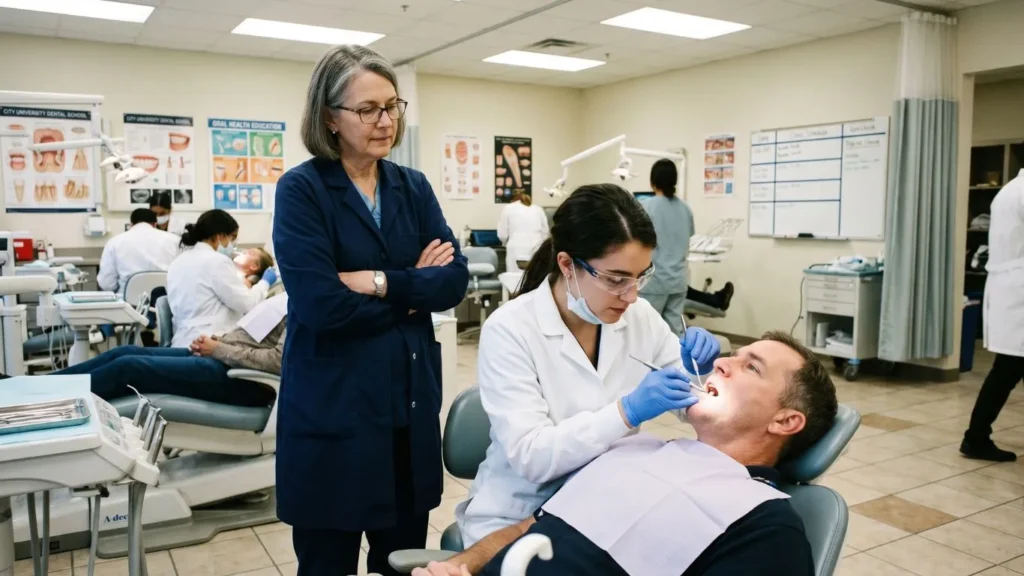
Dental school clinics provide supervised care from students supervised closely by licensed faculty. Quality is generally high, and prices are dramatically lower, typically $10 to $100 for a routine cleaning compared to $75 to $350 at private offices. Deep cleanings at dental schools cost $50 to $150 versus $400 to $1,000 at private practices. Appointments take longer (two to four hours), but the savings can be enormous.
2. Community Health Centers (FQHCs)
Federally Qualified Health Centers receive government funding to provide care to uninsured and low-income patients on a sliding fee scale. Many offer dental services. You can find one near you through the HRSA Health Center Finder at findahealthcenter.hrsa.gov.
3. Dental Discount Plans (Not Insurance)
Also called dental savings plans, these are membership programs where you pay an annual fee, typically $80 to $200 per year, and receive 10% to 60% discounts at participating dentists. There are no claim forms, no waiting periods, and no annual maximums. If how much is a dental cleaning without insurance concerns you year-round, a discount plan often pays for itself after just one or two visits. Reviewing whether to cancel an existing health plan before switching strategies is worth considering.
4. In-House Dental Membership Plans
Many independent dental offices now offer their own membership programs: pay an annual fee of $100 to $300 and get your cleanings included, plus 20% to 40% off other procedures. No deductibles, no insurance middlemen, no claim denials.
5. Ask for a Cash Discount
Practices that deal with uninsured patients often accept lower fees for upfront cash payment. Asking simply, “Do you offer a discount for patients who pay cash at the time of service?” is not rude. It is routine. Many offices will say yes, offering 10% to 30% off.
6. Use an HSA or FSA
If you have a Health Savings Account or Flexible Spending Account through an employer, those funds are pre-tax dollars. Using them for dental cleanings effectively gives you a discount equal to your tax bracket, typically 22% to 32% for middle-income earners. This is one of the most underused tools for reducing how much a dental cleaning without insurance actually costs you.
7. Payment Plans
Most dental offices will work out a payment plan for larger bills. A $600 deep cleaning spread over six months is $100 per month, far more manageable than a single lump payment. Some offices offer zero-interest financing for six to twelve months through third-party dental financing programs.
Does Medicare or Medicaid Cover Dental Cleanings?
This is a question many older and lower-income adults have, and the answer is complicated.
Original Medicare (Parts A and B) does not cover routine dental care at all. No cleanings, no exams, no x-rays, unless the dental work is directly tied to a covered medical procedure like jaw surgery.
Medicare Advantage (Part C) plans often do include dental benefits, though the scope varies by plan. Some cover two cleanings per year with no copay, while others have limited annual maximums.
Medicaid covers comprehensive dental services for children in all states. For adults, coverage varies dramatically by state. Some states cover only emergency extractions. Others include preventive cleanings. If you are on Medicaid, check your state’s specific dental benefit schedule. Understanding your legal obligations around health coverage is a smart first step if you are navigating coverage gaps.
If you are considering life coverage alongside health decisions, comparing term vs. whole life insurance can also help clarify your overall financial protection picture.
When a Routine Cleaning Turns Into Something More
Sometimes you go in expecting a standard cleaning and leave with a recommendation for a deep cleaning. This happens more than people expect, especially after long gaps between dental visits.
Here is how to handle that situation financially:
Get an itemized estimate in writing before agreeing to any procedure. Ask the front desk for a treatment plan with individual CDT codes and prices listed. This lets you compare prices if needed.
Ask whether treatment can be staged. If the full cost of a deep cleaning is too high right now, some dentists will treat one or two quadrants at a time across separate appointments. This spreads the cost over weeks or months.
Get a second opinion. If a dentist recommends an expensive procedure you were not expecting, it is completely acceptable to seek a second opinion before committing. This is especially worth doing for deep cleanings or crowns. Understanding the cost of malpractice insurance for dental professionals gives context on why dental fees carry built-in overhead that you may not see on the surface.
Check your state’s dental society for referrals. Many state dental associations run reduced-fee programs or maintain lists of dentists who provide charity care.
How Often Do You Actually Need a Cleaning?
The American Dental Association recommends that most adults visit the dentist at least once a year and ideally twice, every six months, for routine cleanings and exams. For people with gum disease, diabetes, a history of heavy tartar buildup, or weakened immune systems, three to four cleanings per year may be recommended.
If you are healthy and have no signs of gum disease, skipping to once-a-year cleanings is a reasonable compromise if cost is a concern. What is never a good idea is skipping cleanings entirely for years at a time.
Regular preventive visits are also what prevent the need for expensive restorative work. And if you are wondering whether life insurance is worth it as part of your overall financial safety net, the same logic applies, paying a smaller regular cost to prevent a much larger one later.
What Happens During a Dental Cleaning, Step by Step
How Much is a Dental Cleaning Without Insurance? Many people avoid the dentist partly because they do not know what to expect. Here is exactly what happens:
1. Oral health assessment. Your hygienist checks your gums with a small probe to measure pocket depth around each tooth. Pockets deeper than 3mm can signal gum disease.
2. Plaque and tartar removal (scaling). Using either a handheld scaler or an ultrasonic device, the hygienist removes hardened tartar and sticky plaque from all tooth surfaces, including along and slightly below the gumline.
3. Polishing. A rotating rubber cup with gritty toothpaste removes surface stains and leaves teeth smooth. This is the part that makes your teeth feel so clean afterward.
4. Flossing. Your hygienist flosses between every tooth, which catches any remaining debris and checks for gum bleeding.
5. Rinsing. You rinse out with water or a fluoride rinse.
6. Fluoride treatment (if recommended). A gel or foam is applied to your teeth for about one minute, then rinsed out.
The total time for a standard cleaning is 30 to 60 minutes. A deep cleaning takes longer, often two to four hours spread across multiple appointments.
Children’s Dental Cleaning Costs Without Insurance
How much is a dental cleaning without insurance for a child is generally lower than for adults. Children’s teeth have less buildup, and appointments are simpler. A child’s cleaning typically costs $70 to $150. If your child is under 18, some states also have CHIP (Children’s Health Insurance Program) coverage that includes dental care at low or no cost, regardless of whether parents have dental insurance.
Even if CHIP is not available, many pediatric dental offices offer significant discounts for self-pay families. It is worth asking when you call to schedule. Understanding what health insurance actually covers in the context of your family helps you make better decisions about when standalone dental coverage makes sense.
A Real-World Budget Plan for Uninsured Adults
If you currently have no dental coverage and need to plan financially, here is a practical approach:
Year 1 (First Visit): Budget $250 to $450 for a comprehensive new-patient visit with exam, x-rays, and cleaning. If deep cleaning is needed, add $300 to $700, depending on severity.
Year 2 and beyond: Budget $150 to $300 annually for two routine cleanings. If you use a dental school or discount plan, cut that figure roughly in half.
Emergency buffer: Keep $500 set aside for unexpected dental needs like a cracked tooth or sudden infection. This prevents one dental emergency from becoming a financial crisis.
Going to a dental school for your first big visit, then transitioning to a discount plan at a private office for ongoing maintenance, is one of the smartest long-term strategies for people who find how much is a dental cleaning without insurance genuinely difficult to afford. Being informed about whether you currently carry the right insurance coverage is part of the same financial discipline.
FAQs
Is it safe to get a dental cleaning at a dental school?
Yes, dental school cleanings are safe. Students who perform cleanings are in the advanced stages of their training and work under direct supervision from licensed dentists and faculty at every step. In fact, dental school patients often receive more thorough care because students take extra time and faculty double-check the work. The main trade-off is time. Appointments can run two to four hours compared to 45 to 60 minutes at a private office. Wait times for scheduling can also be longer. But for patients focused on cost, the savings are significant: routine cleanings at dental schools typically run $10 to $100 compared to $75 to $200 at private practices.
Why did my dentist recommend a deep cleaning when I only came in for a routine cleaning?
This happens frequently to patients who have not been seen in one or more years. During your exam, the hygienist measures the depth of the pockets between your teeth and gums using a small probe. Healthy pockets measure 1 to 3 millimeters. If several pockets measure 4 millimeters or deeper, it signals early gum disease, and a standard prophylaxis cleaning does not reach below the gumline, where the bacteria and hardened tartar are sitting. A deep cleaning, which involves scaling and root planing, is the treatment designed to address that. It is not an upsell. It is a clinically different procedure for a different condition. That said, you have every right to ask for the specific measurements and get a second opinion before agreeing to the treatment.
Does dental cleaning hurt if you have sensitive teeth or have not been in years?
For patients with healthy gums who clean regularly, a routine prophylaxis is generally mild and painless. Some light sensitivity is normal during polishing. For patients who have not had a cleaning in several years or who have gum inflammation, the cleaning can cause noticeable discomfort, especially when the hygienist scales near the gumline or in areas of active gum disease. In those cases, you can ask your hygienist to use a topical numbing gel on sensitive areas before starting. For deep cleanings, local anesthesia is typically used because the cleaning goes below the gumline onto the tooth roots. The soreness after a thorough cleaning usually fades within 24 to 48 hours.
What is the difference between a dental cleaning and a dental exam, and do you need both?
They are two separate procedures that are usually done at the same appointment but billed differently. The cleaning (prophylaxis) is performed by the dental hygienist and involves removing plaque, tartar, and surface stains from your teeth. The exam is performed by the dentist and involves checking for cavities, gum disease, signs of oral cancer, bite issues, and reviewing any x-rays. You can technically have a cleaning without an exam, and some offices allow this for returning patients. However, most dentists recommend having both together because the exam is what catches problems that cannot be seen during the cleaning alone. On a first visit without insurance, the exam adds $50 to $200 to your total bill, but skipping it means potential issues go undetected until they become more expensive to treat.
The Bottom Line of How Much is a Dental Cleaning Without Insurance?
How much is a dental cleaning without insurance in 2025 comes down to a range of $75 to $200 for a routine cleaning at a private practice, or as low as $10 to $100 at a dental school. Deep cleanings cost more, anywhere from $150 to $350 per quadrant. A first visit with exam and x-rays typically runs $200 to $450 total.
The factors that matter most are your location, the type of cleaning you need, the office you choose, and how long it has been since your last visit.
What matters even more is not letting cost be the reason you skip care entirely. A $150 cleaning today is not a luxury. It is cheaper than the $2,000 procedure you may need if you wait another three years. Whether you use a dental school, a discount plan, an HSA, or simply ask for a cash rate, the options to make dental care affordable without insurance are real and accessible.
Your teeth are with you for life. The math strongly favors taking care of them now.
Note: All prices in this article reflect 2026 national averages and regional ranges. Costs vary by provider, location, and individual treatment needs. Always request an itemized estimate before agreeing to treatment.