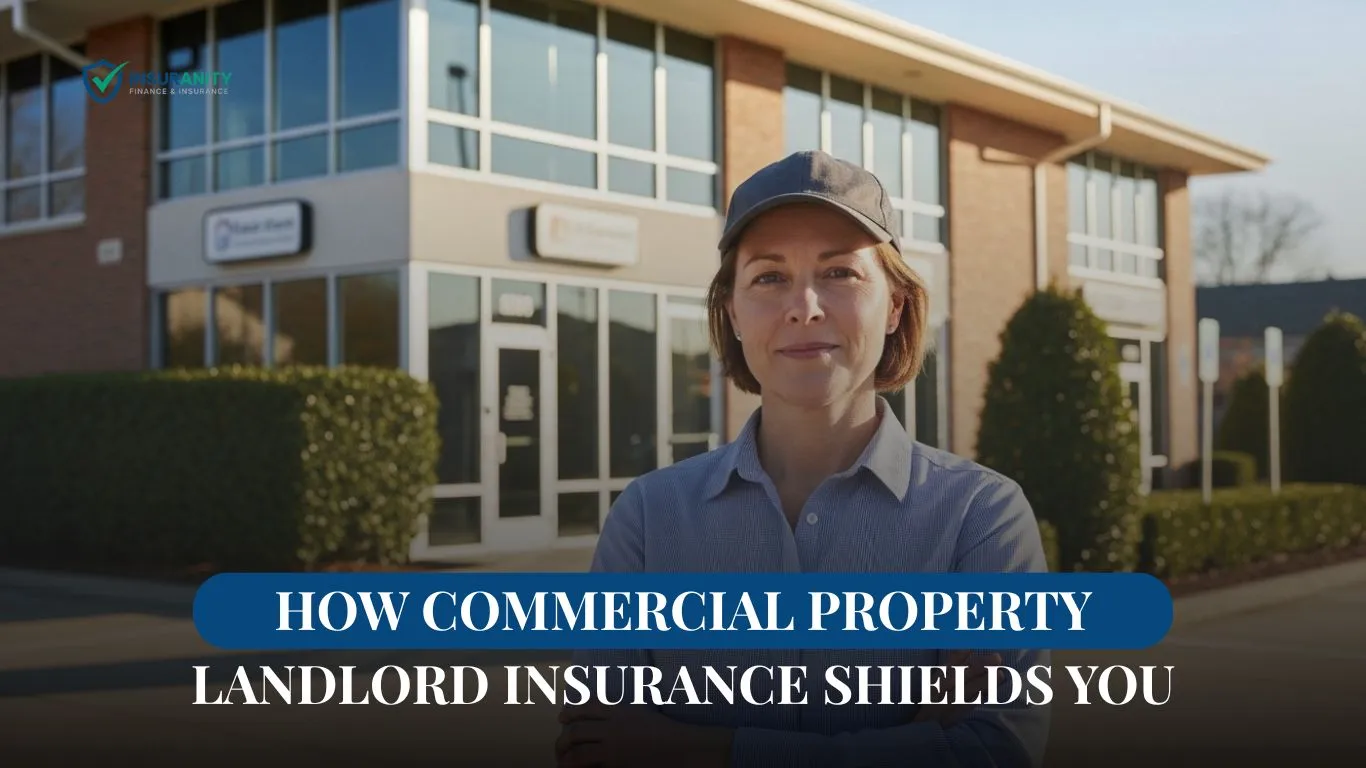
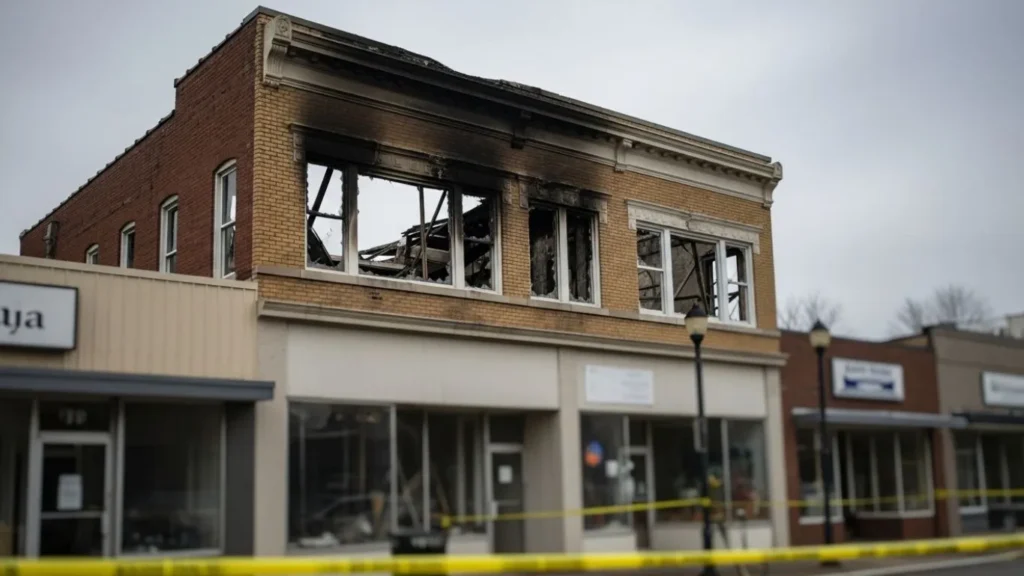
Imagine this: It’s a Tuesday morning, and you get a phone call that your commercial building caught fire overnight. One of your tenants left a space heater running. The roof is partially gone. Three businesses inside can’t open. And rent checks that were supposed to hit your account on the 1st? Gone for the next several months.
This is not a horror story. It happens to real landlords across the United States every single year.
Now here’s the good news. Landlords who carry Commercial Property Landlord Insurance walk away from situations like this without losing their life savings. Those who don’t? They often lose everything.
So if you own a commercial building, a retail strip, an office space, or a warehouse that you rent out to businesses, this guide is written for you. By the time you finish reading, you will fully understand what Commercial Property Landlord Insurance is, how it actually works, what it covers, what it doesn’t, and how to set up the right policy step by step.
What Is Commercial Property Landlord Insurance?
Commercial Property Landlord Insurance is a type of business insurance that is specifically designed to protect people who own buildings or spaces that they rent out to other businesses.
Think of it like a safety net. You own the building. A business rents it from you. Something bad happens, whether it’s a fire, a storm, a lawsuit, or a tenant who simply stops paying because their space becomes unusable. Commercial Property Landlord Insurance steps in and helps cover the financial damage, so you don’t have to pay for it all out of your own pocket.
It is different from homeowners’ insurance, which only covers homes you live in. It is also different from regular commercial property insurance, which only covers the building itself. Commercial Property Landlord Insurance goes further because it also includes liability protection and lost rental income coverage.
In simple terms, it covers three big things:
- The building: if it gets damaged or destroyed
- Your legal costs: if someone gets hurt and sues you
- Your rental income: if your property becomes unusable and tenants can’t pay
Why Every Commercial Landlord Needs This Coverage
A lot of first-time landlords think, “My tenant has their own insurance. I’m probably fine.”
That thinking has cost people millions of dollars.
Here’s why. Your tenant’s insurance covers their stuff, their equipment, their inventory, and their employees. It does not cover your building. It does not cover a lawsuit filed against you as the property owner. And it definitely does not replace your lost rental income if their space burns down and they move out for six months.
Commercial Property Landlord Insurance fills that gap.
Banks understand this, too. In fact, many mortgage lenders require landlords to carry this type of coverage before they approve a commercial real estate loan. It is not just smart. In many situations, it is required.
Understanding what a health insurance premium is can help you better understand how insurance premiums work across different policy types, including commercial landlord policies.
What Does Commercial Property Landlord Insurance Actually Cover?
Let’s break this down in plain language, the way a knowledgeable friend would explain it over coffee.
1. Building Coverage (Property Damage)
This is the core of any Commercial Property Landlord Insurance policy. It covers the physical structure of your building when it is damaged by what insurance companies call “covered perils.” Those typically include:
- Fire and smoke damage
- Windstorms and hail
- Lightning strikes
- Vandalism and theft
- Water damage from burst pipes
- Explosions
So if a fire breaks out and destroys two floors of your office building, your Commercial Property Landlord Insurance pays to rebuild those floors, up to your policy’s coverage limit.
It is worth noting that flood damage and earthquake damage are almost always excluded by default. If your property is located in a flood zone or earthquake-prone area, you need to ask specifically about adding those as additional covered perils. Many landlords miss this and end up uninsured after a major weather event.
2. General Liability Coverage
This is the part that most guides skip over, but it might be the most important.
As a commercial landlord, you are legally responsible for the common areas of your property. That means the parking lot, the hallways, the lobby, the stairs, and the elevators. If someone slips and falls in your parking lot and breaks their hip, they can sue you, not your tenant.
General liability coverage inside your Commercial Property Landlord Insurance policy pays for:
- Legal defense costs
- Medical bills for injured parties
- Settlements or court judgments
Without this, a single lawsuit could wipe out years of rental income. With it, you are shielded.
3. Loss of Rental Income (Business Interruption)
This is the coverage that saves landlords when disaster strikes.
Here’s how it works. Let’s say a tornado tears through your retail strip. Three businesses can’t operate. They stop paying rent. Repairs take four months. During those four months, your Commercial Property Landlord Insurance continues to pay you the rental income you would have collected, so you can still pay your mortgage, your property taxes, and your other bills.
This coverage is sometimes called “business interruption insurance” or “loss of rents” coverage, and it is often overlooked until it is desperately needed.
If you have financed any of your buildings, this coverage is not optional. It keeps you out of default while your property is being repaired.
The Lessor’s Risk Only (LRO) Policy Explained
You may come across a term called Lessor’s Risk Only insurance, or LRO. This is just another name for Commercial Property Landlord Insurance that is used by some insurers and brokers.
LRO policies are specifically built for landlords who lease their space entirely to business tenants. They bundle property coverage and liability coverage into one plan, and they are often one of the most cost-effective options available. Just like business personal property insurance covers the physical items a business owns, an LRO policy covers the physical structure you own as a landlord.
If you own a building and rent it 100% to other businesses, an LRO policy is likely the right foundation for your coverage program.
What Is NOT Covered by Commercial Property Landlord Insurance?
Knowing what is excluded is just as important as knowing what is covered. Here are the most common exclusions:
| What’s Excluded | Why It Matters |
|---|---|
| Flood damage | Requires a separate flood insurance policy |
| Earthquake damage | Needs to be added as an endorsement or separate policy |
| Tenant’s personal property | Tenants must carry their own business insurance |
| Normal wear and tear | Routine maintenance is never covered |
| Your own business equipment | Covered under a separate business property policy |
| Vacant building damage | Many policies limit coverage after 30 to 60 days of vacancy |
This last one catches many landlords by surprise. If your building sits empty for more than 30 to 60 days, some insurers will reduce or eliminate coverage until a new tenant moves in. If you regularly deal with vacancy periods between tenants, make sure your policy addresses this.
How to Choose the Right Commercial Property Landlord Insurance Policy: Step by Step
Getting the right policy does not have to be complicated. Follow these steps, and you will be well-positioned to protect your investment properly.
Step 1: Calculate Your Building’s Replacement Cost
The most common mistake landlords make is underinsuring their property. Do not insure based on what you paid for the building. Insure based on what it would cost to rebuild it from the ground up today.
Construction costs have risen sharply over the past several years. A building that cost $800,000 to construct a decade ago might cost $1.4 million to rebuild today. If your policy limit reflects the old number, you are underinsured, and you may not even know it.
Work with a licensed appraiser or your insurance broker to determine the current replacement cost of your structure.
Step 2: Know Your Liability Exposure
Think about the people who visit your property. Customers are coming to your tenant’s retail shop. Delivery drivers. Visitors. Each person who walks onto your property is a potential liability claim if they get hurt in a common area.
General liability limits of $1 million per occurrence and $2 million in aggregate are a common starting point, but higher limits are recommended for larger or higher-traffic properties.
You can also consider business liability insurance add-ons depending on your state and the nature of your commercial tenants.
Step 3: Calculate Your Rental Income Exposure
Add up all the rent you collect from your building in 12 months. Then ask your insurer whether your business interruption coverage would replace that amount for the full repair period.
Some policies cap this coverage at 6 months. Others cover up to 12 months or more. The length of time it would take to rebuild your specific property after a total loss determines how much coverage you actually need.
Step 4: Identify Your Property-Specific Risks
Does your building sit in a hurricane zone? Is it in a city with a high crime rate? Do you lease to tenants who work with flammable materials, like restaurants or auto shops?
Each of these factors changes what your policy should look like. A warehouse leased to a chemical company has very different insurance needs compared to a small office building leased to an accounting firm.
Step 5: Talk to Your Tenants About Their Coverage
This step is often skipped entirely by new landlords, and it is a big mistake.
Ask your tenants to name you as an additional insured on their business liability policy. This simple step means that if a customer gets hurt inside a tenant’s space and sues both you and the tenant, the tenant’s liability coverage will extend protection to you as well.
Also, require your tenants to carry their own business insurance coverage for their contents and operations. Make it a condition of their lease.
Step 6: Review Your Policy Annually
Your property’s value changes over time. Rental rates change. You may add new structures or make improvements. Your Commercial Property Landlord Insurance policy should be reviewed every year to make sure the limits still match your current exposure.
Set a calendar reminder 60 days before your policy renewal date. That gives you time to shop around, compare options, and make adjustments before your policy auto-renews at potentially outdated limits.
How Much Does Commercial Property Landlord Insurance Cost?
The honest answer is: it depends. But here is a realistic range to work with.
Most commercial landlords in the US pay between $1,200 and $3,500 per year for a standard Commercial Property Landlord Insurance policy on a single building. Larger properties, higher-risk tenants, or locations in disaster-prone areas will push that number higher.
The factors that affect your premium include:
- Location: Properties in areas prone to hurricanes, tornadoes, or high crime cost more to insure
- Building size and construction type: Older buildings with wood frames cost more to insure than newer steel-frame buildings
- Tenant type: A restaurant or auto body shop creates more risk than a law office
- Your claims history: Multiple past claims will raise your rates
- Coverage limits and deductibles: Higher limits cost more; higher deductibles lower your premium
One effective way to lower your premium is to install security systems, fire sprinklers, and smoke detectors. Insurers reward landlords who reduce the likelihood of claims by reducing physical risks on the property.
Commercial Property Landlord Insurance vs. Other Related Policies
It helps to understand how Commercial Property Landlord Insurance compares to other types of coverage you might encounter.
| Policy Type | Who It Covers | What It Covers |
|---|---|---|
| Commercial Property Landlord Insurance | The landlord | Building, liability, lost rental income |
| Tenant’s Business Insurance | The tenant | Their equipment, inventory, liability |
| General Liability Insurance (standalone) | The landlord | Lawsuits and injury claims only |
| Commercial Property Insurance (standalone) | The landlord | Building damage only |
| Business Owner’s Policy (BOP) | Small businesses | Bundled property and liability |
| Umbrella Insurance | The landlord | Extra coverage above standard limits |
As shown above, Commercial Property Landlord Insurance is the broadest protection available for landlords specifically. It was built for the risks that property owners face, not the risks that tenant businesses face.
A Real-World Scenario: What Happens Without It
Marcus owns a two-story retail building in Ohio. He rented the ground floor to a restaurant and the upper floor to a yoga studio. He carried basic commercial property insurance but had let his liability coverage lapse to save money.
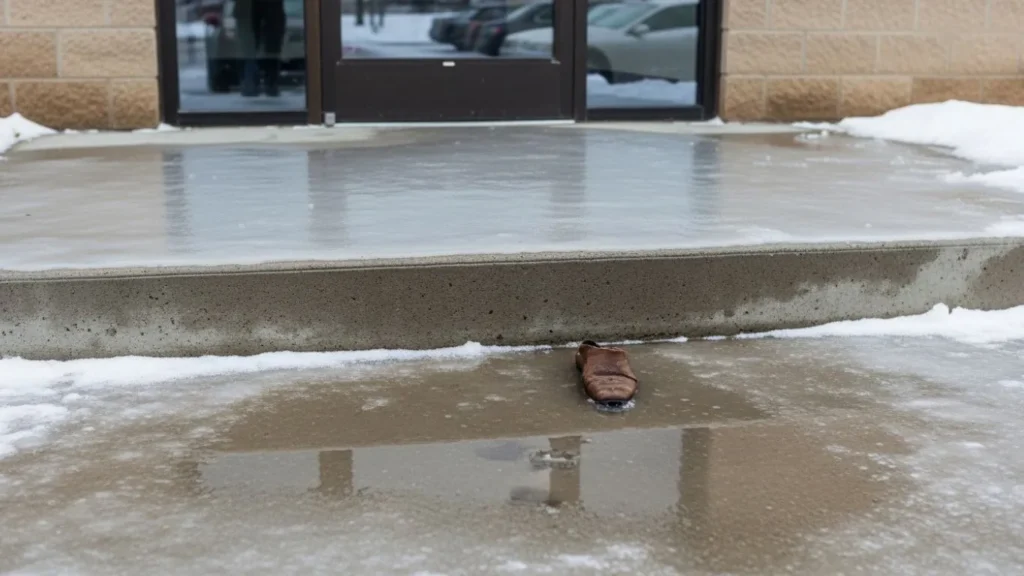
One winter, an ice patch formed near the building entrance overnight. A customer heading into the restaurant slipped and fractured their wrist and knee. They sued Marcus directly for $220,000, arguing that the property owner failed to maintain safe conditions.
Because Marcus had no liability coverage, he paid the settlement out of pocket. He was forced to take out a second mortgage on his own home.
Had he maintained proper Commercial Property Landlord Insurance with general liability coverage, his insurer would have handled the entire legal process and paid the settlement. His personal finances would have been untouched.
This is exactly why understanding your insurance policy details before a claim happens is so much more valuable than learning about them after.
Special Situations That Require Extra Attention
Mixed-Use Properties
If you own a building that has both residential and commercial units, you are dealing with a mixed-use property. Standard Commercial Property Landlord Insurance policies may not fully cover the residential portion. You may need a hybrid policy or separate policies for each section.
Vacant Buildings
As mentioned earlier, vacancy is a risk that many standard policies exclude or limit after 30 to 60 days. If your property goes vacant between tenants, notify your insurer immediately and ask about vacant building coverage or endorsements.
Multi-Property Portfolios
If you own more than one commercial building, a blanket policy or portfolio-level policy can often cover all your properties more efficiently than insuring each one separately. Work with a commercial insurance broker who specializes in real estate to structure this correctly. Managing a diverse insurance portfolio shares some similarities with managing business travel accident insurance across multiple employees. Both require careful coordination of coverage limits and policy terms.
Properties With High-Risk Tenants
If you lease to businesses that involve fire risk (restaurants, manufacturers), chemical exposure (auto shops, dry cleaners), or heavy equipment, you need specialized endorsements on your Commercial Property Landlord Insurance policy. Standard policies may specifically exclude claims arising from these types of tenants.
How to File a Claim on Your Commercial Property Landlord Insurance Policy
When something goes wrong, here is what to do immediately:

Step 1: Secure the property and prevent further damage. Board up broken windows. Shut off the water if there is a pipe issue. This is not just common sense. Most policies require you to take reasonable steps to mitigate damage after a loss.
Step 2: Document everything with photos and video before any cleanup begins. Photograph every inch of the damage from multiple angles.
Step 3: Contact your insurance company or broker as soon as possible. Most policies require prompt notification of a loss.
Step 4: Do not sign any repair contracts or begin major repairs until your insurer has sent an adjuster to inspect the damage and you have received written authorization.
Step 5: Keep all receipts, invoices, and records of expenses related to the loss. These will be needed during the claims review process.
Step 6: Follow up consistently. Large commercial claims can take weeks or months to settle. Stay in regular contact with your claims adjuster and respond promptly to all requests for documentation.
The Connection Between Insurance and Long-Term Property Value
There is one more thing that most articles on Commercial Property Landlord Insurance completely miss: the role insurance plays in preserving and growing your property’s long-term value.
A well-insured building is a more bankable building. Lenders look at insurance coverage when evaluating refinancing requests. Sophisticated buyers look at insurance history when considering an acquisition. A property with multiple uninsured losses on record, or one that was clearly underinsured, will attract lower offers and less favorable financing terms.
Think of Commercial Property Landlord Insurance not just as a safety expense, but as a value-preservation tool. Just like life insurance protects long-term financial security for families, commercial landlord insurance protects long-term financial security for property investors.
The right coverage, maintained consistently and reviewed annually, is one of the most important decisions you will make as a commercial property owner.
FAQs
Does Commercial Property Landlord Insurance cover tenant improvements and buildouts inside my building?
Standard Commercial Property Landlord Insurance generally covers the base building structure, including permanently installed fixtures like HVAC systems, electrical, and plumbing. However, tenant improvements and buildouts, meaning walls, flooring, or fixtures that a tenant installs inside their leased space, fall into a grey area. If the improvements become part of the permanent structure, they may be covered under your policy. If they are considered the tenant's property, they are not. This is why your lease agreement should clearly define who owns tenant improvements, and your insurance broker should be informed so your policy is written to reflect that accurately.
Can a Commercial Property Landlord Insurance policy be shared across multiple tenants in one building?
Yes. A single Commercial Property Landlord Insurance policy can cover an entire building with multiple tenants under one plan. However, premium allocation becomes important when tenants operate very different types of businesses. A welding shop in one unit carries far more fire and liability risk than an accounting office in another unit. Some landlords structure their lease so that higher-risk tenants absorb a larger portion of the insurance cost. What matters most is that your policy limits reflect the combined risk of all tenants operating in the building, not just the lowest-risk occupant.
What happens to my Commercial Property Landlord Insurance if a tenant defaults and leaves the building empty?
This is one of the most overlooked risks in commercial real estate. When a tenant defaults and vacates, most standard Commercial Property Landlord Insurance policies trigger a vacancy clause after 30 to 60 consecutive days of the building sitting empty. Once that threshold is crossed, your insurer may reduce coverage significantly or exclude certain perils entirely, including vandalism and water damage, which are two of the most common claims that happen in vacant buildings. The moment a tenant gives notice to vacate, contact your insurer immediately to discuss a vacancy endorsement or a specialized vacant building policy to maintain full coverage during the gap period.
Is ordinance or law coverage included in a standard Commercial Property Landlord Insurance policy?
Ordinance or law coverage is almost never included in a standard Commercial Property Landlord Insurance policy, and this gap catches many landlords completely off guard. Here is why it matters. If your building is damaged and local building codes have changed since it was originally constructed, you are legally required to bring the rebuilt portions up to current code. That can mean upgraded electrical systems, new fire suppression requirements, ADA compliance upgrades, or structural changes. None of that extra cost is covered by a basic policy. Only an ordinance or law endorsement will pay for the difference between rebuilding to the old standard and rebuilding to today's legal requirements. For older commercial buildings especially, this coverage is considered essential.
Key Takeaways
Commercial Property Landlord Insurance is the primary financial shield between your investment and the unpredictable risks of owning commercial real estate. It covers building damage, liability claims, and lost rental income in a way that no other single policy does.
The most important actions to take right now:
- Verify your building is insured at today’s replacement cost, not its original purchase price
- Confirm your policy includes general liability coverage for common areas
- Make sure your business interruption coverage would replace your full annual rental income
- Require all tenants to name you as an additional insured on their own policies
- Review your Commercial Property Landlord Insurance policy every year without exception
- Ask specifically about flood, earthquake, and vacancy coverage based on your property’s location
For a broader understanding of how business insurance works across different industries, the Insurance Information Institute offers reliable, independent guidance on policy structures and deductibles that applies directly to commercial property owners.
Owning commercial real estate is one of the most powerful ways to build wealth in America. Commercial Property Landlord Insurance is what makes sure a single unexpected event doesn’t undo years of that hard work. It is not a luxury. It is the foundation that responsible commercial property ownership is built on.