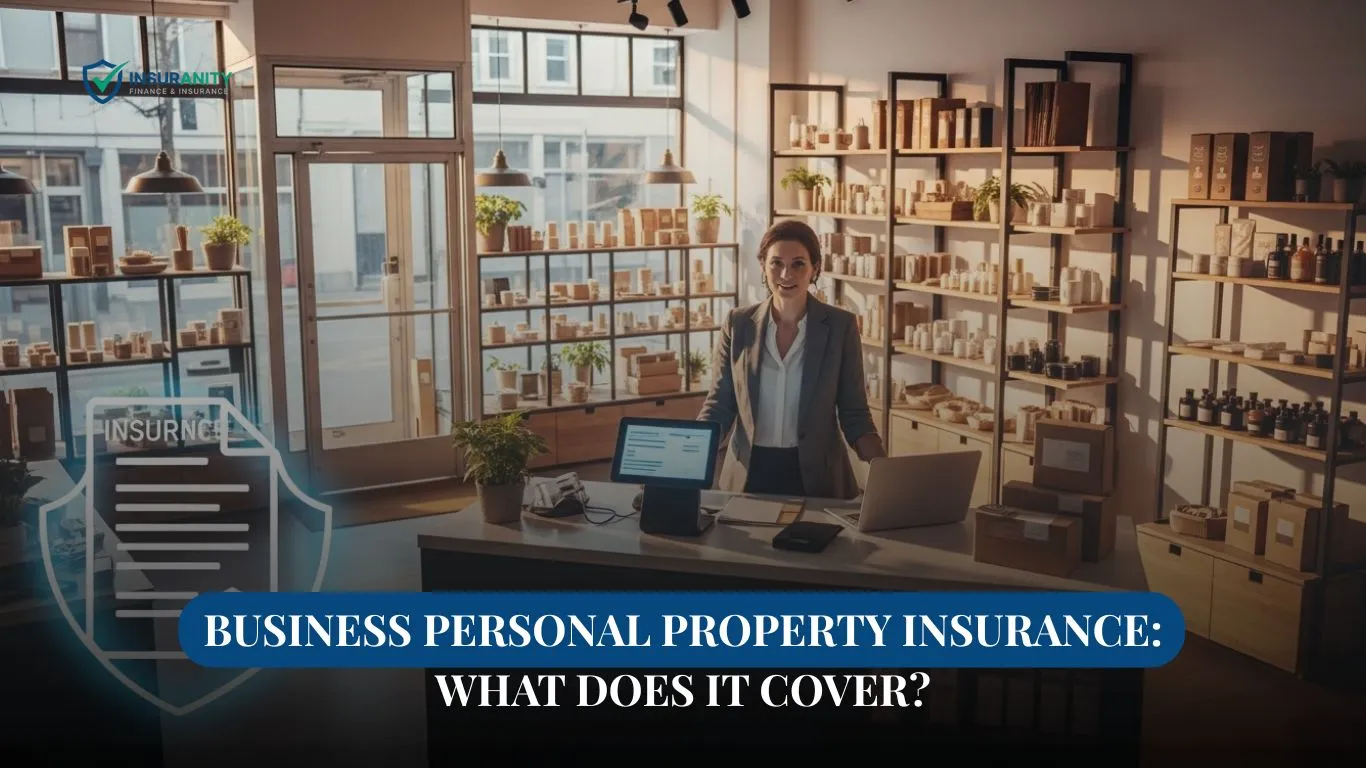
It was a Tuesday morning in Phoenix when Maria, owner of a small electrical supply boutique, walked in to find her back office completely flooded from a burst pipe. Two laptops, a desktop server, all her product inventory, and the custom shelving she had installed six months ago were destroyed. Her first call was to her insurance agent. Her second was to her contractor. She was back open in 19 days. Her neighbor down the street, who skipped coverage to save money, never reopened at all.
That is what business personal property insurance does. It is not just a policy on paper. It is what keeps your business alive when the unexpected turns your entire operation upside down.
What Is Business Personal Property Insurance?
So, what is business personal property insurance, exactly? Put simply, it is a type of commercial coverage that protects the physical, movable assets your business owns, leases, or uses. It does not cover the building itself, which falls under a separate structure or landlord policy. What it does cover is everything inside your business that you depend on to operate every single day.
The business personal property insurance definition most insurers use is: any tangible property owned or used by a business, located at or near a covered premises, that is not permanently attached to the building.
Think of it this way. Pick up your business, turn it upside down, and shake it. Everything that falls out of the furniture, computers, inventory, tools, display cases, and rented equipment is your business’s personal property. And that is exactly what business personal property insurance is built to protect.
Most insurers offer this as part of a commercial property policy, or bundled inside a Business Owner’s Policy (BOP). Standalone personal property insurance for business can sometimes be added as an endorsement to a general liability policy, which is especially useful for home-based business owners who do not need a full commercial policy structure.
What Does BPP Insurance Cover?
This is the question every business owner needs answered in plain language, so here it is.
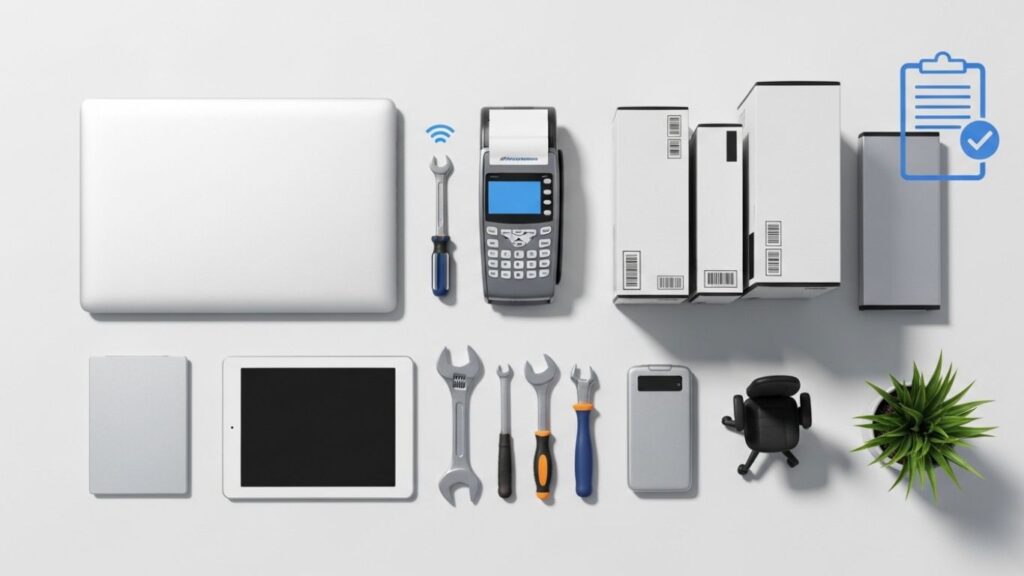
Covered Items Under a Standard Policy
| Asset Category | Common Examples |
|---|---|
| Furniture and Fixtures | Desks, chairs, display cases, counters, shelving |
| Computers and Electronics | Laptops, servers, monitors, point-of-sale systems |
| Inventory and Stock | Products for sale, raw materials, packaged goods |
| Tools and Equipment | Custom lighting, built-in cabinetry, and flooring you paid for in a leased space |
| Leased or Rented Equipment | Items in your care, custody, or control |
| Tenant Improvements | Custom lighting, built-in cabinetry, flooring you paid for in a leased space |
| Outdoor Property | Fencing, signage (usually with sub-limits) |
Insurance business personal property coverage also kicks in when your assets are damaged or destroyed by specific events called covered perils. Under a standard policy, these typically include:
- Fire and smoke
- Theft and burglary
- Vandalism
- Windstorm and hail
- Lightning strikes
- Explosions
- Sprinkler leakage
- Water damage from burst pipes
Policies come in two forms. A named peril policy only covers what is explicitly listed. A special form policy, also called open peril or all-risk, covers everything except what is specifically excluded. Special form coverage costs more, but for most businesses with significant assets, the broader protection is worth the extra premium.
What Is NOT Covered?
Understanding the gaps in insurance business personal property coverage is just as important as knowing what is included. Standard policies typically exclude:
- The building or structure itself (needs commercial building coverage)
- Floods (requires a separate flood insurance policy)
- Earthquakes (requires a separate endorsement or policy)
- Business vehicles (covered under commercial auto insurance)
- Employee injuries (handled by workers’ compensation)
- Mechanical or electrical equipment breakdown (requires equipment breakdown insurance)
- Intellectual property, patents, or trademarks
- Digital data and records (may require a cyber liability add-on)
Floods and earthquakes are the two exclusions that catch business owners off guard most often. If your location sits in a flood zone or seismically active region, a standard BPP policy leaves you exposed. Separate endorsements exist specifically for these risks, and in high-risk areas, skipping them is a costly mistake.
Replacement Cost vs. Actual Cash Value: Choose Wisely
When you shop for a business personal property insurance quote, one of the most important decisions you will make is how your property gets valued after a loss. This single choice dramatically affects how much money you actually receive when a claim is paid.
Replacement Cost Value (RCV) pays the cost to buy a brand-new equivalent of the damaged or stolen item today, at current prices, with no deduction for age or wear.
Actual Cash Value (ACV) pays the depreciated value, what the item is worth today, not what it costs to replace it.
Here is a practical example. A plumbing company owns a commercial pipe inspection camera worth $8,000 new. After two years of regular use, its actual cash value might be $4,500. If it is stolen and the policy uses ACV, the payout is $4,500. The owner covers the remaining $3,500 out of pocket. With replacement cost coverage, the full $8,000 is paid.
Replacement cost coverage comes with a higher premium, but for businesses that depend on specialized or expensive equipment, it is almost always the smarter long-term investment.
Business Personal Property Insurance Cost: What to Expect
One of the most common questions business owners ask before getting a business personal property insurance quote is: What is this actually going to cost me?
The business personal property insurance cost varies based on several factors, but here is a realistic picture based on current market data:
| Business Type | Estimated Monthly Cost (BOP with BPP) |
|---|---|
| Low-risk consulting or home-based | $18 to $45/month |
| Small retail shop or boutique | $50 to $120/month |
| Restaurant or food service | $100 to $250/month |
| Contractor (electrician or plumber) | $80 to $200/month |
| Medical or professional office | $75 to $175/month |
According to Insureon data, the average BOP, which includes BPP coverage alongside general liability, runs around $83 per month for small businesses. The Hartford reports its average commercial property customers pay approximately $134 per month. For very low-risk businesses, commercial property coverage with BPP can start as low as $18 per month.
Your specific business personal property insurance cost depends on:
- The total replacement value of your covered assets
- Your industry and risk profile
- Your business location and local crime or weather risk
- Whether you choose replacement cost or actual cash value
- Your chosen deductible
- Your prior claims history
The most reliable way to find the right price is to get a business personal property insurance quote from multiple carriers and compare them on equivalent coverage terms. Cheaper is not always better if the policy has lower limits, higher deductibles, or fewer covered perils.
Commercial Property Insurance With Business Personal Property: How They Work Together
A lot of confusion surrounds the relationship between commercial property insurance and BPP. Here is how they actually connect.
Commercial property insurance is the broader policy. It typically covers two things: the physical structure of your business location, and the contents inside it. The “contents” portion of that policy is your business personal property insurance. So when insurers refer to commercial property insurance with business personal property, they mean a combined policy that protects both the building and everything inside it under one structure.
For most small businesses, this combination is purchased inside a Business Owner’s Policy (BOP), which bundles:
- Commercial property coverage: structure and BPP contents
- General liability insurance: third-party injury and property damage claims
- Business interruption insurance: lost income during a covered shutdown (often included or available as an add-on)
Buying a BOP is almost always more cost-effective than purchasing each coverage separately. Bundling can save up to 15 to 20 percent compared to standalone policies.
To understand how property and casualty coverage works as a complete system for your business, the guide at Property and Casualty Insurance: What It Covers and Why It Matters breaks it down clearly.
Business Personal Property Insurance for Electricians
For trade contractors, business personal property insurance for electricians is one of the most essential and most overlooked coverages available.

An electrician’s entire livelihood depends on physical tools and equipment. Conduit benders, multimeters, wire strippers, cable pullers, voltage testers, and specialty diagnostic systems can easily represent $20,000 to $50,000 or more in total asset value. Add a loaded work trailer and van stock, and that number climbs fast.
Here is what most policies cover under business personal property insurance for electricians:
- Hand tools and power tools at your shop, office, or job site
- Electrical testing and diagnostic equipment
- Laptops and tablets used for estimates and project management
- Office furniture and equipment at your business location
- Inventory of supplies like wire, conduit, breakers, and panels
- Leased or rented equipment while it is in your care
One of the most common claims for electricians is tool theft from a job site or a locked work vehicle. Most BPP policies cover theft from a secured location, but some limit off-premises coverage or require specific security conditions. Reading your policy language carefully, or having a licensed agent review it, is important before assuming you are covered everywhere you work.
Electricians operating out of a home shop also need to know that homeowners’ insurance provides very little, if any, coverage for business tools and inventory. A dedicated business personal property insurance for electricians policy or a contractor tools floater fills that gap.
Business Personal Property Insurance for Plumbers
Business personal property insurance for plumbers covers a similar set of risks, with a few trade-specific details worth knowing.
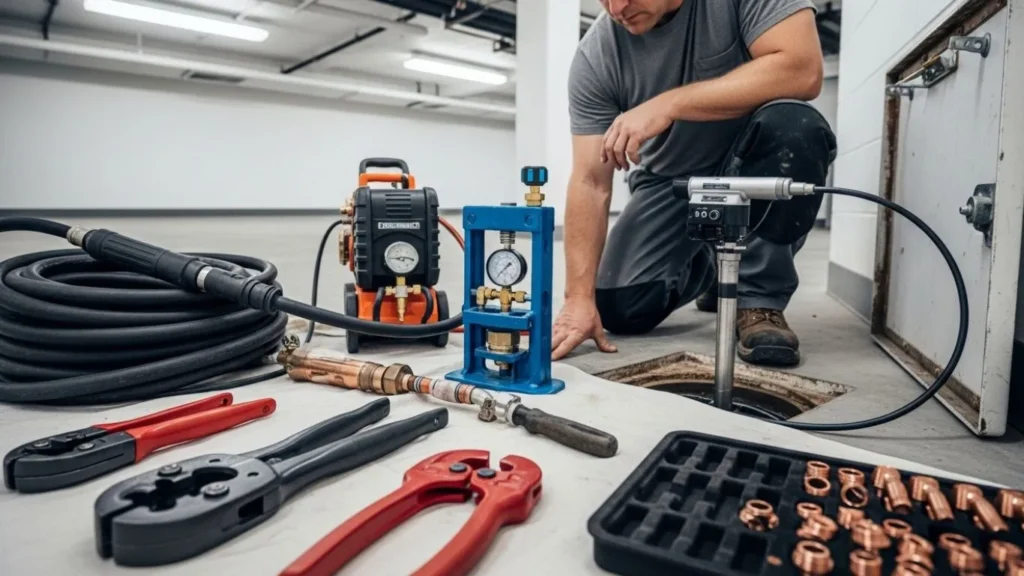
Plumbers work with pipe cutters, press tools, drain snakes, hydro-jet machines, camera inspection systems, and soldering equipment, all specialized, expensive, and impossible to quickly replace without disrupting your schedule and client commitments.
Here is what business personal property insurance for plumbers typically covers:
- Pipe wrenches, cutters, pliers, and hand tools
- Motorized drain cleaning and hydro-jetting equipment
- Camera inspection and locating systems
- Water pressure testing gear
- Copper fittings, PVC inventory, and supply stock
- Office and shop equipment used in business operations
- Specialty rented equipment while in your custody
A real scenario: a solo plumber’s van is broken into overnight, and $9,000 worth of tools go missing. Without coverage, that is weeks of lost work and out-of-pocket replacement costs. With business personal property insurance for plumbers, the claim is filed, and replacement tools are sourced quickly, often within days.
Plumbers who move equipment frequently between a shop, supply houses, and job sites should also look into whether their policy covers property in transit. Standard BPP coverage sometimes limits protection to a fixed premises. An inland marine endorsement or tools floater can extend coverage to cover assets on the move.
Personal Property Insurance for Business: What Home-Based Owners Must Know
If you run your business from home, personal property insurance for business takes on an extra layer of importance that many owners do not realize until it is too late.
Homeowners’ insurance is not designed to cover a business. Most standard home policies cap business property coverage at roughly $2,500 on-premises and offer little to nothing for business property stored off-site. For a home-based e-commerce seller with $25,000 in inventory in a spare bedroom, that limit is dangerously inadequate.
Options for home-based business owners include:
- A home-based business endorsement is added to an existing homeowner’s policy
- A standalone personal property insurance for business policy
- A full BOP if the business has grown enough to warrant a more comprehensive structure
If your business equipment, supplies, or inventory exceeds $5,000 in total value, dedicated personal property insurance for business is almost certainly worth the investment. The coverage gap between a homeowner’s policy and a proper business property policy can mean the difference between recovering from a loss and absorbing it entirely.
For business owners also thinking about long-term financial protection strategies, is Life Insurance Worth It for Business Owners? offers a practical look at how life insurance fits into a broader financial plan, a useful read alongside your property coverage decisions.
Step-by-Step: How to Get the Right BPP Coverage
Here is a clear, step-by-step process for securing the right business personal property insurance for your specific business.
Step 1: Inventory Everything You Own
Walk through your business and document every physical asset. Photograph and list furniture, electronics, equipment, inventory, tools, and any improvements you have made to the leased space. This list becomes the foundation of your coverage.
Step 2: Calculate Total Replacement Value
For each item, note what it would cost to replace it with a new equivalent at today’s prices. Add it all up. That total is your starting point for choosing a coverage limit.
Step 3: Choose Your Valuation Method
Decide between replacement cost and actual cash value. For most businesses with significant or specialized assets, replacement cost is the better choice even at a slightly higher premium.
Step 4: Select Your Coverage Form
Choose between named peril and special form. If your assets are significant, special form coverage provides much broader protection and is usually worth the extra cost.
Step 5: Bundle Into a BOP
For most small businesses, commercial property insurance with business personal property bundled inside a BOP is the most cost-effective structure. It combines BPP, general liability, and often business interruption coverage at a better rate than buying each separately.
Step 6: Get Multiple Quotes
Request a business personal property insurance quote from at least three carriers. Compare each quote using the same coverage limits, valuation method, and deductible. Comparing quotes that differ in these elements leads to bad decisions.
Step 7: Review Every Year
Your business grows, and so does the value of your assets. Review your BPP coverage limits every 12 months and update them to reflect new equipment, higher inventory levels, or improvements to your space. Businesses that skip this step often discover they are underinsured precisely when they need full coverage most.
If your business also involves vehicles, remember those assets require separate coverage. Temporary Commercial Vehicle Insurance covers that topic in detail and is worth reviewing if you operate a fleet or use commercial vehicles seasonally.
BPP Insurance in Action
Restaurant Kitchen Fire
A family-owned restaurant in Dallas experiences a grease fire that destroys the kitchen. Commercial refrigeration, ovens, prep stations, and food inventory are all lost. Their business personal property insurance covers the full replacement cost of every asset inside, allowing them to reopen within three weeks rather than close permanently.
Electrician’s Tool Theft
An independent electrician in Atlanta returns to a job site on Monday morning to find his locked trailer broken into. Gone: $22,000 in tools and diagnostic equipment. His business personal property insurance for electricians processes the claim quickly, and he is back to work with replacement tools the following week.
Plumber’s Camera System Loss
A plumbing company in Chicago accidentally drops a $12,000 camera inspection system into a drain on a commercial job. The policy pays out the full replacement cost. Without coverage, that single incident would have erased several months of profit.
Retail Boutique Break-In
A clothing store in Miami was broken into overnight. The thief takes two point-of-sale systems, a laptop, and $35,000 worth of merchandise. The store’s business personal property insurance covers full replacement cost for all stolen inventory and equipment, and the owner restocks and reopens within two weeks.
Insuranity is built to fill every one of these gaps with clear, honest, actionable information that helps real business owners make real decisions. Browse the full Insuranity blog for more guides built the same way.
FAQs
Does business personal property insurance cover property stored off-site or in transit?
Standard business personal property insurance is tied to the address listed on your policy, which means coverage typically applies only while your property is at that specific business location. Assets being transported between job sites, stored at a client's location, or sitting in a work vehicle are often not covered under a basic BPP policy. To fill this gap, businesses can add an inland marine insurance policy or a contractor's tools and equipment floater, which extends protection to property in transit or stored off-site. If your work regularly takes equipment away from your primary location, this additional coverage is essential.
Can I add business personal property insurance to my general liability policy instead of buying a full commercial property policy?
Yes, and this is a commonly overlooked option. Small businesses that do not own or rent a dedicated commercial space, such as freelancers, home-based operators, or mobile service providers, can add a BPP endorsement directly to a general liability policy rather than purchasing a full commercial property policy. This endorsement covers inventory, equipment, and other business assets at a lower cost than a standalone commercial property policy, making it a practical and affordable solution for businesses with lighter property needs.
What happens if I am underinsured and my business personal property insurance limit is too low?
If your covered loss exceeds your policy limit, you pay the difference out of pocket. For example, if a fire destroys $80,000 worth of equipment and inventory but your BPP limit is $50,000, the insurer pays $50,000 and you absorb the remaining $30,000. Many insurers also apply a coinsurance clause, which requires you to insure your property to at least 80 percent of its total replacement value. If you fall below that threshold, your payout on even a partial loss can be reduced proportionally. Reviewing and updating your coverage limit every year as your assets grow is the most effective way to avoid this outcome.
Does business personal property insurance cover a leased or rented space differently than an owned space?
The coverage itself works the same way regardless of whether you own or rent your space, BPP protects the contents, not the structure. However, if you lease your space, there are two important nuances. First, any improvements or upgrades you paid for, such as custom lighting, built-in shelving, or flooring, are typically covered under a "tenant improvements and betterments" provision within your BPP policy, since those improvements are considered your financial investment even though they are attached to someone else's building. Second, your landlord's commercial property policy covers the building itself but does not cover your business contents at all. As a tenant, your BPP coverage is the only protection you have for everything inside your space.
Disclaimer: The information provided in this article is for general educational purposes only and does not constitute legal, financial, or insurance advice. Coverage terms, definitions, exclusions, limits, and availability vary by insurer, state, and individual policy. Cost figures referenced are industry estimates drawn from publicly available data and may not reflect your actual premium. Always consult a licensed insurance professional before purchasing any insurance product. Insuranity is not responsible for coverage decisions made based on this content. In the event of a loss, your policy language governs all claim determinations.