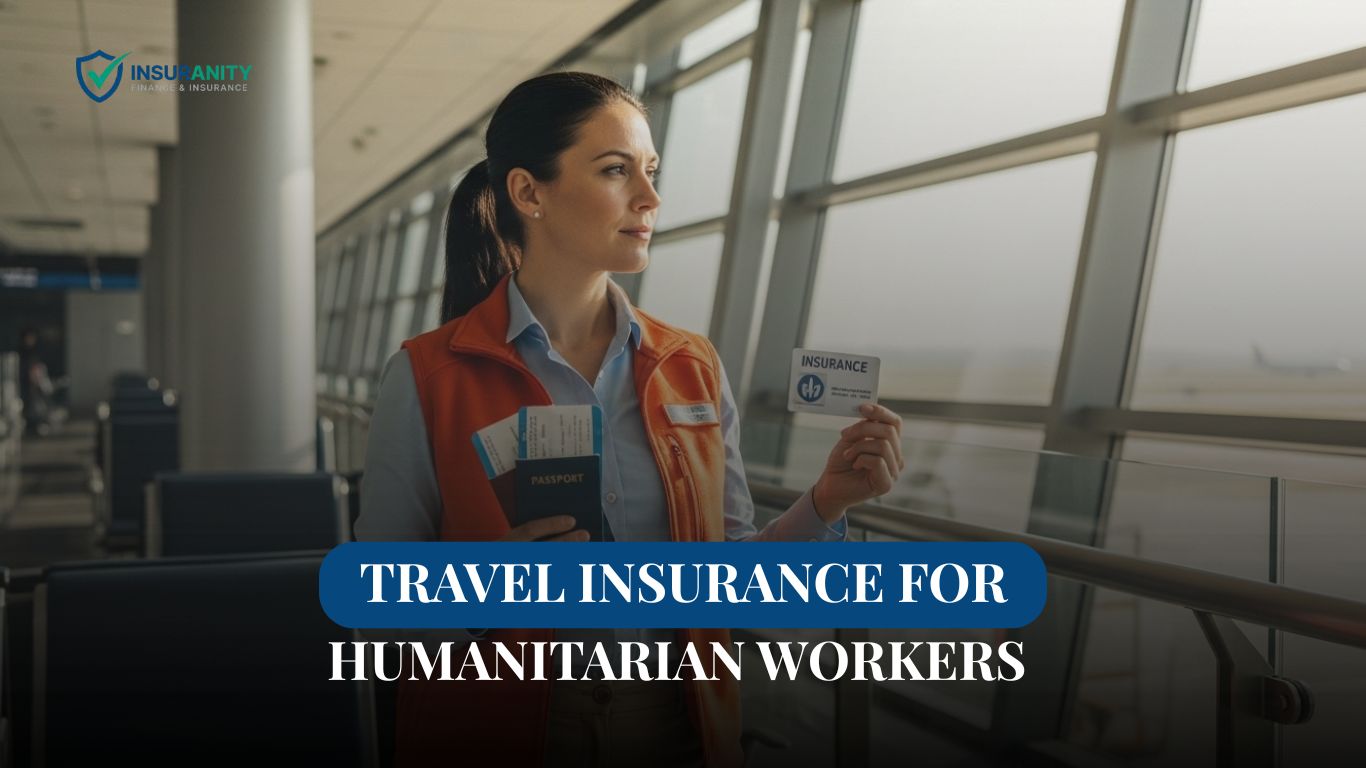
Imagine this: An aid worker deployed to a remote village in South Sudan suddenly develops a severe infection. The nearest hospital capable of handling the case is over 400 miles away. Without the right coverage in place, the medical evacuation alone could cost more than $85,000, money that neither the worker nor their NGO had budgeted for.
This is not a rare story. It happens far more often than most people realize. And it is exactly why travel insurance for humanitarian workers is not just a paperwork checkbox. It is a lifeline.
If you work for an NGO, a relief organization, a mission group, or any cause that takes you across borders and into difficult places, this guide is written for you. We will walk you through everything you need to know in plain, simple language, no confusing insurance jargon, no fluff, just clear facts that help you make the right choice before you board that plane.
Why Regular Travel Insurance Is Not Enough
Most people think any travel insurance plan will do the job. That is one of the most costly mistakes a humanitarian worker can make.
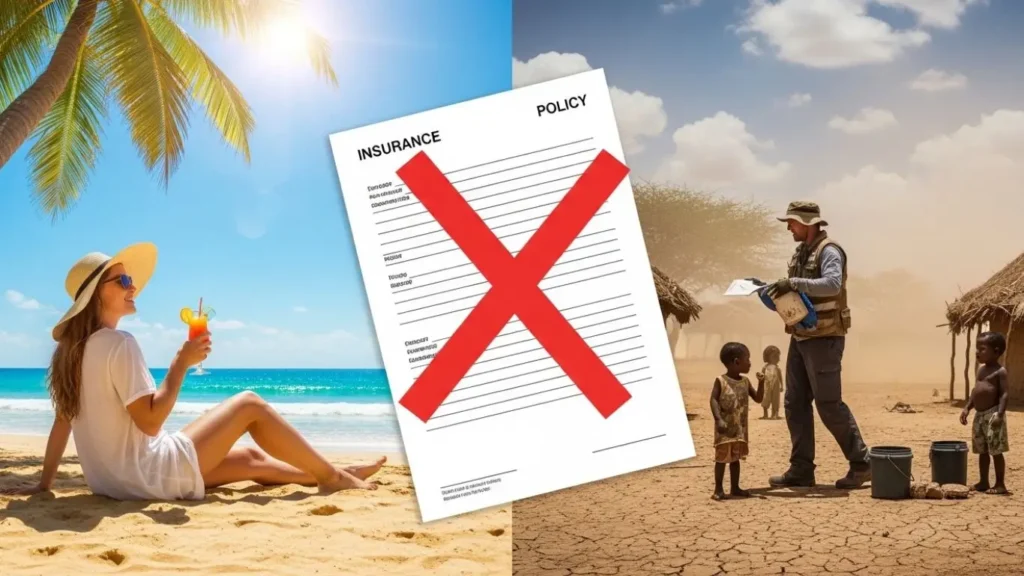
Standard travel insurance is designed for tourists. It covers things like lost luggage on a beach vacation or a cancelled cruise. When you are working in a conflict zone, a flood-stricken region, or a country under political unrest, standard policies often have exclusions that leave you completely unprotected.
Here is what standard plans typically exclude:
| Risk Type | Standard Travel Insurance | Humanitarian-Specific Plan |
|---|---|---|
| Medical evacuation from conflict zones | Usually excluded | Covered |
| Security/political evacuation | Not covered | Often included |
| Manual labor or field work injuries | Excluded | Covered |
| High-risk country coverage | Voided | Active |
| 24/7 crisis response team | Not available | Standard feature |
| Long-term deployment (6–12+ months) | Not supported | Supported |
This is why travel insurance for humanitarian workers exists as its own specialized category. The risks are simply different, and your coverage must reflect that.
If you are also exploring broader international health protection, learning about health insurance options at Insuranity can give you a fuller picture of how global medical coverage works alongside your mission plan.
What Does Travel Insurance for Humanitarian Workers Actually Cover?
Good travel insurance for humanitarian workers goes far beyond basic trip protection. Here is what a solid specialized policy should include:
1. Emergency Medical Coverage
This covers hospital stays, surgeries, doctor visits, and prescription medications while you are abroad. Look for plans with at least $250,000 in medical coverage, especially if you are heading into areas with limited healthcare infrastructure.
2. Medical Evacuation
This is one of the most critical parts. Medical evacuation gets you transported to the nearest qualified medical facility, or even back home, if local care cannot handle your condition. Costs can reach $100,000 or more for a single evacuation. Never go without this.
3. Security Evacuation
Also called political evacuation or emergency extraction, this covers the cost of getting you out of a country if there is a sudden civil conflict, coup, or serious security threat. Most standard policies do not include this at all.
4. Trip Interruption and Cancellation
If your mission is cut short due to an emergency at home, a natural disaster, or a deteriorating security situation, this covers your non-refundable costs and travel home.
5. Personal Liability
If you accidentally cause injury or property damage while working in the field, liability coverage protects you from out-of-pocket legal costs.
6. Equipment and Gear Protection
Humanitarian workers often carry laptops, medical devices, satellite phones, and other expensive equipment. A good policy covers theft or accidental damage to these items.
7. Mental Health Support
Fieldwork in crisis areas carries a real psychological toll. Some specialized plans now include access to counseling and mental health resources, which is an area most competitors still overlook.
Understanding what life insurance and health protection look like together can also be helpful for workers planning long-term deployments. The team at Insuranity’s life insurance section explains how these policies can work side by side.
How to Choose the Right Plan: A Step-by-Step Guide

Choosing travel insurance for humanitarian workers does not have to be overwhelming. Follow these steps and you will find the right coverage for your mission.
Step 1: List Your Deployment Details
Write down where you are going, how long you will be there, what kind of work you will be doing (manual, clinical, administrative), and whether your organization has any minimum coverage requirements.
Step 2: Confirm Your Organization’s Requirements
Many NGOs require workers to carry policies with specific minimum limits — particularly for medical evacuation and security evacuation. Match your plan to that list before you buy anything.
Step 3: Check High-Risk Country Lists
Some plans automatically void coverage if you enter certain countries. Always verify that your destination is covered under the specific policy you are considering.
Step 4: Compare These Key Numbers
- Emergency medical limit (minimum: $250,000)
- Medical evacuation limit (minimum: $500,000)
- Security evacuation limit (minimum: $100,000)
- Trip interruption benefit (at least 150% of trip cost)
Step 5: Read the Exclusions Page First
This sounds backward, but it is the most important habit in insurance shopping. Read what is NOT covered before you read what is. Look for exclusions around manual labor, high-risk territories, and pre-existing conditions.
Step 6: Confirm 24/7 Emergency Assistance Access
Your plan should include a real emergency response center with multilingual staff, available any time of day or night. Ask specifically whether the number is reachable via satellite phone if local cellular networks are down.
Step 7: Get Your Documents Before You Leave
Carry digital and physical copies of your policy documents, the emergency assistance number, and your policy number. Share copies with a trusted contact back home.
If you are unsure how travel coverage interacts with your domestic auto or property policies, it is worth reviewing how vehicle insurance works and what cross-border protections you may already have.
Understanding Specialist Providers vs. General Insurers
Not all companies that sell travel insurance for humanitarian workers are equally equipped to handle the realities of field work. Here is how to tell the difference.
Specialist Providers
Understand the humanitarian sector. They have experience with NGOs, know how to handle claims from conflict zones, and often have pre-negotiated relationships with hospitals and evacuation services worldwide. Examples include IMG Global’s Outreach Mission plan and purpose-built humanitarian platforms.
General Insurers
May offer travelers’ plans that technically apply to aid work, but their claims teams may push back on high-risk country claims or evacuations from conflict areas. Their emergency lines may not be staffed for the kind of scenarios humanitarian workers actually face.
The safest approach is to buy directly from a specialist provider or use a broker who works specifically with the NGO and humanitarian sector. Avoid reseller platforms that bundle preset limits with little room for customization.
A Note on Group Organizational Plans
If your organization provides a group plan, do not assume it covers everything you need. Group policies are often designed to meet minimum compliance requirements, not to provide comprehensive personal protection.
Ask your HR or operations team these three questions:
- Does the group plan cover activities outside official working hours?
- Is security evacuation included, or is it a separate add-on?
- What is the process for accessing emergency funds while in the field?
If the answers leave gaps, a personal supplemental plan is worth every dollar. The cost difference between adequate and inadequate coverage becomes very clear the first time something goes wrong in the field.
Insuranity also covers broader travel insurance topics and guides that can help you understand how supplemental plans interact with your primary organizational coverage.
Real Numbers That Bring This Home

According to incident tracking data, 2024 was the deadliest year on record for humanitarian work, with over 400 major attacks against aid workers worldwide, resulting in more than 370 deaths. These are not abstract statistics. They represent real people who went into the field to help others.
Medical evacuations in complex crisis settings have been reported to exceed $1 million per case in certain scenarios, according to field data from major international medical organizations. That figure alone should settle any hesitation about the cost of a premium plan.
Proper travel insurance for humanitarian workers is not an expense. It is a responsibility, to yourself, to your family, and to the communities you serve.
Quick Reference: What to Look for at a Glance
Before you finalize any policy for travel insurance for humanitarian workers, run through this checklist:
- Emergency medical coverage of at least $250,000
- Medical evacuation with no sub-limit for conflict zones
- Security/political evacuation included
- High-risk country coverage confirmed for your destination
- Manual labor and field work activities covered
- 24/7 emergency assistance reachable without internet
- Mental health support included or available as add-on
- Equipment and gear coverage for work tools
- Pre-authorization process confirmed for your deployment area
- Policy documents saved in digital and physical formats
FAQs
Can humanitarian workers get travel insurance if their government has issued a "Do Not Travel" warning for their destination?
This is one of the most misunderstood areas in travel insurance for humanitarian workers. Most standard insurers void your entire policy the moment you enter a country under a Level 4 "Do Not Travel" advisory from the U.S. State Department. However, specialist humanitarian plans are specifically designed to remain active in these exact situations. They operate under what is called a "conflict zone waiver" or "high-risk territory endorsement." If you are deploying to a region under active travel advisories. such as Sudan, Yemen, or parts of the DRC, you must confirm that your insurer offers this waiver explicitly. Without it, your policy is essentially worthless the moment you land.
What happens to my travel insurance coverage during rest and recuperation (R&R) breaks in a third country?
If your deployment is in, say, South Sudan, but you take an R&R break in Kenya or Uganda, some humanitarian travel policies only cover you in your official deployment country. The moment you leave for your break, coverage may lapse, particularly for medical and evacuation benefits. Quality travel insurance for humanitarian workers should provide what is called "worldwide follow-me" coverage, which means your protection travels with you wherever you go during the policy period, not just within your listed deployment zone. Always check whether your policy has a single-country restriction or true worldwide mobility.
Are family members or dependents covered if they visit a humanitarian worker in the field?
If your spouse or a family member visits you during a long-term deployment, they are almost certainly not covered under your humanitarian worker policy. Your plan covers you as the named insured. A visiting family member would need their own separate travel medical policy, and that policy must also cover the specific country they are entering, which may itself be under a travel advisory. If the destination is high-risk, standard tourist plans may decline to cover them entirely. In this case, a short-term specialist rider or a separate high-risk travel plan for the visitor is the only reliable option.
How does travel insurance for humanitarian workers handle ransom, kidnap, and extortion situations?
It is a real risk in many active mission zones. Standard travel insurance for humanitarian workers does not include kidnap, ransom, and extortion (KRE) coverage. That is a separate, specialized product sometimes called K&R insurance. However, some higher-tier humanitarian plans include a "crisis response" benefit that covers consultancy fees for a professional crisis negotiator and limited emergency response costs. If you are deploying to regions where kidnapping of aid workers has been reported, such as parts of Mali, Nigeria, or Haiti. You should ask your insurer directly whether any KRE benefit exists, and whether your organization carries a separate organizational K&R policy that extends to you.
The Bottom Line
Aid work is one of the most meaningful things a person can do. But going into the field without proper travel insurance for humanitarian workers puts everything at risk — your health, your finances, and your ability to keep doing the work that matters.
The right plan is out there. It will not be the cheapest option on the first comparison site you visit. But when you are in the middle of a crisis, whether it is a medical emergency in the DRC or a sudden evacuation from a conflict zone, you will not be thinking about the premium you saved. You will be grateful for every line of coverage you secured before you left.
Take the time. Do the research. Get the right plan.
For more guidance on protecting yourself across every type of risk, explore the full range of insurance resources at Insuranity — from health and life to travel and vehicle coverage, all explained in plain language for people who want real answers.
Disclaimer: This article is published by Insuranity for educational purposes only. Our goal is to translate complex insurance rules and legal topics into simple, easy-to-understand language for everyday readers. Nothing in this article should be taken as legal, financial, or tax advice. Laws and penalty amounts change over time and vary by state. Before making any decisions about your health coverage, please consult a licensed insurance professional, a certified tax advisor, or your state’s official health insurance marketplace. Insuranity is a research-based information guide. We educate, we do not recommend specific plans or actions for your personal situation.